
The rakshasa as a class originates in Sanskrit epic and Puranic narratives where they appear as non‑human antagonists and morally ambivalent supernatural agents. The supplied epic retellings (indexed in the Indian Myth and Legend collections) present rakshasa among the catalogue of hostile and disruptive beings that protagonists encounter in mythic episodes. The provided materials do not include a distinct, documented Himalayan origin myth that separates a local rakshasa tradition from the broader pan‑Indian material; therefore Himalayan references must be understood as receptions or mentions within the wider epic framework rather than as independently attested origin stories unique to the mountains.
Epic and legendary literature referenced in the supplied materials portrays rakshasa generally in monstrous, fearsome, and variable forms, often capable of assuming frightening shapes. The specific research notes for Himalayan variants state that no reliable, detailed physical description unique to Himalayan folk belief is documented in the provided sources; therefore appearance here is reported at the level of the pan‑Indian epic motif—various monstrous or shape‑changing aspects—without Himalayan‑specific physical detail in the supplied corpus.
In the epic narrative context cited by the supplied sources, rakshasa‑type beings act as hostile or obstructive supernatural agents in human affairs: opponents in stories who may deceive, assault, or otherwise disrupt human and ritual order. The supplied materials do not document distinct Himalayan‑folk powers (such as specific possession, local curses, or named magical techniques) for Himalayan variants; claims about additional abilities in Himalayan local tradition are not present in the provided sources.
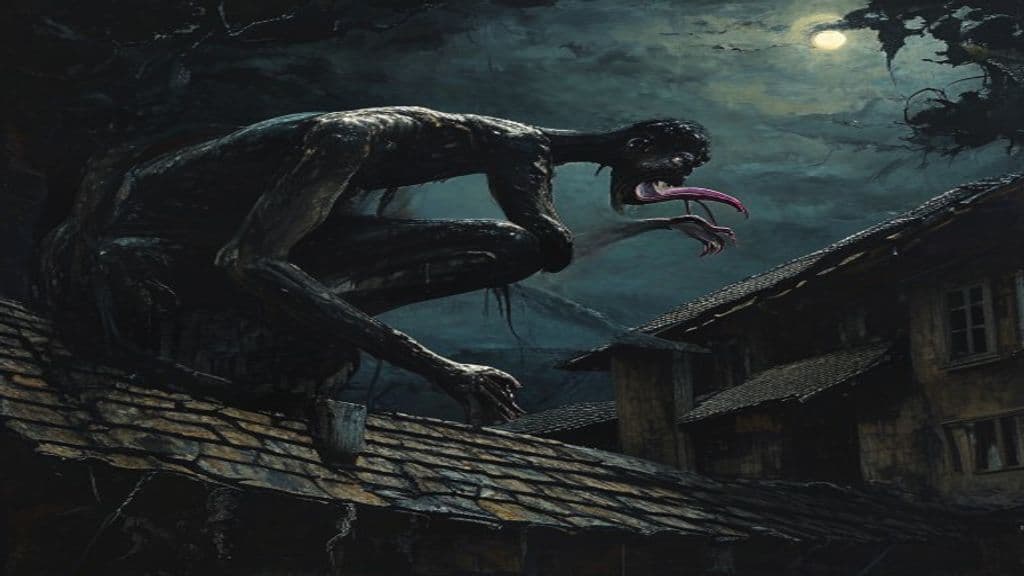
Aswang
The most feared supernatural being in Philippine folklore — a shape-shifting monster that appears human by day but transforms at night to prey on pregnant women and children.

Ghoul
A ghoul is a demon-like or monstrous humanoid originating in pre-Islamic Arabian religion, traditionally associated with graveyards and the consumption of human flesh. The concept later entered broader folklore and has been widely reused and transformed in modern fiction and popular culture.
Community Record
- [1]INDIAN MYTH AND LEGEND (Internet Sacred Text Archive) — chapter indexes. Various chapter headings and indexes in Indian Myth and Legend, Internet Sacred Text Archiveliterary
- [2]INDIAN MYTH AND LEGEND (Internet Sacred Text Archive) — collection page. Collection page for Indian Myth and Legend (indexes and chapter listings)literary
- [3]Khasas — Wikipedia (notes on an ancient Himalayan people; included among supplied sources). "Khasas were an ancient Indian tribe and a late Janapada kingdom from Himalayan regions..." (Wikipedia: Khasas)wiki
- [4]mAnasa-taraMgiNI (blog index pages included in source list). Mirror of old mAnasollAsa — blog pages included among supplied materialsother
- [5]mAnasa-taraMgiNI (additional page). Mirror of old mAnasollAsa — blog pages included among supplied materialsother
- [6]Sikh Religion and Hinduism (SMS publication) — supplied among sources. Sikh Religion and Hinduism (publication provided in source list); cited as part of the supplied corpus though not providing Himalayan rakshasa ritual detailother
- [7]The Ramayana. Valmiki. c. 5th–4th century BCE. Ramayana. (Monier-Williams, M., trans. 1894)literary
- [8]Demonology in Early Indian Literature. Gonda, Jan. 1965. Change and Continuity in Indian Religion. Mouton.academic