
Across multiple ancient myth cycles the sea-serpent appears as a primordial or chaotic watery adversary opposed to a chief deity or culture-hero (the Drachenkampf mytheme). Examples in the supplied sources include Mesopotamian Tiamat opposed by Marduk, Ugaritic Yam/Lotān opposed by Baal, and Hebrew Leviathan/Rahab set against Yahweh or storm-gods; in Indo-European materials similar oppositions occur (e.g., Vedic Vritra). In later regional folklore the creature becomes a monstrous presence of the ocean—a narrative figure in which saints or heroes may slay or bind a dangerous local beast (for example, hagiographic accounts of Saint Olaf and a serpent in Norwegian tradition).
Descriptions across sources converge on a very large, elongated serpentine body sometimes described as scaly or uneven-skinned. Specific historical accounts give extreme eyewitness estimates (e.g., Olaus Magnus's Norwegian account claiming 200–400 feet long and 20 feet wide; Poseidonius quoted by Strabo describing a carcass about a plethrum/30 m long; Hans Egede's 1734 description of a creature with a long sharp snout, broad flappers, and scaly, wrinkled skin). Heads are variably described (long snout, flaming eyes, even horse-like features in some European accounts) and some reports add appendages such as broad fins or tentacle-like structures (later commentators sometimes propose misidentified giant squid as explanations).
In mythic contexts the sea-serpent functions as a cosmic opponent—an embodiment of primordial chaos that is often defeated or bound by storm/sky gods or culture‑heroes in creation and heroic narratives. In folkloric and sailors' accounts its alleged behaviors include surfacing and lifting itself high above the water, spouting water like a whale, coiling around and capsizing ships, and leaving the sea to feed on shore animals (calves, lambs, pigs) or marine life. Modern commentators recorded in the sources sometimes offer naturalistic hypotheses (e.g., giant squid or misidentification) for particular sightings; such interpretations are presented in the sources as later rationales, not as primary-source claims.
Weaknesses
- otherdefeat or binding by storm/sky gods or culture-heroes (mythic narrative)
Wards
- ritualthrow objects overboard (reported sailor tactic)
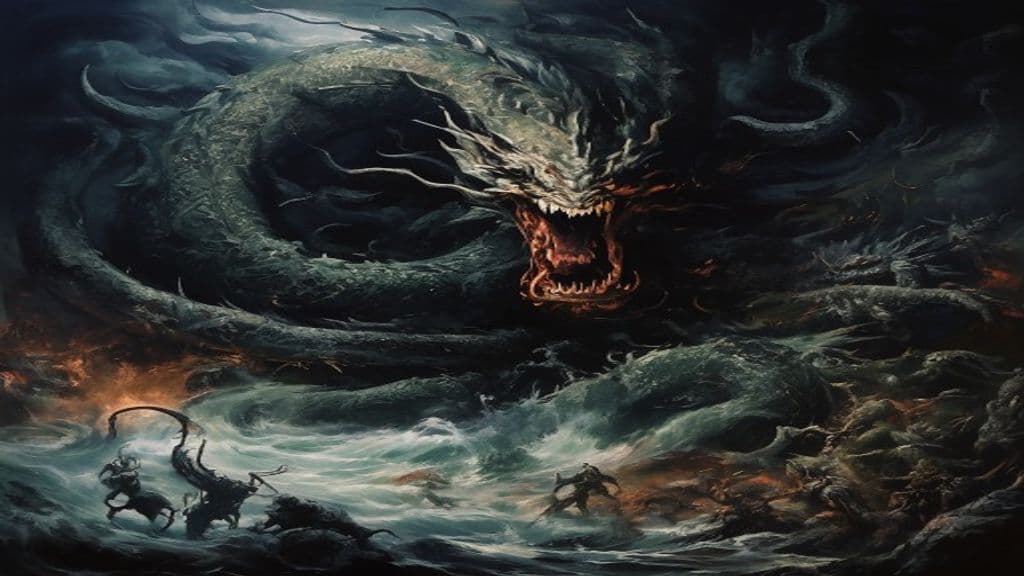
Tiamat
The primordial salt-sea dragon of Babylonian creation myth — the chaos-mother from whose slain body the universe was built, and whose blood became the first humans.
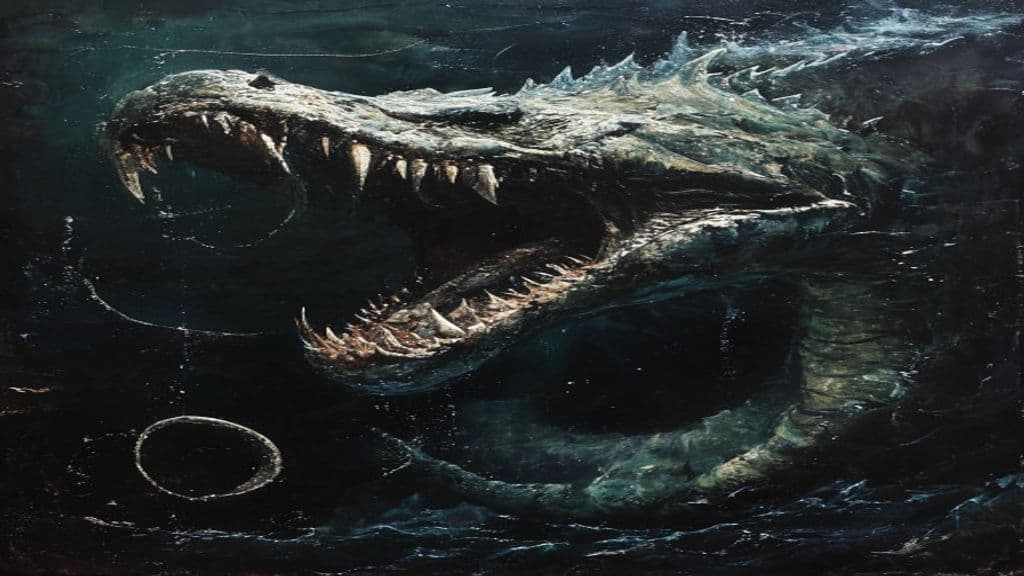
Leviathan
A giant sea serpent in Jewish mythology, embodying chaos and serving as a metaphor for a powerful enemy. (Note: - Power tier should be Ancient (Leviathan's abilities are often described as deity-level, such as threatening the damned after their lives are over and being annihilated) - Appearance is not mentioned)
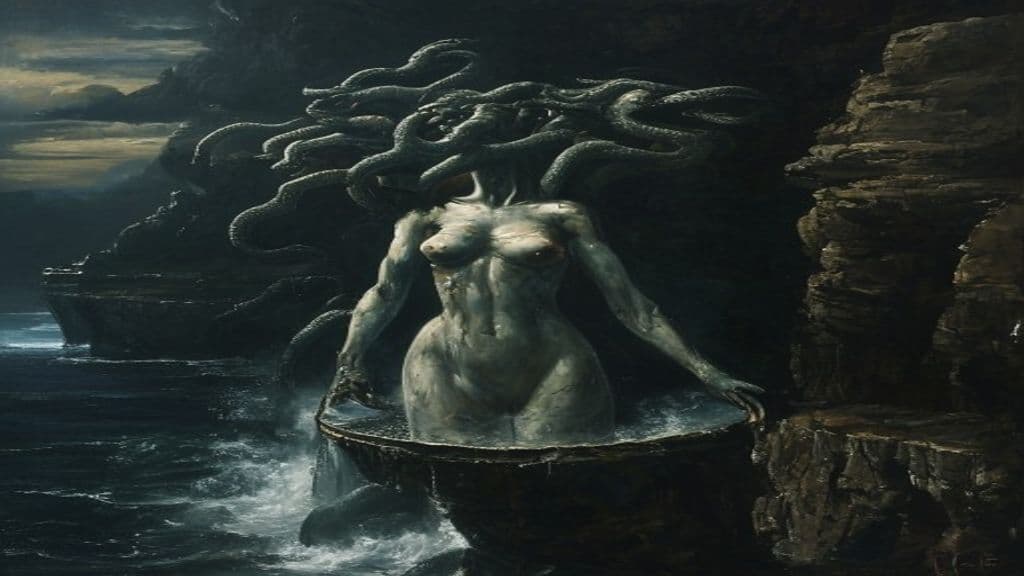
Scylla
A six-headed sea monster lurking in a narrow strait, snatching sailors from passing ships — the original origin of the phrase 'between Scylla and Charybdis.'

Jörmungandr
In Norse mythology, Jörmungandr is an unfathomably large sea-serpent, the Midgard Serpent or World Serpent, that dwells in the world sea and encircles Midgard, biting its own tail; Jörmungandr releasing his tail is described as one of the signs of the beginning of Ragnarök. The name has been reused in modern astronomy for near-Earth asteroid 471926 Jormungandr (provisional 2013 KN6), discovered 28 May 2013.
Community Record
- [1]Sea serpent — Wikipedia. Wikipedia, 'Sea serpent'wiki
- [2]Wikidata entry for sea serpent. Wikidata Q379173other
- [3]Olaus Magnus: description of Norwegian sea serpents (Carta marina and related accounts). Olaus Magnus account cited in secondary summaries (see 'Sea serpent' article)folk
- [4]Hans Egede 1734 report (Greenland sighting). Hans Egede's 1734 sighting as reported in secondary sources summarized by 'Sea serpent' reference worksfolk
- [5]Poseidonius via Strabo: reported corpse measurement. Strabo quoting Poseidonius, as summarized in 'Sea serpent' referencesacademic
- [6]Where Be Monsters? The Daedalus Sea Serpent and the War for Credibility — The Appendix. Essay on historic sea-serpent reports and credibilityother