No single cosmogonic origin is supplied in the sampled material; selkies are presented as a strand of local island and coastal mythic fauna in northern-Atlantic traditions (notably Orkney and Shetland) rather than as created beings with a single origin myth. Collectors and scholars in the 19th and 20th centuries debated their taxonomy—some (e.g., W. Traill Dennison) argued for restricting the Scots-derived term selkie to shapeshifting seals, while other commentators recorded overlap and conflation with merfolk/finfolk terms in local dialects. The tradition situates selkies as sea-kin whose essence is bound to the seal skin that enables movement between marine and human social realms.
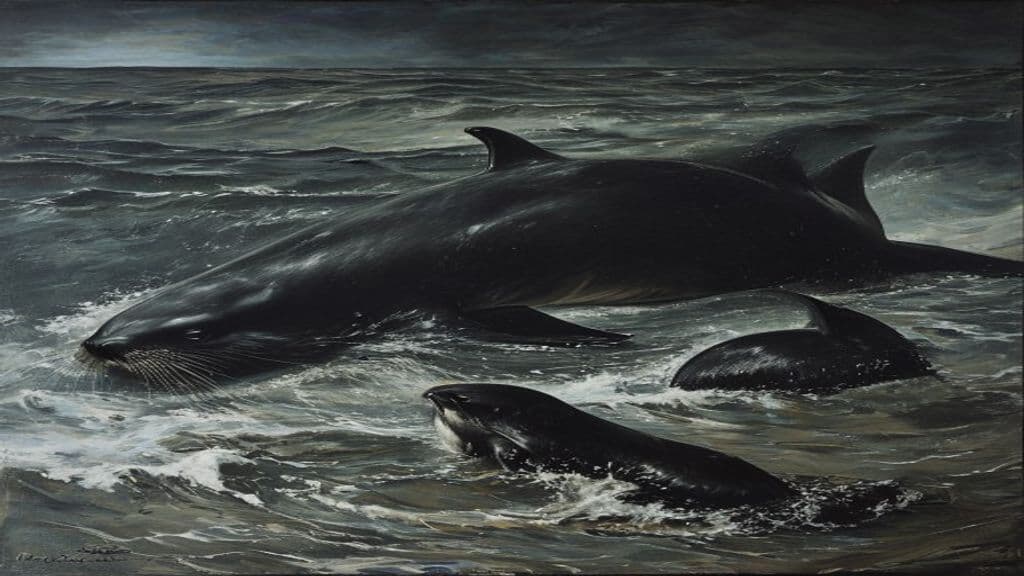
In their sea form selkies are seals; in several island accounts the shapeshifting individuals are larger-than-average seals (tradition notes "seals of greater size than the grey seal" and occasional identification with larger species). In human guise they are typically described as attractive: male selkies often said to be very handsome and seductive, female selkies commonly found naked on shore when their skin has been hidden. Offspring of human–selkie unions are sometimes reported to show physical traces of their parentage, such as webbing between fingers and toes.
The central ability attested in the sources is transformation between seal and human by removing or donning a seal skin. Selkies participate in human social life—forming marriages, sexual relationships, and parenthood with humans in many tales—yet they retain a deep yearning for the sea and may escape and return to their marine home if able to recover their skin. Narrative motifs record both helpful and vengeful behaviours: selkies may give gifts or claim children in some stories (e.g., the Great Silkie motif) while in other accounts an abducted or coerced selkie ultimately leaves, creating family rupture. Human concealment of a selkie's skin is a recurring coercive method in the tales; beyond shapeshifting and social influence there are no systematic supernatural powers described in the provided material.
Weaknesses
- conditionRemoval or concealment of the seal skin prevents transformation and return to the sea
Wards
- otherThere are no documented universal wards; human possession of the selkie's seal skin is the narrative means to restrain a selkie (not a protective ritual)
Community Record
- [1]Selkie — Wikipedia. Wikipedia, 'Selkie'wiki
- [2]Wikidata: selkie. Wikidata entry for selkieother
- [3]Maelstrom (archive). Archive.org: Maelstrom (collection reference cited in provided notes)other
- [4]Nim at Sea (archive). Archive.org: Nim at Sea (collection reference cited in provided notes)other
- [5]Scottish myths, folklore and legends | Scotland.org. Scotland.org, 'Scottish myths, folklore and legends' (summary material cited)other
- [6]Legend of the Selkies: Uncover Magical Irish Myths. ConnollyCove: 'Legend of the Selkies' (summary of Irish selkie material)other