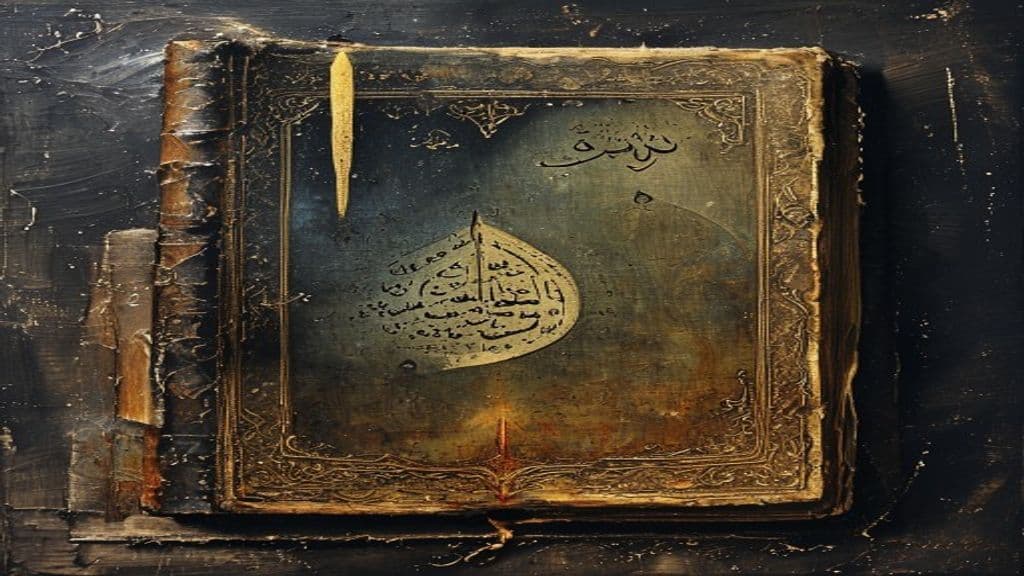
The Shams al-Ma'arif is attributed to Ahmad al-Buni, a Sufi scholar of the 13th century. However, the authorship is disputed and the work's composition history is uncertain.
The Shams al-Ma'arif guides practitioners in meditation, ritualistic practices, and other forms of spiritual growth through its knowledge on Arabic magic and esoteric spirituality.
ʿAbd al‑Qādir al‑Jīlānī
Historical Sunni Muslim preacher, Hanbali jurist, and Sufi shaykh who is the eponym and authoritative exemplar of the Qādiriyya Sufi order; remembered for his recorded discourses (majalis), juridical learning, and role as a transmitter of Sufi training and khirqa investiture. Active in Baghdad in the 12th century, his writings and shrine remain central to Qādirī devotional and institutional life.
Shakini
Tantric goddess presiding over the Vishuddha (throat) chakra — she governs speech, truth, and poison. Disturbed, she afflicts voice and communication; correctly propitiated, she grants eloquence, clairvoyance, and the power to speak what cannot be unsaid.
Shakka
The string "Shakka" appears in the supplied sources as a modern personal/stage name (a British singer), a 1981 Hindi-language film title, and as a brief disambiguation entry labeling a Babylonian/Akkadian patron god of herdsmen. The available corpus contains no substantive folkloric or ritual material treating "Shakka" as a living supernatural entity.
Shakyamuni Buddha
Shakyamuni Buddha (Siddhartha Gautama) is the historical founder of Buddhism, an awakened teacher (muni) of the Shakya clan whose life—birth in Lumbini, awakening at Bodh Gaya, teaching across the Indo-Gangetic plain, and parinirvāṇa at Kushinagar—forms the foundation of Buddhist doctrine, monastic order, and much devotional practice. In material religion he is also represented in images and texts that serve as loci of sacred presence and ritual efficacy.
Shala (Šala)
Shala is a Mesopotamian goddess associated with weather and grain, known principally as the wife/consort of the storm god Adad (Ishkur). She appears in god lists, hymns and cylinder‑seal inscriptions from the Old Babylonian period onward and functions as a fertility and communal-protective figure tied to dew and agricultural well‑being.
Shamash (Utu)
Shamash (Akkadian šamaš; Sumerian Utu) is the ancient Mesopotamian sun god, a principal deity responsible for the visible sun and for juridical, protective, and divinatory functions. He is venerated especially at Sippar and Larsa, appears in major myths as an ally of heroes, and is regarded as the divine witness whose sight underwrites justice and truth.
Shamharush
Shamharush (also Shamhurish, Shamhurash, Sidi Chamharouch) is a longstanding jinn sovereign figure in Moroccan folk belief, described as one of the seven jinn kings and a supreme judicial ruler of the jinn. Associated with Thursday and Jupiter, he was historically venerated at a shrine near Aroumd in the High Atlas but his cult was later contested by Islamic scholars.
Shamshir-e Zomorrodnegār
A sacred sword in the Persian legend Shahnameh, capable of piercing the invulnerability of Fulad-zereh, a demonic entity created by a witch mother's charm. (Note: 1. Remove Power tier: Primordial as it is likely Greater (powerful regional) given its ability to counter a demonic entity. 2. Add sensory cues from Source 1: mention of King Solomon's ownership could)
Shangdi (上帝)
Shangdi is the name of the Highest Deity or 'Lord Above' in classical Chinese theology. In Shang dynasty practice he was the supreme spiritual power invoked by the ruling elite for polity-scale outcomes; in Zhou thought he increasingly overlaps with Tiān and functions as an ethical cosmic authority who grants or withdraws the Mandate of Heaven.
Shankha
A sacred symbol associated with Lord Vishnu, used in Hindu rituals and ceremonies as a conch shell trumpet or horn. (Note: - Power tier should be Greater, as it plays a crucial role in Hindu rituals and ceremonies, implying deity-level power. - Appearance should mention that it's often made from a large conch shell, but d)
Shape-shifters
A cross-cultural motif and capability in mythology, folklore, and speculative fiction describing beings or persons who can physically transform themselves through unnatural means. Appears across ancient ritual contexts, foundational epics, and modern popular culture rather than as a single unified species or entity.
Shar-Kali-Sharri
Shar-Kali-Sharri was an historical king of Agade/Akkad in the late third millennium BCE (reigned c. 2218–2193 BC, 25 years in the Sumerian King List) who, in some inscriptional and later traditions, is attested with divine epithets and the dingir (divine) determinative. He is recorded as an imperial sovereign active in temple building, military campaigns, and administration and is treated in some sources as a deified royal figure after or during his reign.
Community Record
- [1]Wikipediawiki