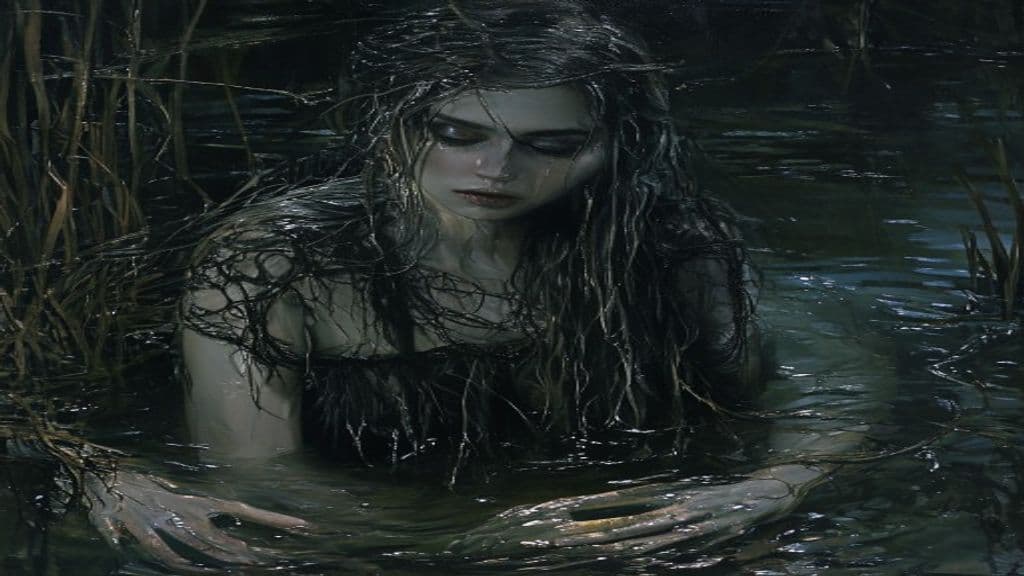
In Cantabrian popular tradition the Sirenuca is narrated as a beautiful but disobedient and spoiled young woman whose vice was climbing the most dangerous cliffs of Castro Urdiales to sing with the waves. The tale frames her change as a moralized metamorphosis: because of her persistent behavior at the sea margin she was transformed into a water nymph. Sources present this metamorphosis as the origin of the Sirenuca rather than as the appearance of a separate, preexisting class of being.
Sources label the Sirenuca as a 'Little Mermaid' and as a 'water nymph.' Before transformation she is described in the tradition as a beautiful young lady; after the metamorphosis she is referred to generically as a water nymph. The available texts provide no standardized iconography or specific anatomical details (such as fins, tail, or precise size) beyond these descriptors.
The tradition emphasizes her vocal practice: she climbed the cliffs to 'sing with the waves,' and the story links this singing and her presence at the sea margin to her transformation into a water nymph. The sources do not attribute other specific powers, such as enchantment, luring, healing, or harming; no further habitual interactions with humans are recorded in the provided material.
Weaknesses
- otherno weaknesses described in sources
Wards
- otherno wards recorded in provided sources
Community Record
- [1]Cantabrian mythology. "The Sirenuca, Little Mermaid, is a beautiful but disobedient and spoiled young lady whose vice was climbing the most dangerous cliffs of Castro Urdiales to sing with the waves. She was transformed into a water nymph."wiki
- [2]Cantabria — Spanish geography & myth. List of Cantabrian entities including 'the sirenuca, little mermaid' among regional beings.folk
- [3]Cantabria (Wikipedia). General regional article (used for contextual location and region-level references to Cantabrian folklore).wiki