
The Slender Man was created on 10 June 2009 by Something Awful forum user Eric Knudsen (pseudonym Victor Surge) during a Photoshop contest; Knudsen posted two black-and-white images of groups of children altered to include a tall, thin spectral figure in a black suit, accompanied by short fictional witness captions. The figure was then expanded collaboratively by many users across forums, videos, games, and other media to form a mutable, open-source mythos rather than arising from an established traditional cosmology.
Common portrayals show an extremely tall, unnaturally thin humanoid with pale white skin and a featureless or blank face, dressed in a black suit and tie. Many depictions add very long, tentacle-like arms or branching tendrils sometimes emerging from the back; early images and fan works often render him in black-and-white or photographic montage styles. Exact facial detail, appendages, and other attributes vary across authors and media.
Across the collaborative fiction the Slender Man is recurrently depicted as stalking and observing people (frequently children or young adults), abducting children, causing rapid-onset psychological symptoms ('Slender sickness'—paranoia, nightmares, nosebleeds), and sometimes converting or influencing humans into proxies. Specific abilities commonly attributed in various works include extending tentacle-like arms, teleportation, and interference with recording devices and screens (notably popularized by the Marble Hornets web series). These abilities and behaviors are not canonical and vary by author and medium; many retellings intentionally leave motives and ontological status vague.
Weaknesses
- otherNo consistent canonical weaknesses documented (sources do not define reliable vulnerabilities)
Wards
- symbol⦻ (circled-slash emblem) — a fan-invented trope and emblem associated with the mythos; sources record its use in fan works but do not attest it as an effective protective ward
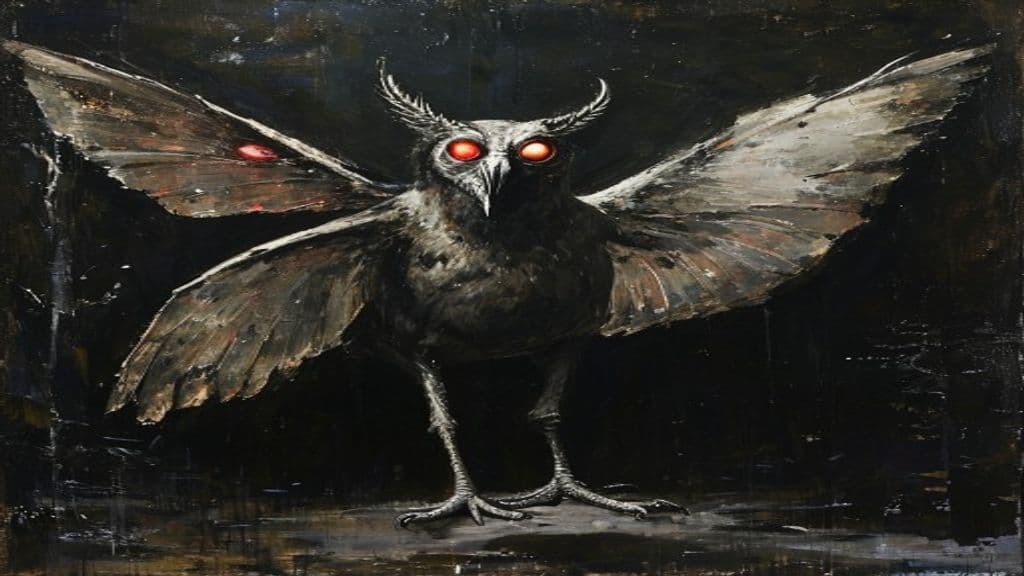
Mothman
A modern American folkloric figure originating from a cluster of 1966–67 sightings around Point Pleasant, West Virginia. Described in press reports and later retellings as a large humanoid or winged creature with notable eyes, the Mothman legend has been variously interpreted as misidentified wildlife, hoaxing/sensationalism, or a paranormal omen linked in some retellings to the Silver Bridge collapse.

Shadow People
Shadow people are a contemporary paranormal concept describing animate, human-shaped shadow-like presences. Presented primarily in modern paranormal media and practitioner discourse, they are often interpreted as spirits or unseen presences rather than as elements of a specific historic folk cosmology.
Slavic Water Spirits
Female tutelary beings associated with bodies of water in Slavic paganism, often dual-natured as benevolent or malevolent. (Note: - Power tier is unclear based on the source material; no indication that they are limited to a "Lesser" power tier. - Appearance is not described in the source material, so this section should be remo)
Slavic dragon
A class of serpent‑like supernatural beings in Slavic oral tradition and epic literature, often associated with snakes, water, weather, and liminal places. Regional vernaculars (e.g., Russian zmei, Polish smok/żmij, Romanian zmeu) describe variants that range from multi‑headed, regenerating monsters to humanoid or ambivalent figures who may help or court humans.
Sledovik
A sacred stone in Slavic and Finnic pagan practices, imbued with spiritual significance. (Note: - Power tier should be Primordial (due to their widespread presence and spiritual significance in Slavic and Finnic cultures). - Abilities description is incomplete and inaccurate (the text only menti)
Sleep Temple (Greek/Egyptian)
A mystical site in ancient Greek tradition associated with inducing sleep, influenced by Imhotep and Egyptian mysticism. (Note: 1. Power tier should be Lesser (local spirit) instead of Minor Spirit. 2. Add sensory cues and wards based on possible connection to hypnosis (e.g., drowsy atmosphere, trance-inducing melodies). 3. Cl)
Sleeping Beauty (folktale motif)
A widespread fairy-tale narrative figure (Aarne–Thompson Type 410): a royal young woman who falls into a prolonged enchanted sleep caused by a curse or a magical/physical agent and is later awakened by reversal of that causation. The story functions as a folkloric motif across Italian, French, and German literary traditions and many later adaptations.
Sleih beggey
An umbrella term in Manx tradition for the island's 'little people' or fair folk, covering a range of domestic and wild fairy types who interact with human communities — sometimes helpful or neutral, sometimes hostile, notably in accounts of hunting, music, hearth-occupation, and infant abduction.
Sluagh
The host of the unforgiven dead in Irish and Scottish tradition — a restless swarm who travel from the west, steal souls, and attack the living, whom they carry off into their dark company.
Smallpox demon (hōsōshin / hōsōgami)
In Japanese folk belief the smallpox demon (Japanese: 疱瘡神, hōsōshin / hōsōgami) is a sickness‑spirit or disease‑kami held responsible for outbreaks of smallpox. Communities treated it as an intentional supernatural agent that could be appeased, placated, driven off, or even enshrined through ritual, performance, color symbolism (especially red), and offerings.
Smaug
Smaug is a singular, ancient dragon from J. R. R. Tolkien's legendarium (The Hobbit). He seized and occupied the Dwarf-kingdom of Erebor, guarded a vast hoard for centuries, and is portrayed as a highly intelligent, speech-capable, and vainglorious hoard-guardian whose single exposed belly-spot proves fatal.
Sobek
Sobek is an ancient Egyptian crocodile-associated deity whose roles include a fierce animal patron, protector/apotropaic power, royal/fertility god, and participant in Osirian healing myths. He appears from the Old Kingdom through the Roman period with major cult centers in the Faiyum (Shedet/Crocodilopolis) and at Kom Ombo and exists in multiple local manifestations and syncretisms (e.g., with Horus and Ra).
Sohrab
A legendary warrior in Persian epic tradition, son of Rostam and Tahmineh. (Note: 1. Power tier: Given that Sohrab's abilities are not described in the source material, it's unclear whether he should be classified as Greater or even if he has deity-level powers. 2. Sensory cues: No)
Soini (Finnish Mythology)
A giant and son of Kaleva in Finnish mythology, known for his mischievous tendencies. (Note: 1. Power tier should be Lesser (not Ancient) based on the description of Soini as a giant and a son of Kaleva, but not necessarily a deity-level figure. 2. Add sensory cues from Christfried Ganander's)
Community Record
- [1]Slender Man - Wikipedia. Wikipedia, 'Slender Man' entry (accessed via provided research notes)wiki
- [2]Slender Man - Wikidata. Wikidata item for Slender Man (referenced in research notes)other
- [3]Marble Hornets (web series) — noted influence on proxies and recording interference. Marble Hornets web series referenced in Wikipedia entry and research notes for popularizing proxies and media interference motifswiki
- [4]Archive: 120: Silence. Archived media item referenced in research notesother
- [5]Archive: 100: The Fear Chemical. Archived media item referenced in research notesother
- [6]Archive: I Play SlenderMan Death Match!. Archived media item referenced in research notesother