Their story likely originated from observations of monsoon patterns and their impact on agriculture, irrigation, and local ecosystems.
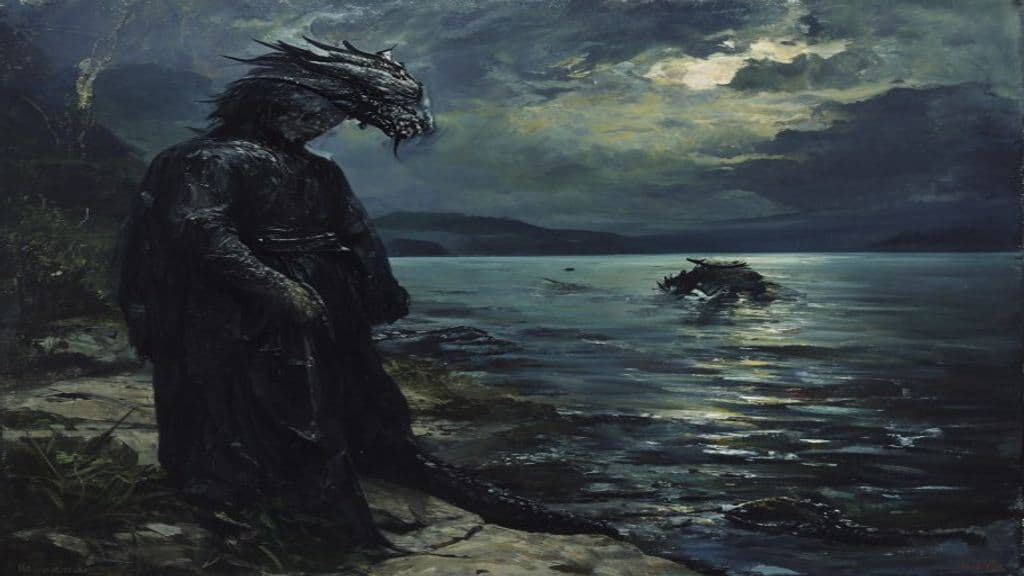
No physical description is provided in the source material. However, Sơn Tinh is commonly depicted as a powerful, proud man, while Thủy Tinh is often depicted as a beautiful woman or dragon.
They are responsible for tidal irrigation and floods in Vietnam, reflecting their dominance over land and water through opposing forces.
Weaknesses
- conditionseparation by a mountain range
- conditionability to reunite only during specific times (e.g. lunar eclipses or solstices)
Wards
None recorded.
Szelanya
Szelanya is presented in the supplied sources as a named wind or air deity (often called a goddess) found in brief Turkish and Hungarian mythic listings and modern popular summaries. Traditional descriptions are fragmentary; later fantasy and fandom materials expand her image beyond the concise encyclopedic entries.
Szélatya
Szélatya (also attested as Szélkirály) is presented in the cited sources as a deity associated with wind. The available references identify the figure as a wind god but provide only minimal details; one source labels the figure 'Turkic' while another describes it as 'Hungarian.'
Sáráhkká
Sáráhkká is a Sámi female household/divine spirit primarily associated with childbirth, the embodiment of fetuses, and the protection of pregnant women and birthing reindeer. She inhabits the domestic locus beneath the goahti hearth and is attended by offerings, taboos, and lifecycle rites in Sámi communities of northern Norway and Sweden.
Sânziană
Sânziene are Romanian seasonal fairies associated with the June 24 Sânziene festival and the Galium verum flower; they bless crops and health, enable potent magic on midsummer night, and can punish humans (especially men) who see them. Their cult is tied to rural Carpathian customs, floral crowns, bonfires, and divinatory crown-throwing over houses.
Sādhya / Sadhyas
The Sādhyas are a class (gaṇa) of minor divine beings in classical Hindu cosmology, variously attested as embodiments of Vedic ritual, attendants of greater deities, members of Puranic divine lists, and as one of the hosts produced in certain cosmogonic passages of the Śrīmad-Bhāgavatam.
Sāsān (Sasan)
Sāsān is attested in medieval Persian historiography as the eponymous ancestor of the Sasanian (Sassanid) dynasty and is described as a Zoroastrian high priest, warrior, and hunter from Pars (Fars) near the fall of the Arsacid (Parthian) Empire in the early 3rd century. Modern uses of 'Sasan' include a male given name and various contemporary personal and corporate names; no supplied sources treat Sasan as a supernatural being.
Tablet of Destinies
A supernatural object in Mesopotamian mythology that confers supreme authority on the god Enlil, allowing him to redefine fate. (Note: - Power tier should be Ancient (deity-level) since it confers authority on a god. - The description of abilities implies a high level of cosmic power but does not necessarily imply primordial powers; )
Tabris
Tabris is attested in the provided sources in two unrelated senses: as the 'real name' of the fictional Neon Genesis Evangelion character Kaworu Nagisa (an Angel in that franchise) and as a taxonomic genus name for algae. No traditional folkloric or historical spirit named Tabris is documented in the supplied materials.
Taenarum
A geographical term referring to Cape Matapan or Cape Tenaro, a cape located at the end of the Mani Peninsula in ancient Greece. There is no associated supernatural entity. (Note: - The entity article claims there is no associated supernatural entity with Taenarum, but since we're creating an entry for a specific entity, this statement should be revised or removed. - Power tier)
Tagaloa
In Samoan myth Tagaloa (also Tagaloa-Lagi or Tagaloa Lagi) is presented as the supreme ruler and creator who dwells in the heavens and is credited in various traditions with making the heavens, sky, land, seas, fresh water, trees, and people. Tagaloa functions as progenitor of other gods and figures in origin narratives that link divine actions to island formation and human genealogy.
Tagroa Siria
Tagroa Siria is the supreme deity of pre-Christian Rotuman religion, chiefly associated with the island's fertility cult and the prosperity of its people. He is referred to as 'God Above' or 'God the Highest' and is located in an underworld-like spirit region called 'Oroi ta' or 'Oroi Hanua Favi.'
Tahatuna
An ancestral canoe in Māori tradition, significant to the settlement of New Zealand. (Note: * Power tier should be Primordial since it's a significant ancestral canoe tied to the settlement of an entire region (New Zealand). * No mention of physical description or abilities beyond cultural s)
Community Record
- [1]