The Sons of Aegyptus are the fifty male offspring of King Aegyptus of Egypt in Greek genealogical tradition. They are presented as cousins and intended spouses to the fifty daughters of Danaus, Aegyptus' twin, an origin framing that links Egyptian and Argive genealogies and the Io–Argive lineage. Ancient catalogues differ on maternal attributions — some accounts (e.g., traditions attributed to Hippostratus) give a single mother (Eurryroe) while other sources (pseudo-Apollodorus, Hyginus) list multiple consorts and produce varying name-lists — but all place the sons as a matched cohort whose proposed marriages precipitate the central Danaid drama.
Classical sources do not provide individualized physical descriptions beyond identifying them as princes; their primary descriptive markers are genealogical (sons of Aegyptus) and numeric (fifty). Ancient mythographic catalogues (e.g., lists preserved in Pseudo-Apollodorus and in Hyginus) record individual names and, in some accounts, mothers for many of the sons, though these lists vary and contain corruptions in transmission. In tragic performance (notably Aeschylus' Suppliants and its commentary) they function visually and thematically as a collective — effectively a chorus of fifty male figures — rather than as distinct, richly-described individuals.
No supernatural powers are ascribed in the provided sources; their agency is that of mortal royal actors. Their notable roles are political and narrative: they are claimants in a mass marriage plot, the intended husbands of the Danaids, and (collectively) the victims of the brides' mass killings on the wedding night in the most common version of the myth. Dramatic authors used them as a chorally-scaled group to embody male collective claims and to balance the fifty Danaids in tragic and genealogical storytelling. One son, Lynceus, survives by the mercy of his wife Hypermnestra, an exception that underscores themes of individual moral choice amid collective violence.
Weaknesses
- otherNone attested in sources
Wards
- otherNone attested in sources

Lynceus
Lynceus is a recurring proper name in Greek myth borne by several distinct human figures (and once by a hound) rather than a single supernatural class. Bearers of the name appear across heroic and founding narratives — notably as a son of Aegyptus who survives the Danaid massacre and becomes king of Argos, and as Lynceus son of Aphareus, an Argonaut noted for his role as lookout of the Argo.
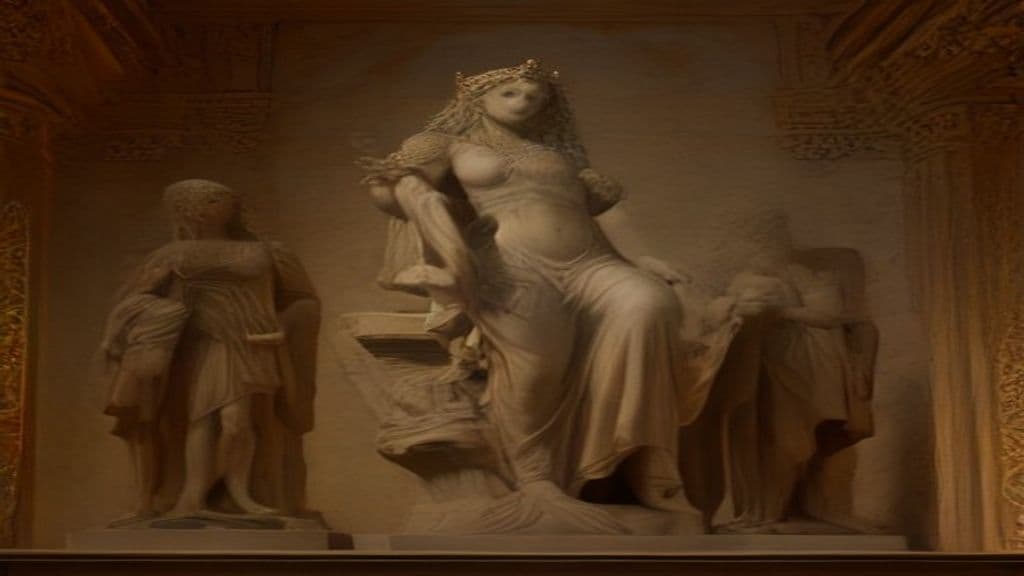
Hypermnestra
Hypermnestra is a mythological mortal from ancient Greek tradition, a daughter of Danaus who alone refused her father's command that the Danaids kill their husbands. By sparing Lynceus she becomes ancestress of the Abantiad line and an exemplar of individual moral refusal within the Danaid narrative.

Danaus
Danaus is a mythic founding-king figure in ancient Greek tradition, remembered as the eponymous ancestor of the Danaids and as a culture-hero whose migration from Egypt/Libya to Argos explains local institutions, place-names, and cultic associations in archaic and classical lore.
Community Record
- [1]Sons of Aegyptus - Wikipedia. Wikipedia contributors, 'Sons of Aegyptus', Wikipedia, The Free Encyclopediawiki
- [2]Lynceus (son of Aegyptus) - Wikipedia. Wikipedia contributors, 'Lynceus (son of Aegyptus)', Wikipedia, The Free Encyclopediawiki
- [3]Wikidata entry: Sons of Aegyptus. Wikidata, Q4173622 'Sons of Aegyptus'wiki
- [4]The Suppliants by Aeschylus (translation). Aeschylus, The Suppliants (translation, Internet Classics Archive)literary
- [5]Aeschylus, Suppliant women — Project Gutenberg Canada edition (notes on chorus size). Murray, The Suppliant Women (Project Gutenberg Canada), commentary on chorus size and the fifty Danaids/Sons of Aegyptusliterary
- [6]Conspectus of Lewis Morgan's Ancient Society (Marx commentary). Conspectus of Lewis Morgan's Ancient Society (via Marx commentary)other
- [7]The Danaans — Ensign Message / related commentary. The Danaans — article linking Danaid/Aegytpus traditionsother
- [8]Suppliant.pl.txt (Aeschylus translation plain text). Aeschylus, The Suppliants (plain text translation)literary
- [9]YPPedia: Aegyptus (summary entry). YPPedia entry on Aegyptus (summary of mythic figure and offspring)other
- [10]Madeline Miller — 'Myth of the Week: The Danaids'. Madeline Miller, 'Myth of the Week: The Danaids' (modern retelling/commentary)other