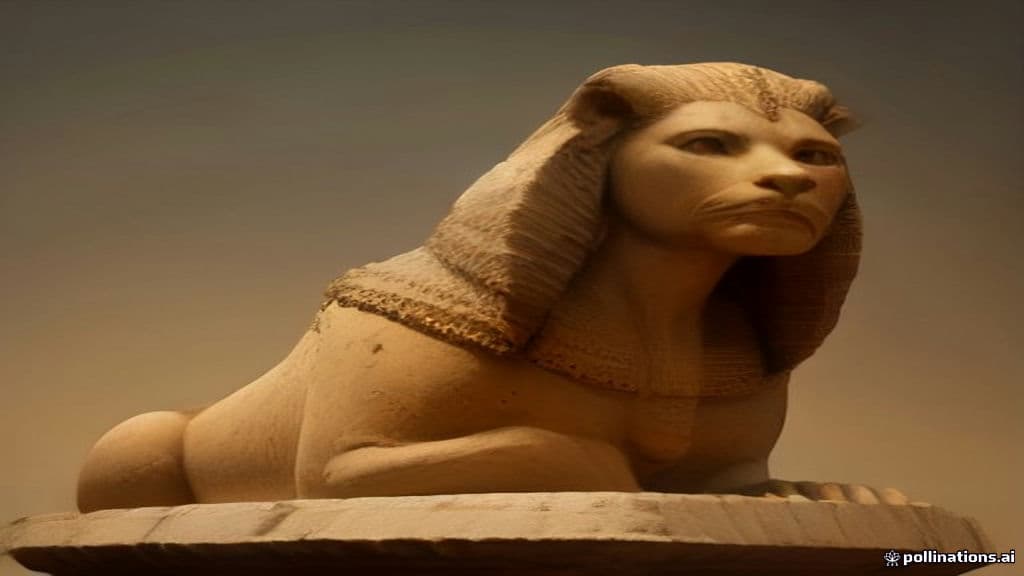
The figure appears in multiple cultural vocabularies. In Egyptian contexts the idea is bound to monumental statuary embodying royal and solar power; one scholarly suggestion (Susan Wise Bauer) proposes that the Greek word σφίγξ may derive from an Egyptian term shesepankh meaning "living image," referring to carved statues of "living rock." In Greek myth the sphinx is instead conceived as an animate monstrous being — a female-headed, winged creature that challenges mortals with a riddle and kills those who fail. These represent two distinct conceptual lineages that became conflated in later usage.
Across sources the sphinx shares a human head atop a lion's body. Greek tradition specifies a female head, lion haunches, and bird wings. Egyptian sphinxes are typically male-headed (androsphinx), often bearing the likeness of a pharaoh and usually wingless; a distinct Egyptian variant, the criosphinx, has a ram's head and is associated with Amon. Monumental examples include the recumbent Great Sphinx of Giza with a human-like head on a lion's body.
In Greek myth the sphinx is an animate, hostile creature that poses riddles to travelers and kills and eats those who fail to solve them; she is described as treacherous and merciless. In Egyptian contexts the sphinx is not portrayed as predatory in the provided sources but functions as a protective, emblematic presence: monumental statues flank approaches to temples and tombs, represent pharaonic/solar strength, and are tasked in the tradition to hold back hostile forces. Thus Greek accounts emphasize an active, lethal intelligence, while Egyptian accounts emphasize symbolic/architectural guardianship.
Weaknesses
- otherDeath upon riddle solution (Greek tradition)
- otherNo mythic vulnerabilities ascribed to Egyptian monumental sphinxes (they are symbolic/statues)
Wards
- otherPlacement of sphinx statues and avenues of sphinx figures flanking entrances and processional ways to guard sacred precincts (Egyptian architectural prevention)
- otherAnswering the riddle correctly (practical defense in Greek myth)
Community Record
- [1]Sphinx — Wikipedia. Wikipedia, entry 'Sphinx'.wiki
- [2]Wikidata: Sphinx (Q127251) — taxon homonym note. Wikidata entry noting modern taxonomic use of the label 'Sphinx'.other
- [3]Color Photo 020811 from Egypt/Giza (Great Sphinx image). Archive photographic record of the Great Sphinx at Giza.other
- [4]Black and White Photo 00996 from Egypt/Giza. Archive photographic record related to Giza sphinx imagery.other
- [5]Black and White Photo 01002 from Egypt/Giza. Archive photographic record related to Giza sphinx imagery.other
- [6]The Sphinx, by Ralph Waldo Emerson. Literary reflection on the sphinx motif.literary