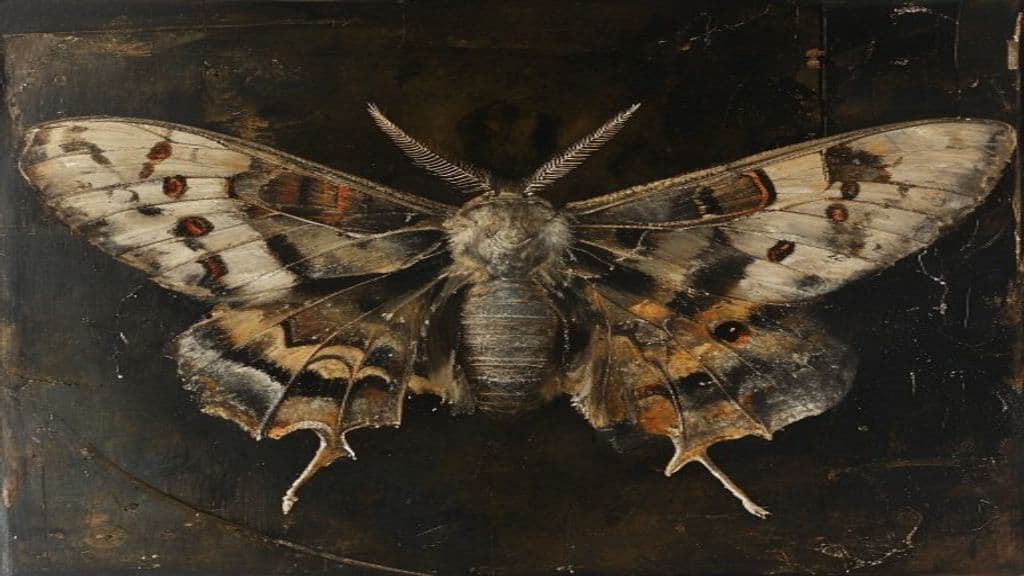
The supplied materials do not contain a narrative origin for a supernatural being called Strophia. One source is a taxonomic account referring to the genus Thyatira (a moth genus erected by Ferdinand Ochsenheimer in 1816) and is unrelated to mythic narrative; another source (a brief Wikidata statement) lists 'Strophia' as a naiad in Greek mythology but provides no origin story, genealogies, or mythic episodes. Therefore no verifiable origin story can be reported from the provided texts.
No descriptions of a supernatural Strophia's appearance are present in the supplied sources. The taxonomic source discusses the moth genus Thyatira (biological organisms), but the materials do not provide physical descriptions or link such biological descriptions to a mythic Strophia. The Wikidata line asserting 'naiad in Greek mythology' gives no visual or corporeal details.
The provided sources contain no information about powers, behaviors, or supernatural abilities of an entity named Strophia. Any extrapolation from the single-line identification as a 'naiad' would be speculative without supporting texts; similarly, biological information about the moth genus Thyatira does not document supernatural abilities.
Weaknesses
- otherNo information on weaknesses in the supplied sources
Wards
- otherNo information on wards or protective practices in the supplied sources
Stratobates
Stratobates (Ancient Greek: Στρατοβάτην) is a Mycenaean prince in Greek genealogical tradition, recorded as one of the sons of King Electryon and Anaxo. He is primarily attested in lists of Electryon's children and is reported to have been killed, along with his brothers, by the sons of Pterelaus during a dynastic dispute that frames the ancestry of Alcmena and the later story of Heracles.
Straw Millionaire
A supernatural entity representing moral lessons in frugality and cleverness, appearing in Japanese Buddhist folk tales to illustrate the power of resourcefulness and determination. (Note: - Power tier: Lower to Greater (The Straw Millionaire's abilities are more in line with a regional entity, given its focus on moral lessons and resourcefulness rather than cosmic power.) - Origin stor)
Stray Sod
A clump of enchanted grass attributed to faeries in Celtic tradition, causing disorientation and loss of direction. (Note: - Power tier: Primordial (not Lesser), as the effect described is far-reaching, causing disorientation even in familiar surroundings. - Abilities: Add that the effect can persist even after leaving th)
Stree
A vengeful female spirit from Chanderi who abducts men during festival nights. Warded off by the inscription 'O Stree, kal aana' — her legend, still practised on walls across Madhya Pradesh, inspired the 2018 Bollywood horror-comedy.
Strigoi
The vampire of Romanian folklore — either a living witch (strigoi viu) or an undead blood-drinker (strigoi mort). The source tradition from which the literary vampire emerged.
Strix
A nocturnal, ill-omened bird-monster of classical antiquity that also functions as a lexical label for harmful, often female, practitioners of witchcraft; implicated in infant predation, corpse-deforming acts, and magical practice.
Strophius
Strophius (Ancient Greek: Στρόφιος, Strophios) is a recurring personal name in Greek literary and mythographic traditions. It denotes several mortal figures—kings, fathers, companions, and crewmen—who appear across the Atreid cycle, Trojan War narratives, and later epic such as Nonnus’s Dionysiaca.
Strymon
Strymon is the personified river-god (potamos) of the ancient Strymon/Struma River in Thrace/Edonia. In classical Greek tradition he functions as a local natural deity, a genealogical ancestor in foundation myths, and a civic emblem known from literary summaries and local coinage references.
Stryx
Stryx is primarily attested in the provided sources as a modern proper name used for a controversial 1978 Italian television variety programme and for various unrelated contemporary cultural products (games, artists, galleries). The supplied materials do not document a traditional folkloric supernatural being called Stryx.
Strzyga
A malefic night-being in Polish and Silesian folk belief associated with certain anomalous births and with revenant activity after death. Traditions portray the strzyga variously as a vampiric, blood-drinking revenant that flies at night (often imagined as an owl), or alternatively as an omen that heralds imminent death; communities employed a mix of popular and Christian measures to prevent or neutralize suspected strzygi.
Stymphalian birds
A swarm of dangerous, man‑eating birds of Greek myth associated with the marsh/lake of Stymphalia in Arcadia. They ravage crops and people, are said to have beaks of bronze or exceptionally powerful beaks and sharp metallic feathers that can be launched as darts, and are best known from Heracles’ sixth labour in which Athena provides a rattle to flush them and Heracles shoots many down.
Stymphalus (son of Elatus)
Stymphalus (Greek: Στύμφαλος) is a mythic, eponymous founder and heroic-age ancestor in Arcadian local tradition. In surviving sources he is presented as a son of Elatus (sometimes by Laodice), a grandson of Arcas, and the name-giver of a spring, a lake/region, and a city in Arcadia; he is treated as a mortal genealogical figure rather than a supernatural creature in the cited material.
Community Record
- [1]Thyatira (moth) — Wikipedia. Wikipedia contributors. "Thyatira (moth)." Wikipedia, The Free Encyclopedia. Excerpt: "Thyatira is a genus of moths belonging to the subfamily Thyatirinae of the Drepanidae. It was erected by Ferdinand Ochsenheimer in 1816."wiki
- [2]Wikidata entry for Strophia (Q3661549). Wikidata. Entry Q3661549: stated label/description — "naiad in Greek mythology."wiki
- [3]Monograph of the genus Strophia : a group of tropical and sub-tropical land shells (archive record). Archive record: Monograph of the genus Strophia — a title for a malacological work. Cited here to note presence of the homonymous taxonomic/literary label; the work is not presented in the supplied materials as evidence of a mythic Strophia.other