
In otogizōshi and later Edo‑period retellings Tamamo‑no‑Mae is presented as one incarnation in a recurring trans‑regional fox‑spirit cycle that appears earlier in Chinese and Indian episodes (as Daji in Shang China, Lady Kayō in Magadha/Indian tales, and Bao Si in Zhou China) before manifesting in Japan as the courtesan at Emperor Konoe's court. A 1653 addendum (Tamamo no sōshi) supplies the post‑mortem Sesshō‑seki episode in which her spirit embeds itself in a poisonous stone; the Nanboku‑chō tradition credits the Buddhist monk Gennō Shinshō with exorcising the spirit and holding a memorial service that allows it to rest.
As a human Tamamo‑no‑Mae is described in the otogizōshi material as an exceptionally beautiful and intelligent courtesan—able to answer any question posed to her—and the favored consort of Emperor Konoe. In Edo‑period folklore and iconography she is identified with the nine‑tailed fox (kyūbi no kitsune) motif and is portrayed posthumously or in revelation as a fox with multiple tails. The 1653 addendum further links her spirit to the Sesshō‑seki stone, an object that emitted lethal fumes.
Narrative sources attribute to Tamamo‑no‑Mae the capacity to assume a convincing human form, to deceive and influence rulers (enchanting or otherwise causing an emperor's illness and political corruption), and exceptional knowledge or wit in human guise. After her human form is slain her spirit is said to have embedded in the Sesshō‑seki, which continually released poisonous gas lethal to those who touched it. The tradition frames her as a recurring itinerant fox‑spirit that repeatedly seeks positions of influence across regions.
Weaknesses
- otherExposure by divination/astrology (Abe no Yasuchika exposed the fox spirit)
- otherKilling/removal by imperial agents (Kazusa-no-suke and Miura-no-suke dispatched to kill the fox in the plains of Nasu)
- ritualBuddhist exorcism and memorial (Gennō Shinshō's exorcism of the Sesshō‑seki and subsequent memorial service)
Wards
- ritualAstrological/divinatory diagnosis (practiced by court astrologers/diviners such as Abe no Yasuchika) — recorded as the means of detecting the fox in the court
- ritualBuddhist exorcism and memorial rites (performed by a monk; credited in tradition with pacifying the Sesshō‑seki and allowing the spirit to rest)
- otherState action / force (imperial agents dispatched to kill or drive off the fox in narrative episodes)
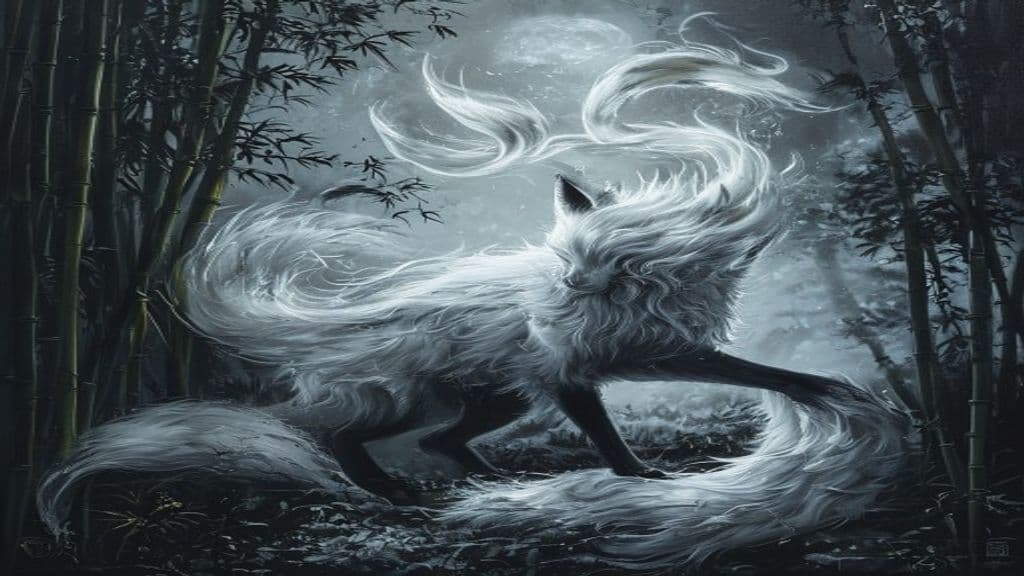
Kitsune
Fox spirits of Japanese mythology — intelligent, long-lived beings who gain additional tails (up to nine) as they age and grow in power. They serve as messengers of the god Inari and as powerful tricksters.
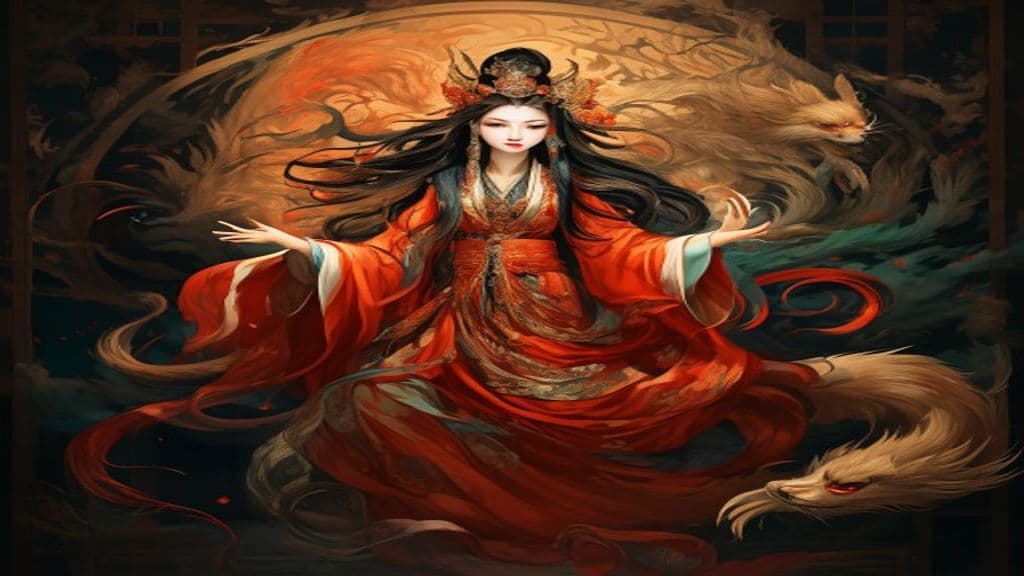
Daji
Daji (妲己, Dájǐ) is a figure in Chinese narrative and popular religious-cultural materials who blurs human and spirit categories: historically remembered as the favorite consort of King Di Xin of Shang but in later legend and fiction identified as a fox‑spirit (often a nine‑tailed or thousand‑year fox) that possessed or impersonated the woman and precipitated moral and political decline.
Amaterasu Ōmikami
Amaterasu Ōmikami is the sun deity and a principal kami in Shinto tradition, presented in classical Japanese sources as ruler of Takamagahara (the High Celestial Plain) and the mythic ancestress of the Imperial House through her grandson Ninigi. She is central to shrine cult at Ise and to ritual nomenclature and practice within institutional Shinto.
Amatsuhikone
Amatsuhikone (天津日子根命 / 天津彥根命) is a kami in Japanese mythology described as a son of the sun goddess Amaterasu. He functions primarily as a member of the heavenly genealogy used to legitimize clan lineages and is later identified as the shintai (sacred body) of Mount Mikami, where Mikami Shrine stands to venerate him.
Ame-no-Tajikarao
Ame-no-Tajikarao is a kami in Japanese Shinto myth notable for exceptional physical strength. He appears in the Ama-no-Iwato narrative as the deity who pulls Amaterasu from the heavenly rock cave, and he is venerated at numerous shrines across Japan with associations to physical power and local lineage claims.
Ame-no-hohi
Ame-no-hohi (also rendered Ame no Fuhi) is a male kami in Japanese mythology identified in sources as the second son of the sun goddess Amaterasu. He is principally attested as an ancestral figure: historical rulers of Izumo and the modern heads of Izumo Taisha and Izumo-taishakyo claim descent from him.
Futsu-no-mitama
A named sacred sword or charm in Japanese mythic and popular-culture references, presented in modern secondary sources as the weapon used by the kami Takemikazuchi to "quell the lands" and later associated in some summaries with transfer to Emperor Jimmu. In contemporary media it is frequently adapted as a named piece of equipment or charm that grants combat power or symbolic authority.
Kuraokami
Kuraokami is a classical Japanese kami associated with rain and snow, named in the Kojiki and Nihon Shoki genealogies as one of the deities produced from the violent aftermath of the fire-deity Kagu-tsuchi's death. The name combines kura (闇, "dark") with the uncommon logograph okami (龗/淤加美), a character and set of associations linking rain, supernatural power, and later commentator identifications with snake/dragon imagery.
Ōyamatsumi
Ōyamatsumi is a Japanese kami associated with mountains, islands, and the sea, presented in core creation genealogies as an elder divine ancestor whose children and descendants populate local and imperial mythic lineages. His principal cult site is Ōyamazumi Shrine on Ōmishima, and he appears prominently in Kojiki/Nihon Shoki narratives such as the Kamiumi birth-cycle and the Tenson Kōrin episode involving Ninigi.
Tama-nui-te-rā
Tama-nui-te-rā (also written Tamanuiterā) is the personification of the sun in Māori mythology, treated as a sun-being who appears in origin narratives and cultural explanations (not merely a celestial object). He is involved in stories such as Māui slowing the sun and is named as husband of Hine Raumati and father of Tānerore.
Tama-te-kapua
Māori trickster figure who arrived in New Zealand on the Arawa canoe, known for mischief and thievery. (Note: 1. Power tier: Primordial (Tama-te-kapua's actions have cosmic implications, such as disrupting ancestral traditions and causing significant conflict.) 2. Appearance: Should be mentioned that no physi)
Tama-te-rangi
Tama-te-rangi was a historical Māori rangatira (chieftain) of Ngāti Kahungunu, ancestor of Ngāi Tamaterangi, remembered in tribal whakapapa and history for his leadership in warfare, alliance-making, and the proverb-laden episode concerning the tohi ritual and ceremonial clothing.
Tamarereti
Tamarereti is a southern Māori (Ngāi Tahu / Kai Tahu) ancestral voyager and legendary navigator whose name is given to a southern-sky star-figure Te Waka o Tamarereti. His voyage narratives connect human voyaging, celestial navigation, and memories of southern phenomena such as floating ice and the Aurora Australis.
Tamatea Arikinui
Historical Māori figure, renowned ariki and leader who played a significant role in the settlement of New Zealand. (Note: - Power tier should be Primordial since historical Māori figures are considered to have had significant cosmic influence. - Abilities need clarification; while negotiation, strategic planning, diploma)
Community Record
- [1]Tamamo‑no‑Mae. Wikipedia: Tamamo‑no‑Maewiki
- [2]Tamamo No Mae AI R-18 (Archive collection). Archive collection referencing Tamamo‑no‑Mae materialsother
- [3]Yokai: Kitsune, Tamamo No Mae, Sesshoseki (Archive). Archive: yokai/kitsune/Tamamo‑no‑Mae/Sesshō‑seki materialsother
- [4]Wikidata: Tamamo‑no‑Mae. Wikidata entry for Tamamo‑no‑Maeother