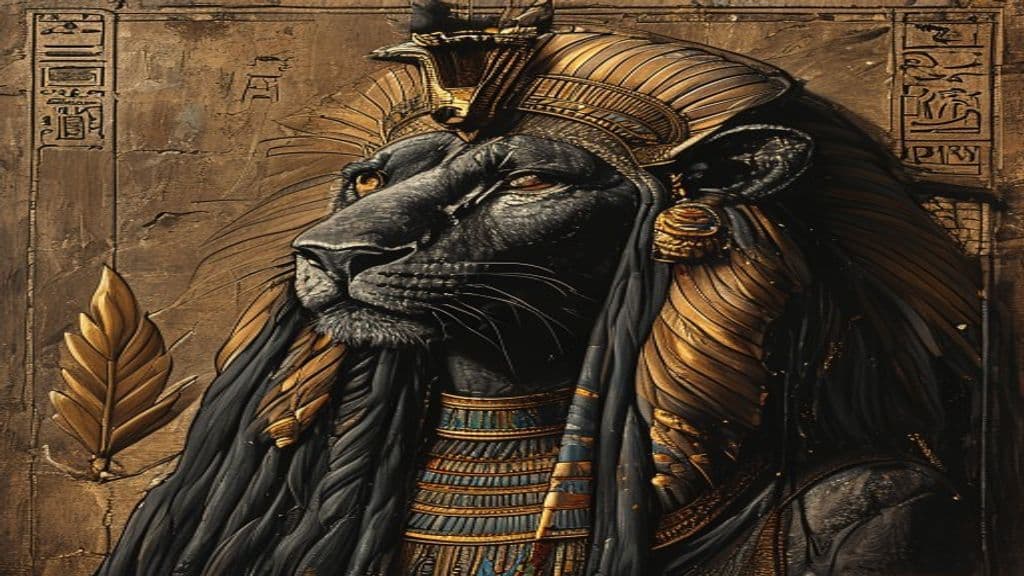
In Heliopolitan creation variants Tefnut is among the first generated beings produced by the creator god (Atum/Ra). In several mythic texts Atum creates the first pair Shu and Tefnut by an act of expectoration (spitting or sneezing); late writings even write her name with a mouth/spitting sign, and the Pyramid Texts record related creation language. These accounts place her at the cosmogonic first generation as the emanation of moisture from the creator.
Tefnut is frequently depicted as a lioness or as a woman with a lioness head; she may also appear fully anthropomorphic wearing a wig topped by a uraeus and often a solar disk. On some monuments she is shown with a diadem, a flame emblem (indicating a 'mistress of the flame' or Eye aspect), or a low flat headdress with sprouting plants in later periods. Her visage is sometimes paired symbolically with Shu in paired imagery; occasional texts and depictions describe rare variants such as lion‑headed serpent iconography.
Tefnut embodies moisture — moist air, dew, and rain — and is recorded in ritual and funerary texts as producing water in mythic terms (for example, passages in the Pyramid Texts). She also functions as one of the leonine Eye of Ra goddesses: a solar, fiery protectress who can display wrath and destructive force against enemies. Mythic narratives represent her as capable of fleeing in anger (a famous episode records her escape to Nubia) and returning only after being placated or honored (for instance, receiving the title 'honorable' from Thoth). In temple practice she is invoked in purification rites and in liturgies connected to royal well-being.
Weaknesses
- ritualplacation/honoring (e.g., conferral of title 'honorable' by Thoth)
Wards
- ritualpriestly purification (wabet rites invoking Tefnut)
- ritualliturgical invocation and honorifics (temple praise to maintain favor)
- ritualinvocation in royal liturgy (prayers for the pharaoh's health, e.g., at Karnak)
Nut
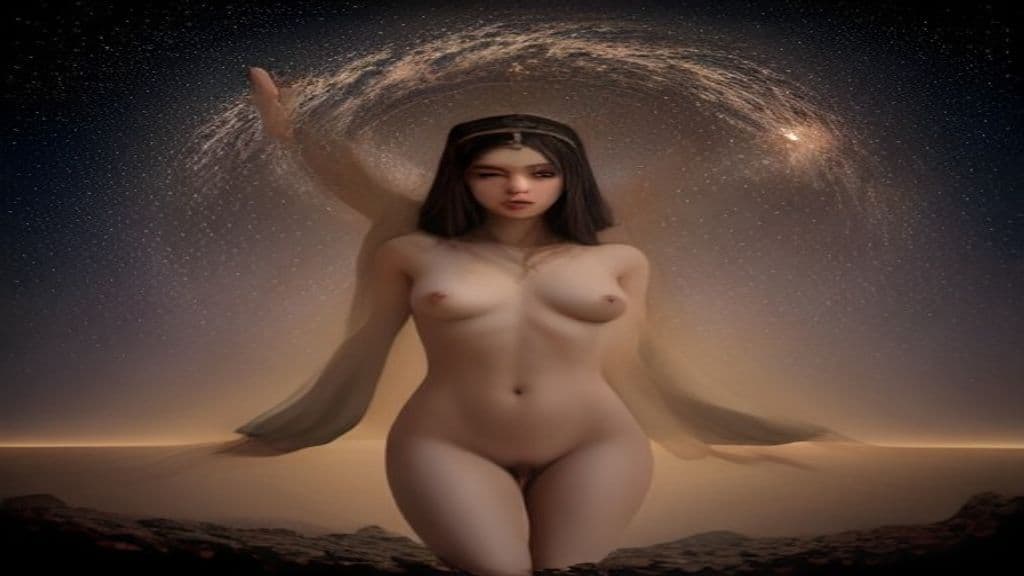
Nut (Ancient Egyptian: Nwt; Coptic: Ⲛⲉ) is the ancient Egyptian goddess who personifies the sky, stars, and cosmos and is associated with motherhood and astronomical symbolism. She is commonly depicted as a star-covered woman arched over the earth, forming the vault of heaven.

Geb
Geb (Egyptian gbb/Gebeb) is the ancient Egyptian personification of the Earth and a member of the Heliopolitan Ennead. He functions as the fertile, chthonic ground that produces crops and snakes, an early divine king who later judges in the divine tribunal, and the husband of the sky goddess Nut.

Shu
Shu is a primordial deity of the Heliopolitan Ennead in ancient Egyptian religion, commonly identified with the atmosphere, air, and the space that separates sky and earth. He is portrayed in sources as spouse and brother of the goddess Tefnut and is credited in summaries with roles including separating Nut (sky) from Geb (earth), generating wind, and associations with light, dryness/heat, peace, and lions.
Community Record
- [1]Tefnut — Wikipedia. Wikipedia entry 'Tefnut' (summary of iconography, cult, mythology, and etymology)wiki
- [2]Tefnut — Wikidata. Wikidata short description: 'deity of moisture, moist air, dew and rain in Ancient Egyptian religion.'wiki
- [3]Pyramid Texts and related creation texts (selected references). Selections and summaries of Egyptian creation texts noting Tefnut's origin by expectoration and statements about producing waters in Pyramid Texts.academic
- [4]GodElectric.org — Tefnut. Modern summary noting iconography and attributes (used as supporting modern synthesis in the provided corpus).other
- [5]Thelemapedia — Tefnut. Modern esoteric reference present in the supplied notes (cited for mention in corpus; not primary ancient source).other