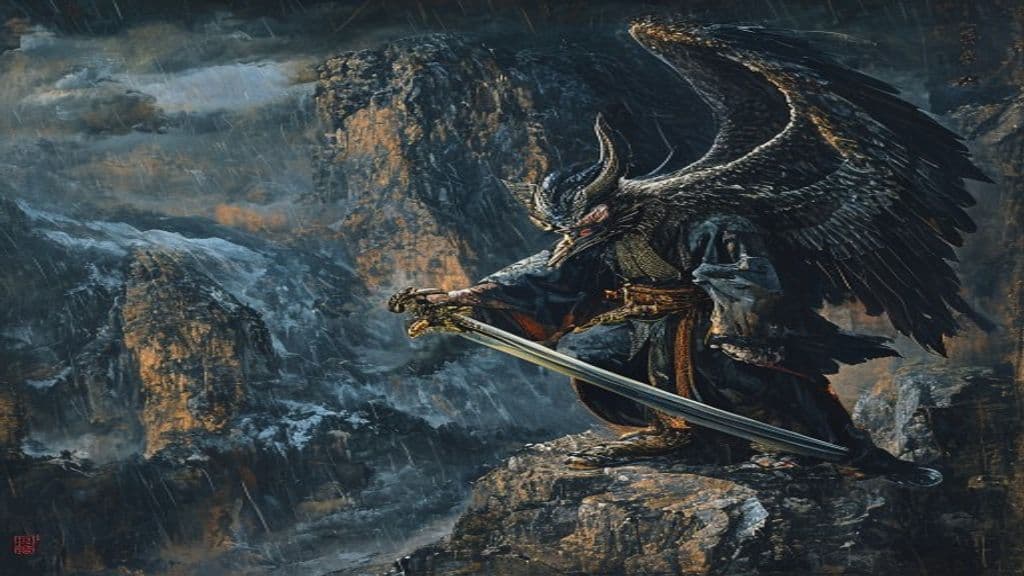
Tengu first appear in Japanese literature as omen-bearing comets or shooting stars associated with military disaster. Over time they became the spirits of particularly proud or wrathful individuals who, upon death, became mountain demons unable to attain enlightenment.
Yamabushi (mountain ascetics) who died without achieving enlightenment were especially prone to becoming Tengu. The greatest of them, the Dai-Tengu, taught swordsmanship to legendary heroes including Minamoto no Yoshitsune.
Two types: the Dai-Tengu (Great Tengu), appearing as a human figure with an enormous red nose, in the robes of a yamabushi monk, carrying a fan of feathers. The lesser Kotengu appears as a crow-headed humanoid with wings.
Flight. Command over winds. Masters of all fighting arts — many great swordsmen were said to have trained under them. Can create illusions and divine the future. Command over their mountain domain.
Weaknesses
- conditionCannot resist testing those who display arrogance
Wards
- ritualTengu plates (tengu-no-ma) placed in the home
- symbolA fan of feathers as offering at mountain shrines
Community Record
- [1]The Book of Yokai. Foster, Michael Dylan. 2015. The Book of Yokai. University of California Press.academic
- [2]Demons and the Devil in Classical Japanese Literature. Ury, Marian. 1988. The Tengu in Japanese Buddhist History. Asian Folklore Studies.academic