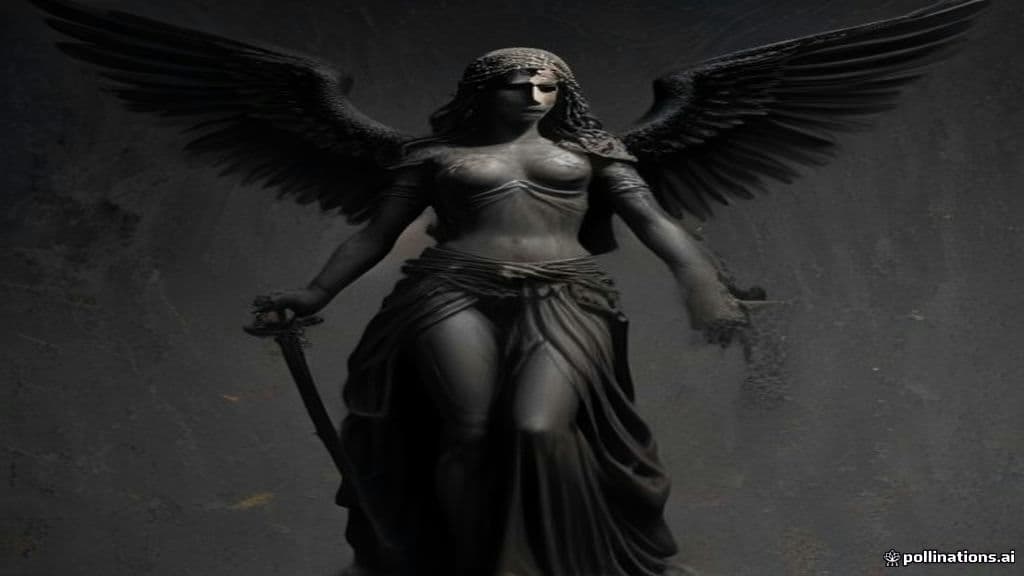
In Hesiod's Theogony Thanatos is generated as one of the offspring of Night (Nyx); he belongs to a suite of personified, chthonic forces that dwell apart from the sun. Theogonic genealogy places him among sisters and brothers such as Hypnos (Sleep), Moros (Doom), and Geras (Old Age), marking him as an elemental cosmic force personified within Greek mythic genealogy (Hesiod; summarized in classical sources and later compendia).
Iconography and literary descriptions vary by period and context. Common attributes include wings and an inverted (reversed) torch as a symbol of extinguished life; a sword sheathed at the belt is attested in dramatic description (Euripides' Alcestis). In some vase-paintings (e.g., scenes involving Sarpedon) he appears as a mature, bearded man; in later art and Roman sarcophagi he is often shown as a youthful, winged figure resembling Eros or an ephebe. Other variant portrayals in later traditions include a youth carrying a butterfly (linking to the soul/ψυχή) or a slumbering infant in Nyx's arms. (Sources: Hesiod; Homeric epic scenes; Euripides Alcestis; later art history summaries referenced in the supplied material.)
Thanatos functions as the divine agent who escorts or takes the dead: Homeric narrative shows Thanatos (with Hypnos) carrying the fallen Sarpedon from the battlefield; Hesiod depicts him as pitiless and holding fast those he seizes. He is sometimes associated with non-violent or 'peaceful' death as contrasted with the Keres (violent death), and in some strands Hermes can assume psychopomp duties that overlap or supersede Thanatos. Mythic narratives also record exceptional episodes where mortals or heroes reverse, delay, or resist his action — Sisyphus deceives and binds Thanatos, and Heracles wrestles him to free Alcestis — indicating Thanatos is powerful in function yet not absolutely invulnerable in story contexts. (Sources: Homeric passages, Hesiod Theogony, Euripides, and mythic narratives summarized in the supplied material.)
Weaknesses
- conditionexceptional mythic resistance (trickery or heroic force)
Wards
None recorded.

Hypnos
Hypnos is the ancient Greek personification and god of sleep who induces slumber in mortals and gods. Son of Night (Nyx) and twin brother of Thanatos (Death), he dwells in liminal places associated with dreams and the underworld and appears in myth as a gentle, intervening deity.

Keres
In Greek myth the Keres (Κῆρες; singular Κήρ) are night-born, malevolent death-spirits associated with violent death, pestilence, and the ravaging aspects of mortality; they are often portrayed as a swarm of blood‑thirsty female spirits that hover over battlefields and seize the dead and dying.
Community Record
- [1]Thanatos — Wikipedia. Thanatos. Wikipedia. (Provided excerpt summarizing classical sources and art-historical descriptions.)wiki
- [2]Hesiod, Theogony (summary quotation). Hesiod, Theogony — quoted and summarized in the supplied material: description of Thanatos among the children of Night and the passage about his 'heart of iron' and pitiless spirit.literary
- [3]Homeric account (Sarpedon; Hypnos and Thanatos carrying the dead). Homer (Iliad) — the Homeric scene in which Hypnos and Thanatos carry Sarpedon's body is discussed in the supplied material.literary
- [4]Euripides, Alcestis (description). Euripides' Alcestis (438 BCE) — Thanatos described as dressed in black and carrying a sword in the provided excerpt.literary
- [5]Art-historical summaries (Roman sarcophagi; vase imagery). Summaries in the supplied material discussing vase imagery (e.g., Euphronios Krater) and later Roman sarcophagi representations of Thanatos as a winged youth or Eros-like figure.other
- [6]Wikidata: Thanatos. Wikidata entry for Thanatos (included in the provided source list; contains limited structured data).other