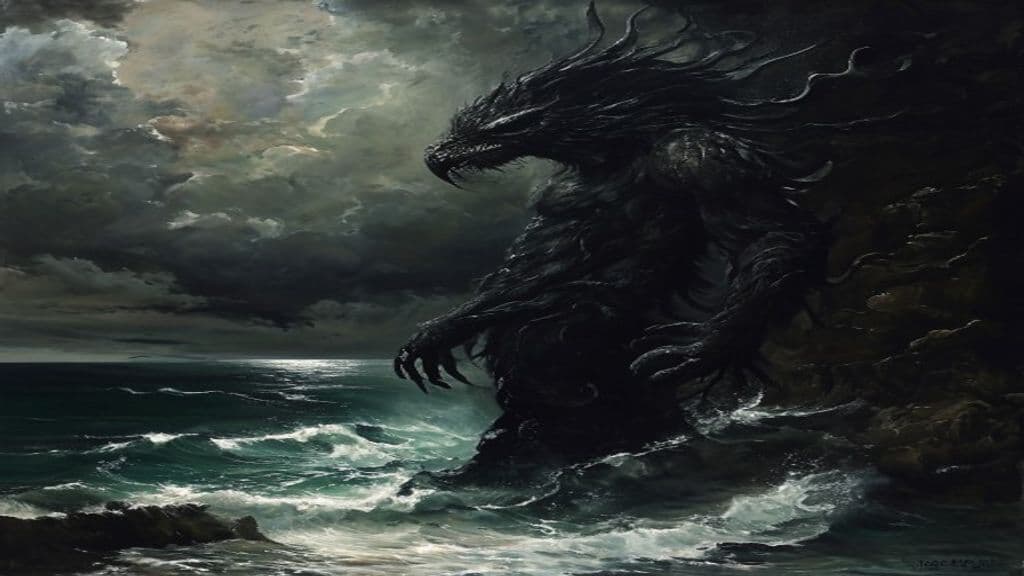
The Tākitimu is said to have played a crucial role in the great Māori migration from Hawaiki to New Zealand, carrying ancestral connections and genealogy between Pacific cultures.
There is no physical description of the Tākitimu provided in the source material, as it is a cultural and historical concept rather than a supernatural being.
The Tākitimu's 'abilities' are related to its role in facilitating the migration of Polynesian people to New Zealand; however, there is no mention of any supernatural powers or behaviors attributed to it.
Weaknesses
- conditionLoss or erasure of ancestral ties
- conditionCultural appropriation
- conditionHistorical forgetfulness
Wards
- symbolReverence for ancestral connections
- ritualRespectful treatment of historical artifacts and cultural heritage
Aitu (Māori)
Malevolent spirits in Māori tradition, often taking the form of plants or animals and associated with trouble-making and mischief. (Note: - Power tier should be Greater, not Lesser (Aitu being lesser gods in some cultures, but also associated with deity-level abilities) - Abilities: Add detail about their role as patrons of specific vil)
Aotearoa (Canoe)
An ancestral vessel in Māori tradition, associated with the migration and settlement of New Zealand. (Note: 1. Power tier should be Ancient, not Primordial. 2. Remove "Historical significance" from sensory cues as it is a general statement rather than a specific cue. 3. Add "Its presence is often associated)
Atea
Atea is a primordial creator-associated being in multiple Polynesian traditions (Marquesas, Tuamotu, and Māori) closely associated with light and the ordering of the cosmos. Variants depict Atea as a self-originating giver of light, a progenitor who fathers gods and humans, or as the cosmic universe that is sex-differentiated into Heaven and Earth in one reported account.
Atua (Māori Deity)
In Māori mythology, Atua are supernatural beings believed to have created the world and all living things. They are considered rulers of the spiritual realm with powers over nature, fertility, and human destiny. (Note: 1. Power tier: Based on the abilities described (controlling nature, fertility, and human destiny), Atua likely belong to the Primordial power tier, not Greater. 2. Weaknesses: Add a specific weakness)
Edward Tregear
Historical figure, not considered a supernatural entity in Māori tradition. (Note: * The Power tier should be "Primordial" as Edward Tregear is a historical figure, implying no supernatural abilities or powers. * The Appearance section should indicate that there is no physical descr)
Hikairo
Hikairo is attested in the provided sources as a personal and group name within Māori contexts (used for individuals and iwi/hapū identifiers such as Ngāti Hikairo), rather than as a documented supernatural being. References show historical and contemporary usages tied to leadership, ceremonial roles, and local guardianship projects.
Hina
Hina is an onomastic category in Polynesian traditions naming a number of related female divine figures—often sovereign goddesses or queens—who are variously associated with domains such as the moon and, in specific local tales, natural forces like rain or fire. Rather than a single pan‑Polynesian personage, Hina functions as a flexible role filled by distinct local figures (e.g., Sina, Hanaiakamalama).
Hineahuone
First woman created by Tāne from clay, becomes his partner and gives birth to Hinetītama. (Note: 1. The source material only describes Hineahuone as being "made" or "created", but does not explicitly state that she was crafted from clay from the earth, implying primordial power. 2. The descriptio)
Hākuturi
The hākuturi (Te Tini o Hakuturi) are a multitudinous host of Māori forest guardian-spirits, often described as birdlike and associated with Tāne. They enforce proper ritual conduct toward trees and can rebuke or repair human transgressions against the forest, as in the Rātā narrative.
Kahuitara
Kahuitara is a name attested in the provided sources with multiple referents in Māori/Polynesian contexts: principally a voyaging waka (canoe) associated with migrations to New Zealand and a place-name (Kahuitara Point) on Pitt Island noted for the first populated sunrise of the new year; a single tertiary source also lists Kahuitara as a tutelary goddess of certain seabirds. The sources do not provide a unified supernatural profile for Kahuitara.
Kahumatamomoe
A revered Māori rangatira and ancestral figure associated with the upper North Island of New Zealand. (Note: 1. Power tier should be Primordial, as there is no indication of supernatural powers beyond those of a human leader. 2. Appearance should state "No physical description available" instead of making an)
Kinilau
In Hawaiian mythology, Kinilau is a figure described as the son of Menehune and Luanu'u, with significance related to ancestry. (Note: * Power tier: Primordial (Kinilau being a significant figure in Hawaiian genealogy and having multiple sons suggests he is at a higher power tier) * Sensory cues, wards, weaknesses: Not mentioned in s)
Community Record
- [1]Wikipedia: Tākitimu. Referenced in Wikipedia articlewiki