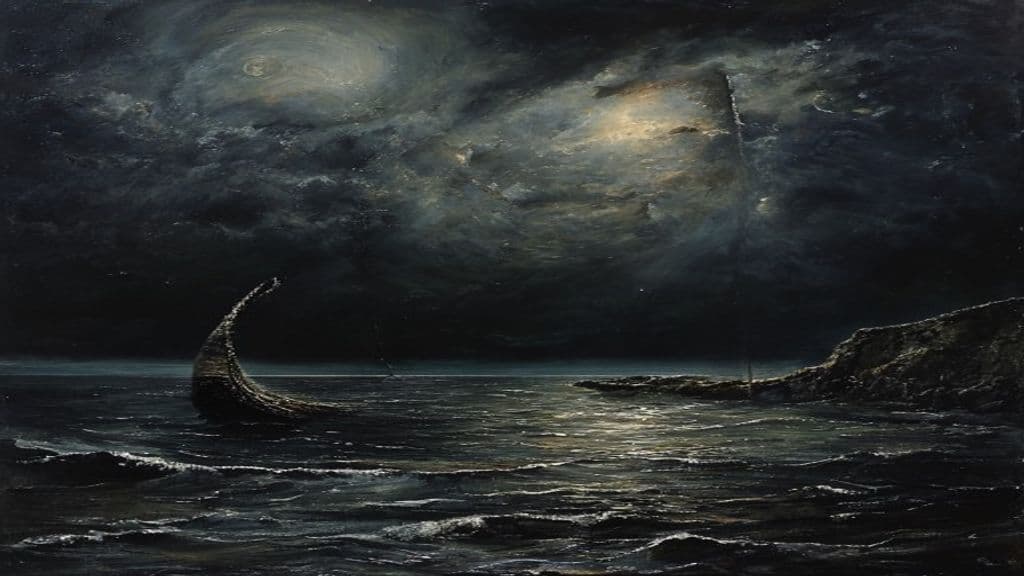
In Māori tradition, Tūnui-ā-rangi was a great ocean-going, voyaging canoe that played a significant role in the migrations that settled New Zealand. Its name is composed of two Māori words: 'tūnui', which means 'cloud' or 'mist', and 'ā-rangi', which refers to the sky or heavens.
There is no physical description of Tūnui-ā-rangi as a supernatural entity in the source material. It is described as a great ocean-going, voyaging canoe used by the Ngāi Tāhuhu iwi.
Its use in migrations that settled New Zealand may be seen as a significant cultural and historical achievement. However, its use is often mythologized as having a supernatural or divine aspect, reflecting its importance in Māori culture and history.
Weaknesses
- loss|ritual failure|symbol desecration|otherLoss or disruption of whakapapa (genealogy)
Wards
- karakia|mātauranga|Māori incantations|otherPerforming rituals or karakia to appease Tūnui-ā-rangi or protect it from harm during voyages
Hei-Tiki (Māori Pendant)
A treasured Māori pendant and cultural artifact, symbolizing craftsmanship and family heritage. (Note: 1. Power tier should be Ancient, as Primordial implies a being of cosmic power, which does not align with the description of Hei-tiki as an ornamental pendant. 2. Abilities and sensory cues are missin)
Hoturoa
In Māori tradition, Hoturoa is a founding ancestor and leader of the Tainui canoe during its migration to New Zealand around 1400. He holds significant cultural and spiritual importance as a figure of historical and genealogical significance. (Note: - Power tier should be Primordial, as Hoturoa's historical and cultural significance far exceeds regional or local spirit levels. - Origin story: Add that his origins are unclear and not explicitly st)
Kehua (Māori Ghosts and Spirits)
In Māori culture, kehua are ghosts or spirits that appear as apparitions of long deceased family members to warn of upcoming danger. They hold a sacred status, implying tapu. (Note: 1. The draft states "Kehua are considered to be apparitions of long deceased family members," but Source 1 mentions it as "long deceased family members may appear." This implies Kehua could also refer)
Kurahaupō
A mythological canoe in Māori tradition that played a crucial role in the migration of people to New Zealand. (Note: * Power tier: Greater is questionable; while it's a significant canoe, there's no indication of "deity-level" abilities or control over cosmic forces. * Appearance: missing information * Abilities: sh)
Mahangaatuamatua
A sacred canoe in Māori tradition, associated with spiritual significance and ceremonial importance. (Note: * Power tier: Not specified as Greater; instead, it's implied to be Primordial due to its association with creation/mythological events (first canoe to land in New Zealand). * Appearance: Remove state)
Matariki
In Māori culture, Matariki is the Pleiades star cluster marking the beginning of the new year in the lunar calendar. (Note: * Power tier: Primordial (since it's a celestial event, not a deity-level entity) * Summary: Inaccurate (Matariki is a celebration marking the beginning of the new year, not just the Pleiades star clu)
Mau rākau (Māori martial art)
Mau rākau is a traditional Māori martial art emphasizing physical and spiritual discipline, practiced by warriors in New Zealand. (Note: * Power tier should be Primordial, as the article states it was practiced by warriors in New Zealand, which implies a high level of cultural and spiritual significance. * The ability to wield traditio)
Motutaiko Island
In Māori tradition, Motutaiko Island is a culturally significant island within Lake Taupō, associated with the black petrel bird and reflecting the Māori worldview's emphasis on connection between natural features and human society. (Note: - Power tier: Minor Spirit (given its local significance and limited abilities) - Weaknesses: drought not mentioned in source material - Wards and weaknesses inconsistent with the provided information)
Takatāpui
In Māori tradition, Takatāpui is an identifier for individuals who identify with non-heterosexual and/or non-cisgender characteristics. (Note: 1. Power tier should be revised or removed, as there is no indication in the source material that Takatāpui individuals possess supernatural abilities. 2. Appearance should be revised to "No physical )
Te Paepae-ki-Rarotonga
Significant ocean-going canoe used in the settlement of New Zealand, reflecting Māori ancestors' maritime traditions and skills. (Note: 1. The source material does not support a Primordial power tier, as it describes a significant ocean-going canoe used in human migrations, not a cosmic entity. 2. Appearance should be "No description )
Tohunga (Māori tradition)
A Tohunga is a respected expert and leader in Māori society, possessing specialized knowledge or skills in various areas. (Note: * Power tier should be Ancient or at least higher than Greater, considering their association with spiritual leadership, healing, and advising on various levels of Māori society. * Summary is partiall)
Ōkoki
A large ocean-going canoe used by Māori ancestors for migration and settlement, playing a significant role in early New Zealand history. (Note: - Power tier: Greater (regional power) would be more fitting given its significant historical impact on New Zealand settlement. - Abilities: None, but its role in facilitating travel and transportatio)
Community Record
- [1]Tūnui-ā-rangi. Wikipedia: A free online encyclopediawiki