
Sources identify the tokoloshe within Nguni and related Bantu mythologies rather than providing a single creation narrative. The name and concept are attested in Xhosa and other Nguni-language contexts (e.g., the Xhosa form uthikoloshe) and the figure appears across Southern African oral and popular traditions as a locally recognized class of small spirit-being. The supplied materials do not record a uniform origin myth or a literal etymological gloss.
Accounts commonly describe the tokoloshe as diminutive or dwarf-like, often hairy and sometimes characterized as bestial in some retellings. Descriptions vary between sources: some portray it in visible, physical terms (short and hairy), while others emphasize its capacity for invisibility. The supplied sources do not give standardized clothing, precise anthropometric details, or a single fixed appearance.
Reported abilities range from mischievous behavior—used to frighten children—to causing sickness and, in some accounts, death. It is frequently described as a water spirit in Nguni mythology in some sources and is said to become invisible by drinking water or swallowing a stone. Many accounts also emphasize that tokoloshes may be summoned, controlled, or deployed by malevolent humans to harm others, placing agency both with the spirit and with those who invoke it.
Weaknesses
- conditionraising beds off the ground
- otherbanishment by spiritual specialists (traditional healers/sangomas or pastors with an apostolic calling)
Wards
- conditionraising beds off the ground
- ritualbanishment by sangoma (traditional healer)
- ritualbanishment by pastors with an apostolic calling
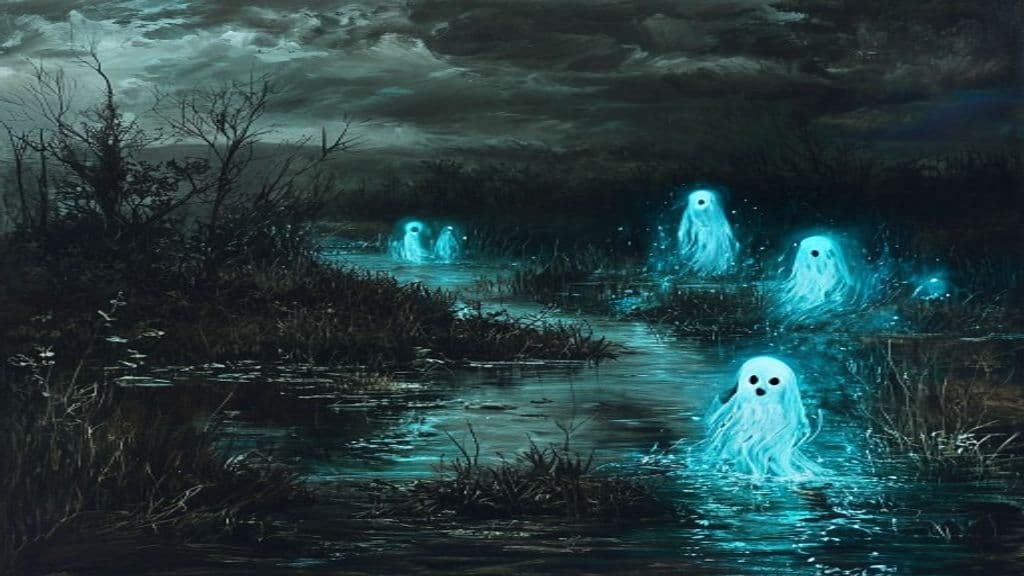
Will-o'-the-Wisp
A wandering light seen over marshy ground at night, leading travellers astray into bogs and fens. Possibly a spirit, possibly the soul of the unbaptised dead, possibly the devil himself.

Bogeyman
A folkloric, non‑canonical monster figure invoked across cultures as a disciplinary device to frighten children into compliant behaviour; presented in sources as a flexible category rather than a single, systematized being and often used figuratively as a personification of terror.
Impundulu
The Impundulu, commonly called the "lightning bird," is a legendary avian creature from Zulu and wider Nguni folklore. Sources describe it as associated with lightning and as a formidable, fear‑inducing supernatural being that appears in modern retellings and popular culture.
Inkanyamba
A serpent-like water-and-storm spirit in southern African (principally Zulu and Xhosa) oral tradition tied to particular deep pools, rivers, and waterfalls. Folklore associates the inkanyamba with tornadoes, seasonal storms, rain and fertility, and with occasional predation on people and animals.
Mamlambo
Mamlambo is a southern African / Zulu river-deity or water spirit figure described in modern sources as a large, hybrid aquatic monster associated both with deadly attacks attributed by villagers and with themes of seductive wealth similar to Mami Wata. High-profile press reports from 1997 linked mamlambo to multiple deaths at the Mzintlava River near Mount Ayliff in the Eastern Cape.
Tlesimenes
Tlesimenes is a poorly attested mythic figure recorded in a modern database as related to the Greek figure Parthenopaeus. No primary literary or ritual material for Tlesimenes is provided in the available sources; any identification with the class of nymphs is tentative and inferred from database placement and general descriptions of nymphs in secondary reference material.
Tláloc
Tláloc (Classical Nahuatl: Tláloc) is the Aztec god of rain, water, and earthly fertility, venerated as a giver of life and sustenance and feared for his power over destructive weather such as hail, thunder, and lightning. He is closely associated with mountaintop shrines (notably Cerro Tláloc), caves, springs, and ritual implements and was a central focus of offerings and impersonatory ritual in central Mexican religious practice.
Tobadzischini
Navajo mythical hero and deity associated with war, agriculture, and darkness. (Note: - Power tier: Should be Primordial (due to being associated with cosmic forces and having god-like abilities) - Summary: Needs to include that he has attributes of both a hero and a deity - Abilities:)
Tohunga (Māori tradition)
A Tohunga is a respected expert and leader in Māori society, possessing specialized knowledge or skills in various areas. (Note: * Power tier should be Ancient or at least higher than Greater, considering their association with spiritual leadership, healing, and advising on various levels of Māori society. * Summary is partiall)
Toi-te-huatahi
Toi-te-huatahi (also Toi, Toi-kai-rākau) is a legendary Māori tūpuna (ancestor) associated with iwi of the Bay of Plenty and surrounding districts. Traditions link him to settlement, place-names (e.g., Te Moana-a-Toi), and genealogies (Te Tini-o-Toi), and recount episodes such as the dog story involving Uenuku and the planting of a karaka grove at Ōtara.
Tongu do dia toinges mo thúath
An abstract concept representing the shared deity of a community, symbolizing communal loyalty and allegiance in early Irish society. (Note: 1. Power tier should be "Minor Spirit" as it is an abstract concept that doesn't possess physical presence or divine abilities. 2. Ability description should emphasize its role in emphasizing commitme)
Tootega
Tootega is presented in the available sources as a wisened, elderly female spirit or goddess associated with an island dwelling and with supernatural relations to kayaks, umiaks and the sea; she is described as able to 'dispense with kayaks, umiaks and other craft' and to walk on water.
Tooth Fairy
A folkloric household figure in Western and Western-influenced cultures associated with the loss of children's deciduous teeth; children place a removed baby tooth in a specified place at night and the figure visits while the child sleeps to take the tooth and leave a small payment or gift. The tradition functions as a comforting, pedagogic domestic myth rather than part of a wider supernatural cosmology.
Torngarsuk
Torngarsuk is a prominent supernatural being in Greenlandic and northeastern Canadian Inuit traditions, described as leader of a class of protective spirits called the Tornat and associated with the sea, death, and the underworld. He is invoked by angakkuit (shamans/medicine-men) and by fishermen as a source of good fortune and healing and is traditionally said to be visible only to ritual specialists.
Community Record
- [1]Tokoloshe (Tokolosh) - Wikipedia. Wikipedia contributors. "Tokoloshe." Wikipedia, The Free Encyclopedia.wiki
- [2]South African Myths and Legends - FunkyMunky. FunkyMunky. "South African Myths and Legends."folk
- [3]Tokoloshe : The Water Spirit - Mythlok. Mythlok. "Tokoloshe: The Water Spirit."folk
- [4]TOKOLOSHE TERROR - Pelicanist (Magonia Review blog). Pelicanist. "Tokoloshe Terror." MAGONIA REVIEW blog entry.other
- [5]DSAE entry: tokoloshe. Dictionary of Southern African English (DSAE). Entry: tokoloshe.other
- [6]Soul Safari blog references. Soul Safari blog. "The Bleached Zulu pt 2 - OST ‘Tokoloshe’ Sam Sklair."other
- [7]Bogeymen Around the World - AFAR. AFAR. "13 of the Freakiest Bogeymen From Around the World."other
- [8]Cryptomundo » African Cryptotourism. Cryptomundo. "African Cryptotourism."other
- [9]Zulu Thought-Patterns and Symbolism. Berglund, Axel-Ivar. 1976. Zulu Thought-Patterns and Symbolism. C. Hurst.academic
- [10]African Mythology. Lynch, Patricia Ann. 2010. African Mythology A to Z. Chelsea House.folk
- [11]Tokoloshis Creature (blog label/index). Blog index label: "Tokoloshis Creature" (DragonsFaeriesElves&theUnseen blog listing).folk
- [12]Blog fragment mentioning witchcraft in Zimbabwe (contextual item). Blog fragment: "Witchcraft legalised in Zimbabwe-... in Zimbabwe where witchcraft and wizardry was ban for about 107years has just been legal again..." (excerpt insufficient to tie directly to tokoloshe practices)folk
- [13]GHott – CMash Reads (contextual item). Related blog pages listed among source material; no tokoloshe-specific content in supplied excerpt.folk
- [14]VolcanoCafé comment page (contextual link present in dataset). Listed among supplied URLs; no tokoloshe-specific content in the provided excerpt.other