No single, coherent mythic creation story for Ukko survives in the provided runic-material; scholarly accounts reconstruct competing origins. Some scholars see Ukko as developing from earlier Finnic sky figures such as Ilmari/Ilmarinen, while others emphasize later influence or parallel formation via contact with Indo-European/Scandinavian thunder-gods (notably Thor) and Baltic or Slavic thunder-terms. Antiquarian and 19th-century national-romantic authors (e.g., in Kalevala reception) sometimes elevated Ukko toward a supreme protector role, but these later reinterpretations are distinct from the variable local attestations recorded in folk sources.
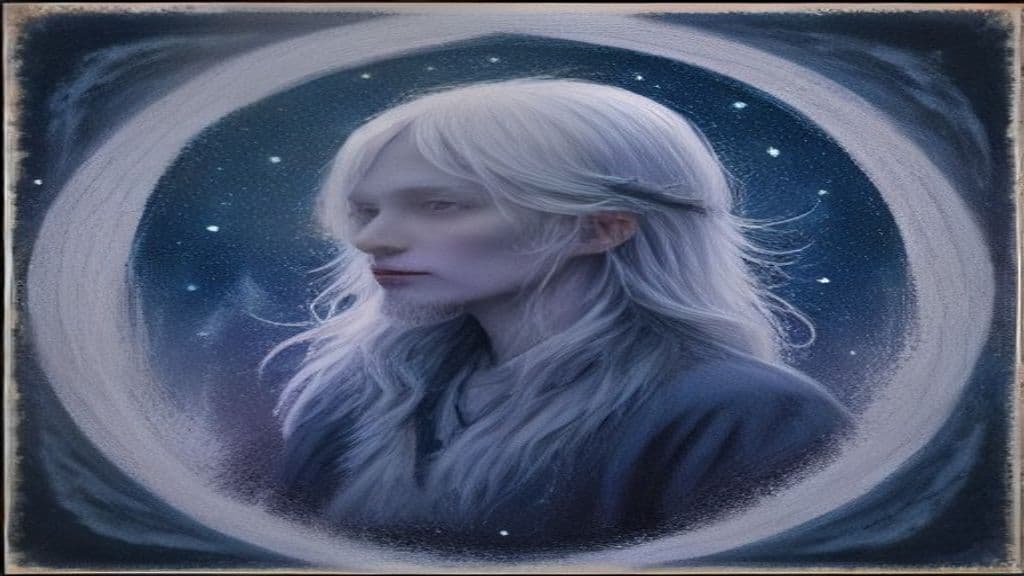
Primary sources do not provide a fixed anthropomorphic portrait. Ukko is consistently located in the high sky and associated with storm-weapon imagery in comparative and material-culture discussions (motifs such as Ukonvasara/Ukonkirves — 'Ukko's hammer/axe' — appear in archaeological and folkloric contexts). However, explicit facial, clothing, or consistent iconographic descriptions are not preserved in the cited runic texts; weapon imagery is treated in sources as a comparative motif rather than a uniform pictorial tradition.
According to the sources, Ukko produces thunder and rain that fertilize fields and are essential to agrarian prosperity; his thunder and 'refreshing rain' are central to crop growth. He was also petitioned in many human affairs (labour, weddings, healing the sick, pasturing and slaughtering cattle, hunting, fishing, and legal disputes), indicating that in practice communities appealed to him as a powerful intercessor. Comparative scholarship notes similarities with Scandinavian thunder deities (e.g., wielding a club/hammer/axe and rulership over storms), and some later writers and collectors portrayed him with broader 'High God' attributes, though this elevated scope is debated among scholars.
Weaknesses
- otherNo specific weaknesses attested in sources
Wards
- mantraEuphemistic avoidance / alternative naming (Pitkänen, Isäinen, Isoinen, ylkäinen, etc.)
- ritualRitual supplication (Vakkajuhlat) to secure favour rather than to repel
Ahtola (Kalevala) (tradition)
In the supplied sources, no supernatural entity named "Ahtola" is attested in the Kalevala or other Finnish mythic texts. The name Ahtola appears in the source set only as a modern Finnish surname and a place-name; the closely related mythic figure attested in the material is Ahti/Ahto, a Finnish water god associated with the sea.
Aitia (Baltic Finnic)
Primordial figure representing the creative power of the universe, associated with the creation of the world and emergence of life from chaos. (Note: 1. Power tier: Primordial is plausible, but it would be more accurate to indicate "Primordial" as a default power tier without specifying, since there's no further information about its abilities or b)
Gunungsin (War Gods)
Korean deities associated with war and conflict, possibly connected to the Jakjaegeon myth. (Note: 1. Power tier should be Primordial only if it's supported by source material; based on the provided sources, the power level is unspecified. 2. Abilities are unknown or unspecified in source material,)
Haltija
In Finnish mythology, a Haltija is a supernatural guardian that protects specific locations and species, embodying a spirit of preservation within the natural world. (Note: * Power tier: should be "Lesser" instead of "Greater", as Haltijas are described as solitary creatures protecting specific places or species. * Abilities: added information about Haltijas being able t)
Hiiden Hirvi
Mythical moose from Finnish tradition that must be hunted by skiing. (Note: - Power tier: Greater (given its classification as a mythical entity that requires special skills to hunt, it's likely more powerful than a Minor Spirit) - Weaknesses: specify what the source material)
Hwanung
Divine being in Korean tradition, son of Hwanin, Lord of Heaven. Associated with human development and progress. (Note: - Power tier: Primordial may be too high given the description of abilities (institution of laws, teaching arts and medicine) which more closely align with a Greater (deity-level, but not cosmic) or A)
Iku-Turso
In Finnish mythology, Iku-Turso is a malevolent sea monster described in the Kalevala. (Note: - The power tier should be Primordial, given its classification as a "giant" and its association with the sea. - Add sensory cues: The source mentions that it's a malevolent entity, so potential senso)
Kalevi
Finnish giant and heroic figure, often associated with pre-human or archaic layer of existence. (Note: * Power tier is likely Greater (powerful regional) rather than Primordial due to Kalevi being a heroic figure that appears in runic songs. * Sensory cues are missing and should be included based on th)
Kokko
Kokko is an item name that appears in discussions of Finnish mythology but is not described in the single provided source. The available material situates Kokko within the broader corpus of Finnish pagan folklore without providing specific details about its nature, appearance, or associated practices.
Kuippana (Tapio)
Kuippana, also attested as Tapio or Hippa, is a Finnish forest spirit attested in Finnish tradition as the named sovereign or 'King of the Forest.' Hunters in the tradition addressed him ritually before hunts; he is represented as bodily merged with forest vegetation.
Kyöpelinvuori
A mythological location in Finnish culture where dead virgins gather after their death, marking the start of their afterlife. (Note: - Power tier: Lower to Greater (not Primordial), as it is a mythological location associated with the afterlife, but not a cosmic entity. - Abilities: Clarify that the article implies Kyöpelinvuori is)
Kõu
Kõu is a name referenced in the context of Estonian mythic nomenclature in the supplied materials, but the provided sources do not record any substantive mythology, description, or practices connected to it. The surviving documentation of Estonian pre‑Christian belief is fragmentary and was systematically recorded only from the 19th century, which limits what can be asserted from the given dataset.
Community Record
- [1]Ukko — Wikipedia. Wikipedia article 'Ukko' (accessed via supplied notes)wiki
- [2]Wikidata: Ukko (Q11899381). Wikidata entry Q11899381 (noted in supplied materials)other
- [3]Ukonvasara / Ukonkirves (Hammer / Axe of Ukko) (Thingiverse archive item). Archive item referencing Ukonvasara/Ukonkirves material-culture motif (supplied)other
- [4]