
The yazatas arise within the Avestan cosmological and ritual vocabulary as entities 'worthy of worship' (from the root yaz- 'to worship, to honor'). In Zoroastrian theology they are the good, beneficent powers under Ahura Mazda; some of the great divine emanations (Amesha Spentas) overlap with or are identified as yazatas. The category functions across hymn, ritual and calendar: individual yazatas are invoked in Avesta hymns (Yashts) and were fixed as patrons in a day-name calendar that placed each day under a particular yazata's protection.
Scriptural and later traditional materials generally present some yazatas with anthropomorphic attributes in hymnic and exegetical contexts: certain figures are described as bearing emblems (e.g., a mace) or crowns, keeping vigil against demons, or otherwise shown in dignified investiture imagery (for example, Mithra in Sassanian reliefs interpreted as a yazata). These descriptions pertain to particular named yazatas or artistic depictions rather than asserting a single uniform appearance for the class as a whole.
Yazatas function as beneficent divine powers with roles tied to elements of creation, moral order, ritual life and cosmology. Specific yazatas are associated with particular domains: Aredvi Sura Anahita with waters (in later tradition described also as a world-encircling river), Tishtrya and Verethragna figure in rain and victory narratives, and Sraosha, Mithra and Rashnu are named in tradition as guardians involved in the Chinvat bridge judgment. They are invoked in hymns, honored in ritual, and serve as patrons for days of the month; beyond these attributions, later summaries sometimes ascribe further element-linked or physical abilities (e.g., vegetation guardianship, flight) to some yazatas, but such claims reflect interpretive expansions rather than consistent statements in the earliest Avesta.
Weaknesses
None recorded.
Wards
- ritualinvocation and hymnic praise (Yashts)
- ritualday-name dedication (calendar observance)

Apsara
Celestial dancers and water nymphs of Hindu cosmology — beautiful semi-divine beings who dance at the court of Indra and, by his command, descend to earth to distract sages from excessive asceticism.
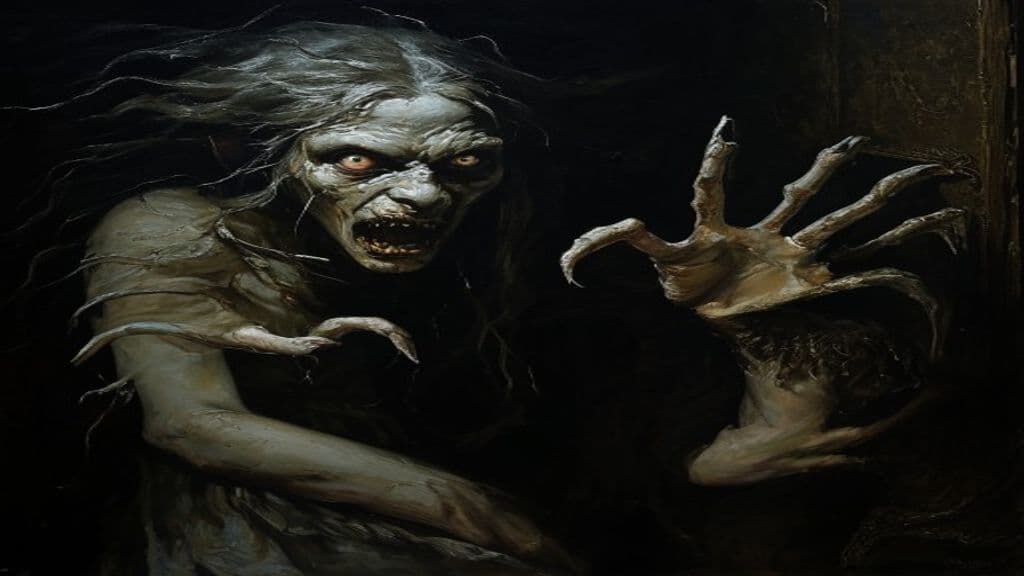
Mormo
A Greek child-eating bogeywoman used to frighten children into obedience, sometimes depicted as a shape-shifting female phantom who bit naughty children.
Community Record
- [1]Yazata - Wikipedia. Wikipedia, 'Yazata'wiki
- [2]KHORDA AVESTA: YASHTS (Mithra yasht excerpt). Avesta: Khorda Avesta, Yashts (Mithra)literary
- [3]The Religious Ceremonies and Customs of the Parsees (excerpt). J. J. Modi, The Religious Ceremonies and Customs of the Parsees, Part 5 (excerpt)folk
- [4]Taq-e-Bustan investiture relief description (Mithra as yazata). Taq-e-Bustan relief discussion (interpretation of Mithra in investiture imagery)other