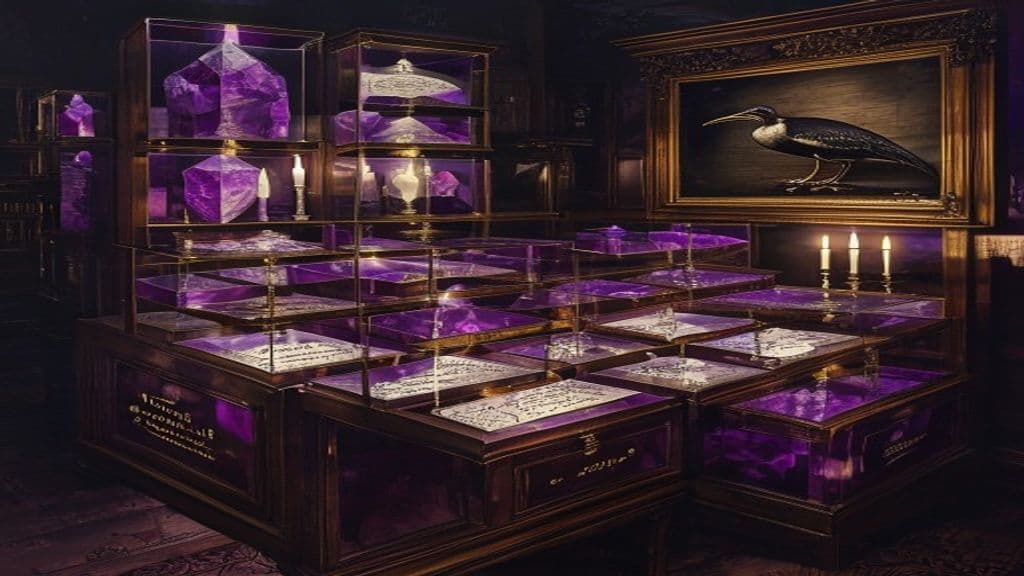
The Delhi Purple Sapphire is actually a large amethyst — the mislabelling of purple stones as sapphires was common in 19th-century Europe. It was looted from the Temple of Indra in Cawnpore (Kanpur) during or shortly after the Indian Uprising of 1857 by a Bengal cavalry officer, Colonel W. Ferris.
Ferris fell into financial ruin and chronic illness following its acquisition. He passed it to his son, who suffered the same fate and eventually gave it away. The stone changed hands multiple times; each owner attached a handwritten note documenting their misfortune. One owner, a scientist named Edward Heron-Allen, was so disturbed by his experiences that he threw the stone into the Regent's Canal — only for it to be dredged up and returned to him by a dealer who bought it from a dredger. He then locked it in seven boxes, surrounded it with a charm against evil, and gave it to the Natural History Museum in 1904 with a letter begging that it not be opened for 33 years.
The Natural History Museum still holds the stone. Heron-Allen's letter, sealed in the outermost box, survives in the museum's archives and has been published. It reads in part: 'Whoever shall then open it, shall first read out this warning, and then do as he pleases with the jewel. My advice to him or her is to cast it into the sea.'
Community Record
- [1]Delhi Purple Sapphire. Wikipedia, citing Natural History Museum records.wiki
- [2]The Jewel of Seven Stars — NHM collection. Natural History Museum, London. Official collection page.other