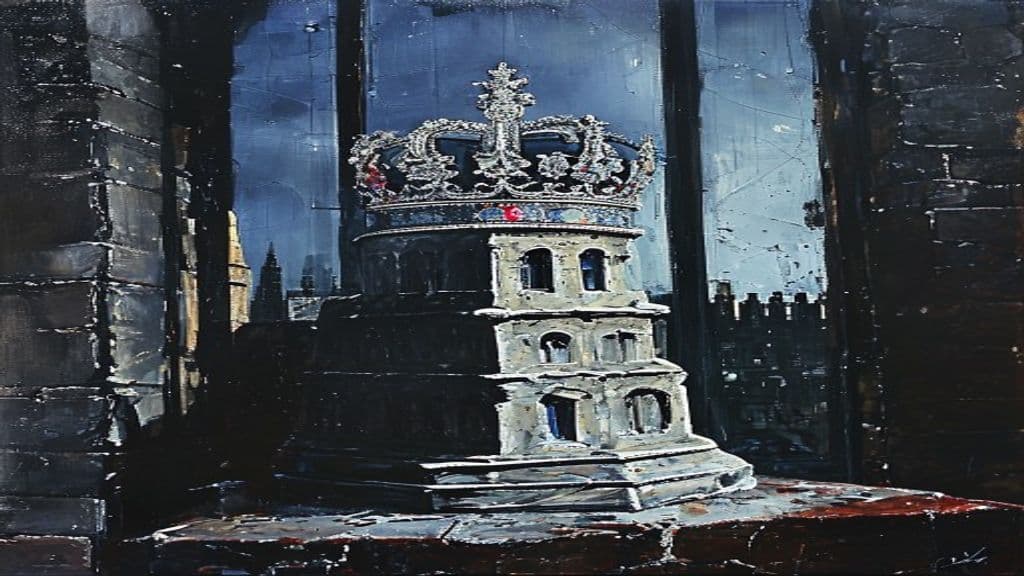
The Koh-i-Noor ('Mountain of Light') is one of the largest cut diamonds in the world, currently 105.6 carats. Its earliest documented mention is in the memoirs of Babur (the Baburnama, 1526), who records it as a prize from the Lodi dynasty's treasury after the First Battle of Panipat. The stone is thought to have been mined in the Golconda region centuries earlier.
The diamond passed through the Mughal emperors, was seized by the Persian conqueror Nadir Shah in 1739, returned to India via Afghan rulers, and eventually came to the Sikh Maharaja Ranjit Singh. After the British annexation of the Punjab in 1849 following the Second Anglo-Sikh War, the stone was transferred to the East India Company and subsequently presented to Queen Victoria.
The curse tradition — that the diamond brings misfortune or death to any man who wears it, but not women — is consistent with the historical record of violent deaths among its male owners: Nadir Shah was assassinated, Shah Shuja was murdered, and Duleep Singh died in poverty and exile. British monarchs have taken the tradition seriously enough that, by convention, the stone is mounted in the crowns worn by queens consort rather than kings. It currently sits in the Crown Jewels on display at the Tower of London.
Community Record
1 person has encountered this.
- [1]Koh-i-Noor. Wikipedia, citing Baburnama and East India Company records.wiki
- [2]The Koh-i-Noor Diamond. Dalrymple, William & Anita Anand (2017). Bloomsbury. Comprehensive history of the stone.academic