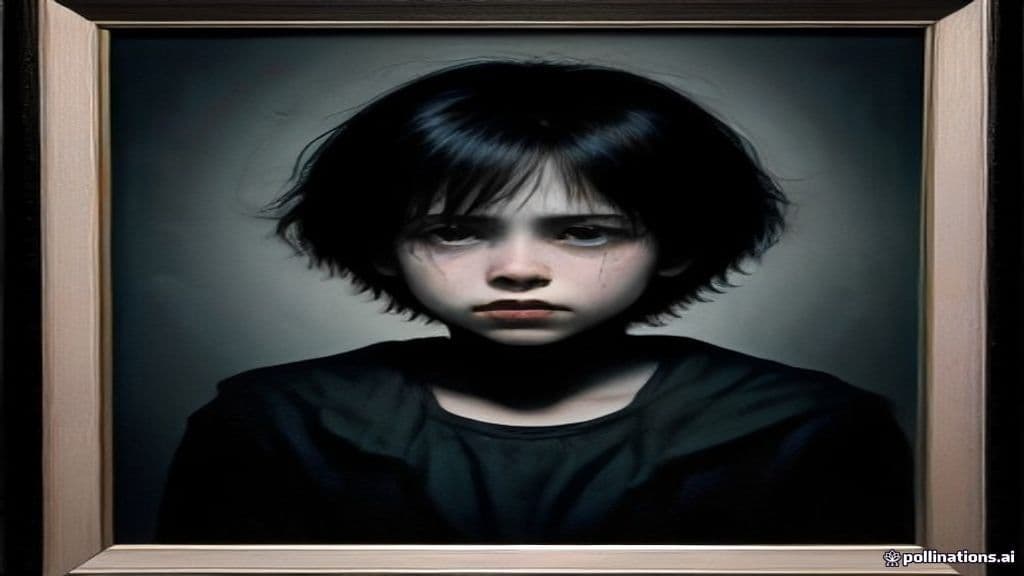
Object identity and manufacture: The Crying Boy refers not to a single original unique work but to mass-produced framed prints and reproductions of a sentimental portrait series depicting a tearful young boy with large, direct eyes. The image is attributed to an Italian painter Bruno Amarillo, who used the pen name Giovanni Bragolin; reproductions were widely distributed from the 1950s onward. Emergence of the 'curse' narrative and press history: In the mid-1980s British tabloid press ran a cluster of sensational stories linking household copies of the print to domestic house fires. A regional Sheffield Star report from Rotherham and subsequent tabloid coverage (summarized in secondary sources) are cited as the moments that launched the wider public narrative. Tabloid follow-ups claimed that readers telephoned papers with similar anecdotes, producing the popular impression of a connected series of incidents. Ownership patterns and notable anecdotal owners: Because the prints were inexpensive and mass-produced, ownership was common among private households. Secondary and tabloid-era accounts name individual households in the United Kingdom—examples include a Rotherham family reported in the Sheffield Star and a Kilburn, North Yorkshire account attributed to Sandra Craske—that were cited in press coverage as having experienced post-acquisition fires. These family-identified incidents are reported in popular summaries and interviews quoted in later articles. Separation of provenance and folklore: The concrete facts supported across sources are that the prints were mass-produced reproductions of work by Bruno Amarillo (Giovanni Bragolin) and that a wave of tabloid stories in the 1980s linked them to house fires. Claims that the prints were causally responsible for fires, that they miraculously survived blazes while everything else burned, or that an originating magical curse existed are elements of the urban-legend narrative as reported in tabloids and later retellings rather than statements verified by independent investigation in the supplied materials. Cultural afterlife: The Crying Boy legend has persisted in popular culture and online retellings (blogs, Listverse, Atlas Obscura/Cultrface coverage) and has been fictionalized in modern horror media (e.g., a 2024 horror comic preview). No authoritative institutional custody, formal neutralization practice, or verified paranormal mechanism is documented in the provided sources.
Community Record
- [1]The Crying Boy. Wikipedia entry 'The Crying Boy' (summarizes attribution to Bruno Amarillo/Giovanni Bragolin and distribution from the 1950s).wiki
- [2]TEARS FOR FEARS: THE CURSE OF THE CRYING BOY. Revenant, article summarizing tabloid-era interviews and quoting Willsher 1985 (Sandra Craske: 'All my paintings were destroyed except the one of the crying boy').other
- [3]The Curse of the Crying Boy. Dr David Clarke overview of the urban-legend origins, summarizes the Sheffield Star/Rotherham story and frames the narrative as tabloid-era sensationalism.other
- [4]10 Unsettling Truths About the Crying Boy Paintings Curse. Listverse popular-summary noting the series of portraits and the visual description of the crying boy motif.other
- [5]Atlas Obscura on the ‘crying boy’ paintings from the ’80s ― Cultrface. Cultrface repost/discussion of Atlas Obscura material documenting the legend's persistence in popular culture.other
- [6]The Curse of the Crying Boy | Tetherd Cow. Tetherd Cow summary referencing tabloid follow-ups (reports that 'The Sun ran a followup story claiming that their offices had been flooded with calls').other
- [7]Read a Preview from Horror Comic Book Series THE CRYING BOY. Daily Dead preview indicating contemporary fictionalization of the Crying Boy motif in a 2024 horror comic.other