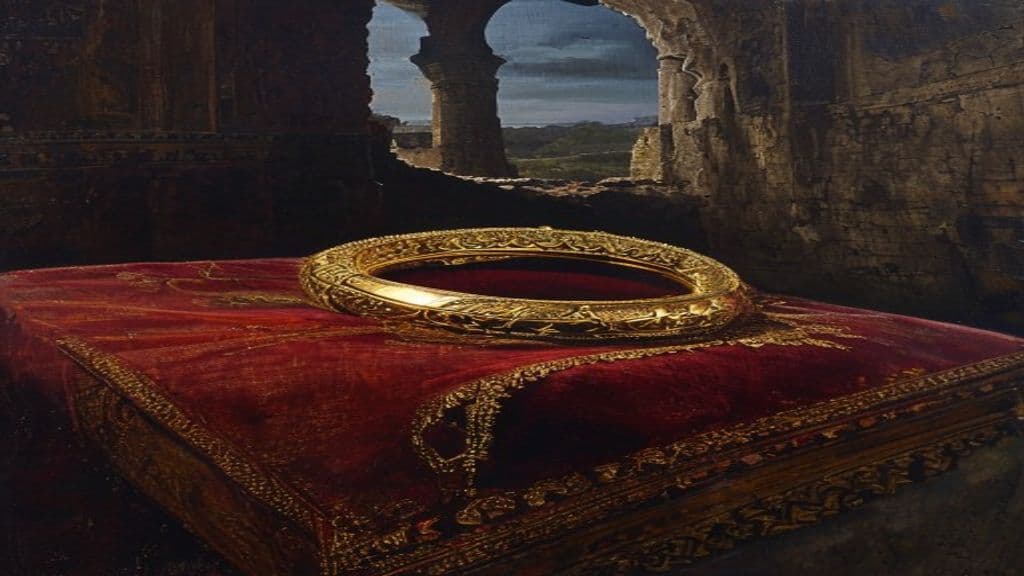
Tipu Sultan, the ruler of Mysore and Britain's most formidable adversary in 18th-century India, died defending his capital Seringapatam on 4 May 1799. Among the objects looted from his body and treasury after the battle was a heavy gold ring engraved with the Persian phrase 'My protector is God' in a style consistent with Tipu's documented aesthetic — he commissioned objects using both Arabic and Devanagari script as symbols of his syncretic court.
The ring entered British possession as part of the spoils distributed to officers of the victorious East India Company forces. It passed through several collections before appearing at Christie's auction house in 2014, where it sold for £145,000 — far above the pre-sale estimate. The Victoria & Albert Museum in London subsequently acquired it on loan from the buyer for public display.
The curse tradition is local and oral — residents of Mysore and Srirangapatna hold that objects belonging to Tipu carry his defiant spirit, and that removing them permanently from India invites misfortune. There is no documentary record of specific incidents. The tradition is consistent with a broader pattern of post-colonial longing for repatriation framed in supernatural terms — objects that 'want' to return.
Community Record
- [1]Tipu Sultan. Wikipedia. Contextual history of Tipu Sultan and fall of Seringapatam.wiki
- [2]Tipu Sultan's ring sells for £145,000 at Christie's. The Guardian, 29 April 2014.other