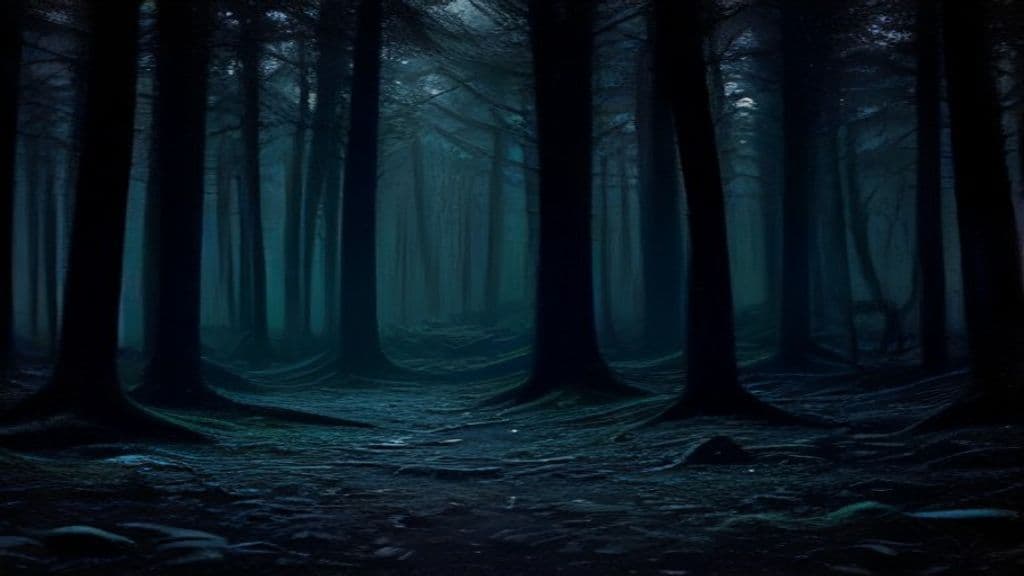
Aokigahara, also called the Sea of Trees (Japanese name Jukai in some sources), is a dense forest on the northwestern flank and base of Mount Fuji on Honshu. Geologically the forest grows on roughly 30 square kilometres of hardened lava from Mount Fuji's last major eruption in 864 CE. Parts of the forest include lava-formed terrain and caves (the western edge has several caves that can fill with ice in winter) and are visited by tourists and school trips. In modern times Aokigahara has become notorious as a place where many people travel to end their lives. Multiple contemporary sources — travel writing, journalism, podcasts and blog pieces — document a frequently reported high incidence of suicides in the forest; some reports specifically note hanging as a commonly observed method. Journalistic accounts and blog posts describe discovered personal effects and suicide notes found in the forest. The porous lava rock and dense tree cover are repeatedly mentioned in sources as producing pronounced solitude and muffled sound, a physical characteristic often noted in accounts of visitors and reporters. Aokigahara has also been represented widely in popular media, inspiring books and films (including the 2016 American film The Forest), podcasts, and user-generated videos. These cultural treatments have amplified the forest's reputation internationally. While some sources reference paranormal legends or broadly allude to frightening folklore associated with the forest, the provided materials do not document specific named supernatural entities tied to Aokigahara; such claims are mentioned in general terms in media coverage rather than corroborated ethnographic sources. Social, cultural and environmental explanations — including Japan's wider suicide issues, the forest's reputation, and its physically isolating characteristics — are discussed in the sources as factors shaping why the site attracts attention and visitors.
Community Record
- [1]Aokigahara. Wikipedia entry 'Aokigahara' (geology, size, porous lava rock, caves, tourist visitation, modern notoriety)wiki
- [2]Aokigahara: Japan's Suicide Forest (Timesuck podcast episode). Timesuck podcast episode and summary describing high incidence of suicides and hangings, and references to paranormal legends in media coverageother
- [3]The Suicide Woods of Mt. Fuji - Seek Japan. Seek Japan article quoting Wataru Tsurumui's The Complete Manual of Suicide and discussing Aokigahara's reputationother
- [4]Aokigahara: Japan's 'Suicide Forest' – What Draws Hundreds of People Here Every Year?. Consequence of Mind piece (journalistic description including discovered personal effects and notes)other
- [5](OMG) OPENING SD CARD FOOTAGE FOUND IN JAPANESE SUICIDE FOREST [archive]. Archived user-generated video metadata indicating circulation of sensational found-footage content about the forestother
- [6]AOKIGAHARA - SUICIDE MISSION. Blog article discussing Aokigahara's reputation and suicide incidenceother
- [7]Ghoulish gifts — Tokyo Times. Tokyo Times piece noting authorities' awareness of suicides at Aokigahara and the site’s social impactother
- [8]Aokigahara, Japan's 'Suicide Forest': Drowning in a Sea of Trees - Unseen Japan. Travel/cultural piece describing visitation and cultural contextother
- [9]Aokigahara (portsmouthpoint blog). Blog post reporting on the forest and its association with suicideother
- [10]The Forest (2016 American film) — Wikipedia. Film entry noting Aokigahara as inspiration/setting for a fictional horror filmwiki