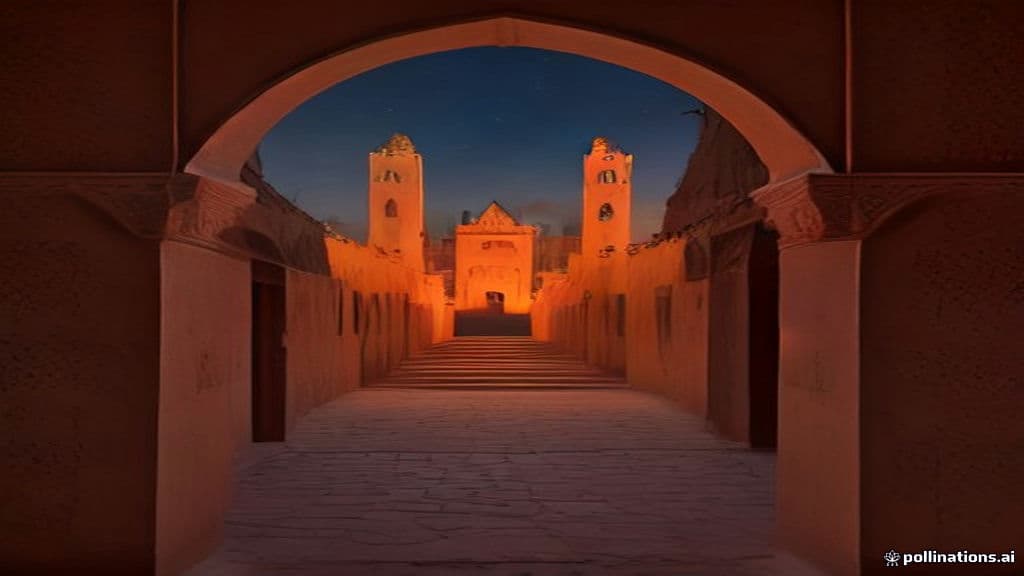
Aït Benhaddou is a historic ighrem or ksar — an earthen, fortified village — that developed along trans-Saharan caravan routes connecting the Sahara with Marrakesh. It is widely cited in architectural and fortification references as a representative example of Moroccan earthen clay construction. The site has been inscribed as a UNESCO World Heritage Site since 1987, reflecting its cultural and architectural significance. The supplied sources focus on its heritage, architecture, and role in trade and media documentation. The research materials provided do not describe any paranormal phenomena, named spirits, or haunting traditions associated with Aït Benhaddou. There are no witness accounts, apparitions, anomalous sounds, physical effects, or folkloric entities recorded in the supplied notes. Consequently, there are no explanatory theories (e.g., residual haunting, unquiet dead) present in these sources. Any claims that the site is haunted are not supported by the cited materials and are therefore treated as unsupported in this documentation. Culturally, the site is notable for its architectural typology and its inclusion in illustrated references on forts and in audiovisual archives. The provided archives indicate the site is visually documented and of interest to heritage and tourism audiences, but the supplied notes do not specify current visitor access rules or conservation condition beyond UNESCO listing.
Community Record
- [1]Aït Benhaddou - Wikipedia. Wikipedia contributors. "Aït Benhaddou." Wikipedia, The Free Encyclopedia.wiki
- [2]Aït Benhaddou - Wikidata. Wikidata entry Q309436 for Aït Benhaddou.wiki
- [3]Castles & forts (illustrated reference). Illustrated reference on castles and forts including an entry on Aït Benhaddou; Archive.org scan.other
- [4]NTDO | Videocast | Marakesz - Ait benhaddou. Videocast archive entry documenting Aït Benhaddou; Archive.org.other