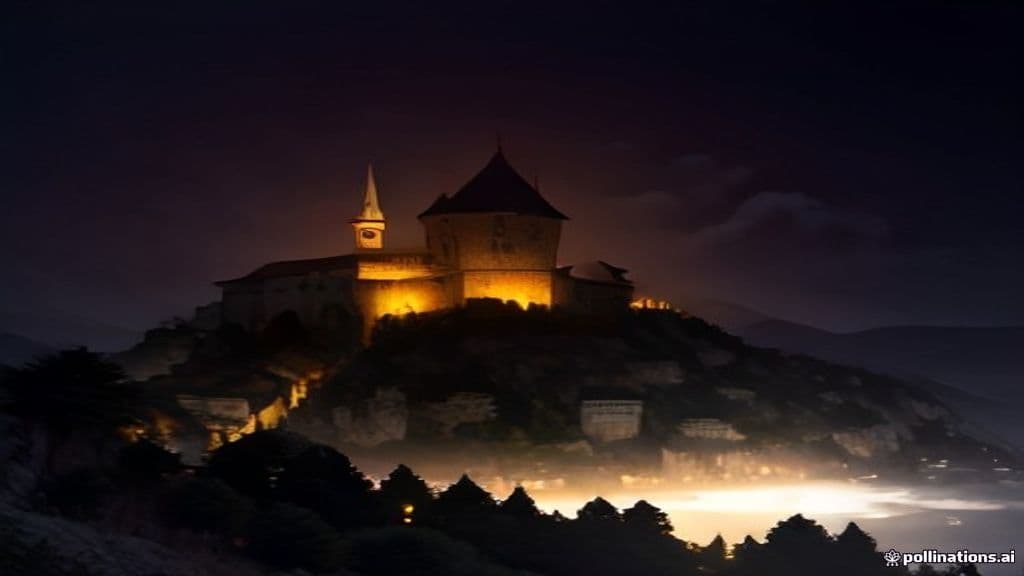
The Fortress of Krujë (also referred to as Krujë Castle) is a multi-structure fortress complex located in the city of Krujë, Albania. Historically it is identified as the center of Gjergj Kastrioti Skanderbeg's rebellion against the Ottoman Empire in the 15th century. The complex contains multiple internal sites noted in available sources: the National Skanderbeg Museum, an ethnographic museum, the Teqe of Dollme of the Bektashi, remains of the Fatih Sultan Mehmed mosque and its minaret, and a hammam. Archival and artistic collections related to Skanderbeg and the fortress (for example items held in the Endlos Museum archive) indicate continued cultural and historical interest in the site. Reported paranormal phenomena: the provided research materials contain no reports of hauntings, apparitions, sounds, or other paranormal activity associated with the Fortress of Krujë. No supernatural entities or folklore about ghosts are present in the cited sources. The historical association with Skanderbeg is documented as a cultural and national-historical connection rather than as a claim of supernatural presence. Cultural context: the fortress's role in Albanian national memory is underscored by the presence of the National Skanderbeg Museum within its walls and by archival/artistic projects that document and preserve the site's historical significance. The mix of religious and ethnographic sites within the fortress (Bektashi teqe, mosque remains) points to layered cultural and religious history at the location. Where the sources are silent — e.g., precise construction dates, detailed chronology, or coordinates — those details are not asserted here.
Community Record
- [1]Fortress of Krujë. Wikipedia contributors, "Fortress of Krujë," Wikipedia, The Free Encyclopedia.wiki
- [2]The Endlos Museum — Fünfzehn. Endlos Museum collection description, archive.org.other
- [3]Gergj Kastrioti Skenderbeu at the Krujë Castle. Endlos Museum archival item, archive.org.other