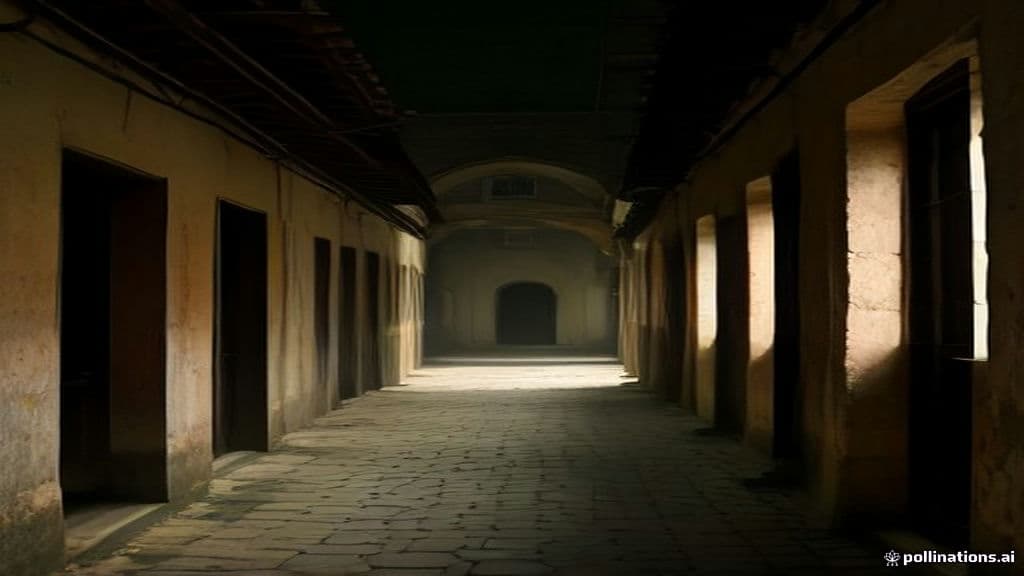
Grand-Bassam served briefly as the French colonial capital of Ivory Coast and retains an ensemble of colonial-era architecture and town planning that led to designation of its historic centre as a UNESCO World Heritage Site in 2012. Documentary sources provided emphasize its architectural and administrative significance, its juxtaposition with a traditional Nzema village, and its continued civic use as a sub-prefecture and commune where conferences and cultural events are held. Colonial-period public-health archives also reference an outbreak or plague event at Grand-Bassam, indicating the town features in historical medical records. The research target mentions "haunted colonial houses and shipwreck ghosts," but the supplied materials do not contain specific eyewitness accounts, named entities, dates, or documented phenomena of a paranormal nature. No supernatural beings or consistent folkloric narratives are present in the provided sources. Consequently, while local legend or oral traditions might include ghost stories, such claims are not corroborated by the cited documentary sources and have not been documented here beyond noting their absence in the supplied material. Grand-Bassam's significance in these sources is therefore historical, architectural, and cultural rather than paranormal: it is a preserved example of colonial urban planning with ongoing administrative and cultural roles and archival appearances in colonial public-health literature.
Community Record
- [1]Grand-Bassam. Wikipedia contributors. "Grand-Bassam." Wikipedia, The Free Encyclopedia.wiki
- [2]IVORY COAST FRENCH COLONY. Further concerning plague at Grand Bassam. Public Health Reports (archival listing). "IVORY COAST FRENCH COLONY. Further concerning plague at Grand Bassam."academic
- [3]Interview Lamyaâ Achary, Sociologue Marocaine, Féministe, Chercheuse Indépendante. Archive.org. Interview with Lamyaâ Achary referencing conferences held at Grand-Bassam.other