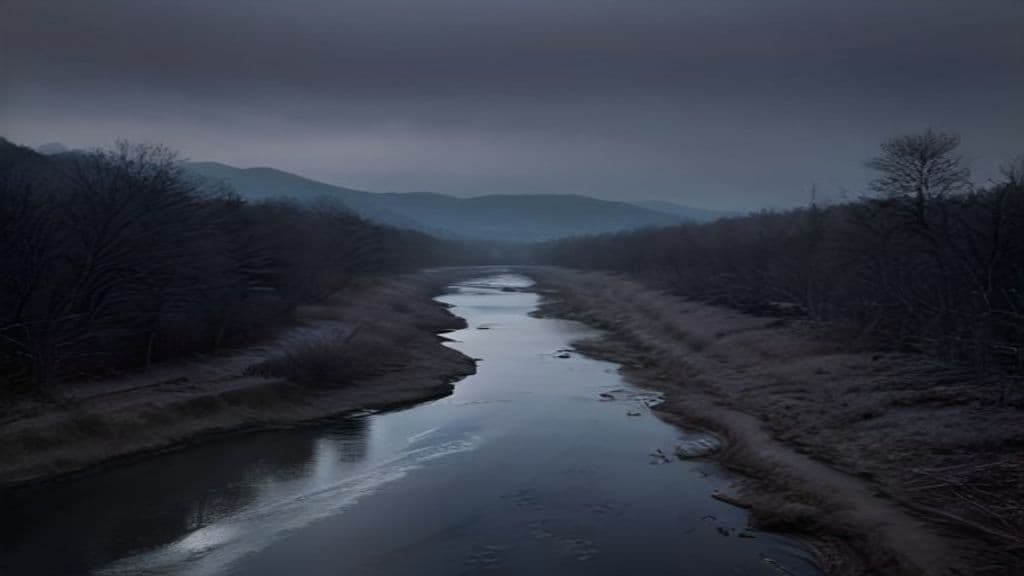
The Imjin River winds through the Demilitarized Zone that has separated the two Koreas since the armistice of the 1950s. The corridor is heavily militarized, marked by barbed wire and border infrastructure, and portions have become tourist destinations—most notably the Joint Security Area at Panmunjom. The research excerpt situates the river and adjacent abandoned villages within the long shadow of a '70-year war,' framing the area as a landscape of wartime memory and boundary. The provided notes do not contain direct eyewitness accounts or named supernatural entities. Rather, they indicate that the Imjin River and the DMZ contain abandoned or derelict village sites and that local or popular references to these as 'ghost villages' exist as part of the wider folkloric imagination surrounding the border. No specific apparitions, sounds, or physical paranormal effects are described in the source material. Culturally, the Imjin River/DMZ corridor functions as both a living memorial to the Korean War's unresolved status and as a locus for stories and legends tied to war, loss, and the border. The area’s restricted status and selective accessibility (organized tours to places like Panmunjom) mean that narratives about abandoned villages circulate in part through tourism, journalism, and oral memory rather than through systematic folkloric documentation in the provided excerpt.
Community Record
- [1]Voices for Peace Winncer Submissions | Korea Policy Institute. Voices for Peace Winncer Submissions | Korea Policy Institute (provided research excerpt)other