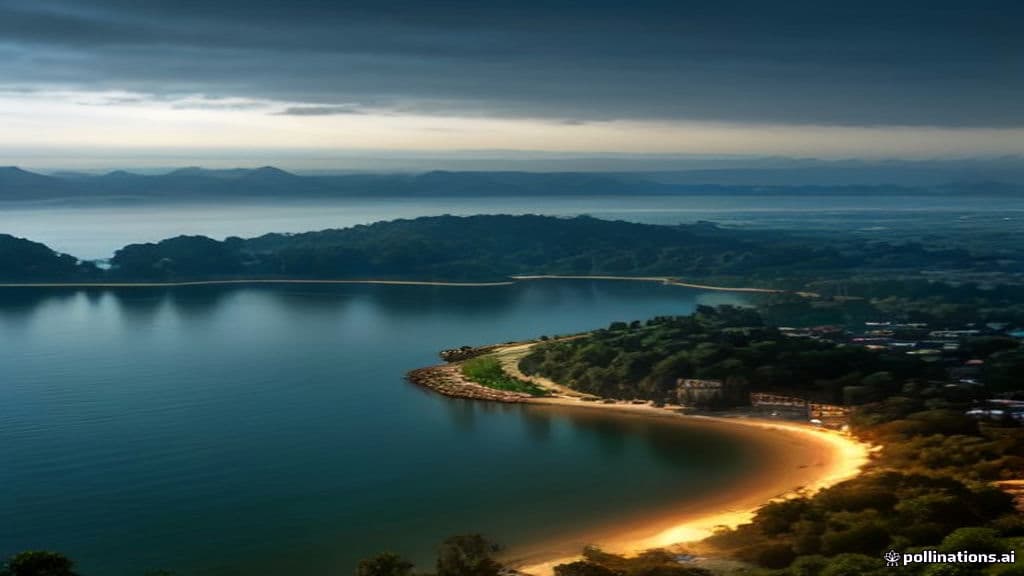
Lake Tana, at approximately 1,788 m elevation, is the largest lake in Ethiopia and the source of the Blue Nile. The lake contains some 37 islands, of which about 20 host Christian monasteries and religious sites; these island monasteries are described in tourism materials as the principal attractions for visitors to Bahir Dar and are typically reached by boat. The lake's level has been regulated since construction of a control weir at its outflow to the Blue Nile, which controls flow to the Blue Nile Falls and associated hydro facilities. The research materials provided focus on physical geography, hydrology, and the touristic importance of the island monasteries; they do not provide specific historical founding dates for the monasteries, named local legends, accounts of supernatural entities, witness testimonies, or descriptions of paranormal phenomena associated with the Zege peninsula or the island monasteries. Because the supplied sources do not document any particular hauntings or folkloric narratives for these sites, no such phenomena are asserted in this record. Further local historical, ethnographic, or church-record research is recommended to document any genuine folklore or reported supernatural accounts tied to the Zege peninsula or individual island monasteries.
Community Record
- [1]Lake Tana. Wikipedia contributors, 'Lake Tana,' Wikipedia, The Free Encyclopedia, https://en.wikipedia.org/wiki/Lake_Tanawiki
- [2]Bahir Dar & Debre Birhan Selassie Church Two Visitor’s Attraction In Ethiopia. Tourism archive excerpt on Bahir Dar and Lake Tana island monasteries, Archive.orgother
- [3]ANNOTED BIBLIOGRAPHY ON U. S. S. R. GRAVIMETRY (CIA reading room). CIA Reading Room document, Archive.orgother
- [4]GEOGRAPHIC BRIEF ON ETHIOPIA (CIA reading room). CIA Reading Room geographic brief on Ethiopia, Archive.orgother