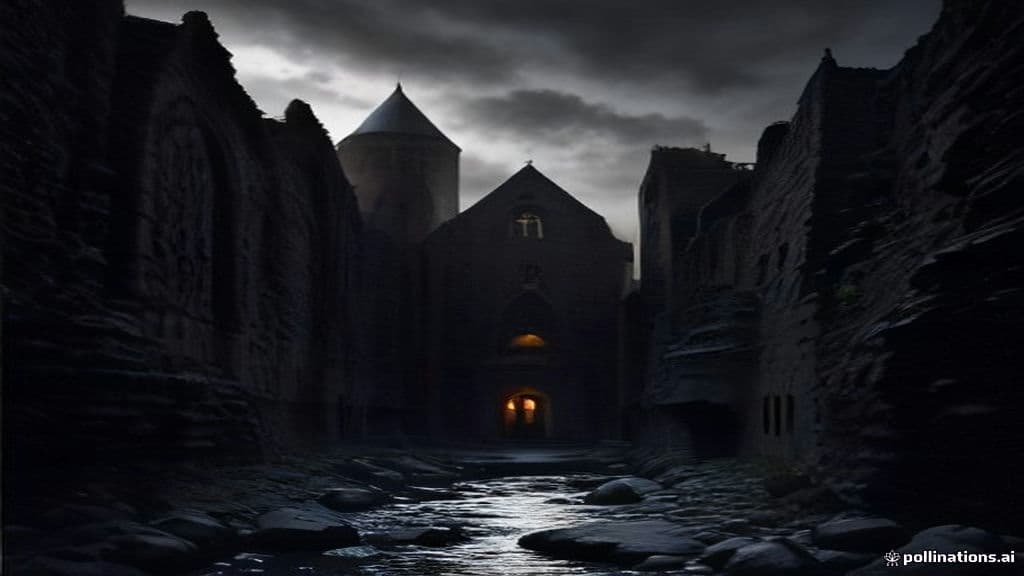
Noravank is a 13th-century Armenian monastery complex situated in a narrow gorge carved by the Amaghu River near the town of Yeghegnadzor and the historical village of Amaghu. The complex is architecturally distinguished by its two-storey Surb Astvatsatsin Church, which features access to the upper floor via a narrow stone staircase that projects from the building's façade. The monastery's setting is characterized in the sources by tall, sheer, brick-red cliffs directly across from the buildings, which together form a visually striking site frequently documented in photographic collections and architectural studies. The site has been the subject of focused architectural scholarship, including a dedicated multilingual monograph (Amaghu Noravank', Documenti di Architettura Armena, vol. 14, 1985) with plates and an English translation by Bryan Fleming. General reference sources such as the site's Wikipedia entry and a Wikidata item summarize its historical and architectural significance. The provided sources emphasize architectural, documentary, and geographic details and do not record any supernatural occurrences associated with the monastery or its gorge.
Community Record
- [1]Noravank Monastery - Wikipedia. Wikipedia contributors, 'Noravank', Wikipedia, The Free Encyclopediawiki
- [2]Noravank (Wikidata item Q1474586). Wikidata entry for Noravankother
- [3]Amaghu Noravank' (Documenti di Architettura Armena, vol. 14; 1985). Amaghu Noravank' (Documenti di Architettura Armena, vol. 14; Milan, 1985). English translation by Bryan Fleming; monograph devoted to the monastery near the village of Amaghu.academic
- [4]The Endlos Museum — Acht Zwanzig (archive listing referencing collections). Endlos Museum archive entry (collection references)other
- [5]The Endlos Museum — Sechs (archive listing referencing collections). Endlos Museum archive entry (collection references)other