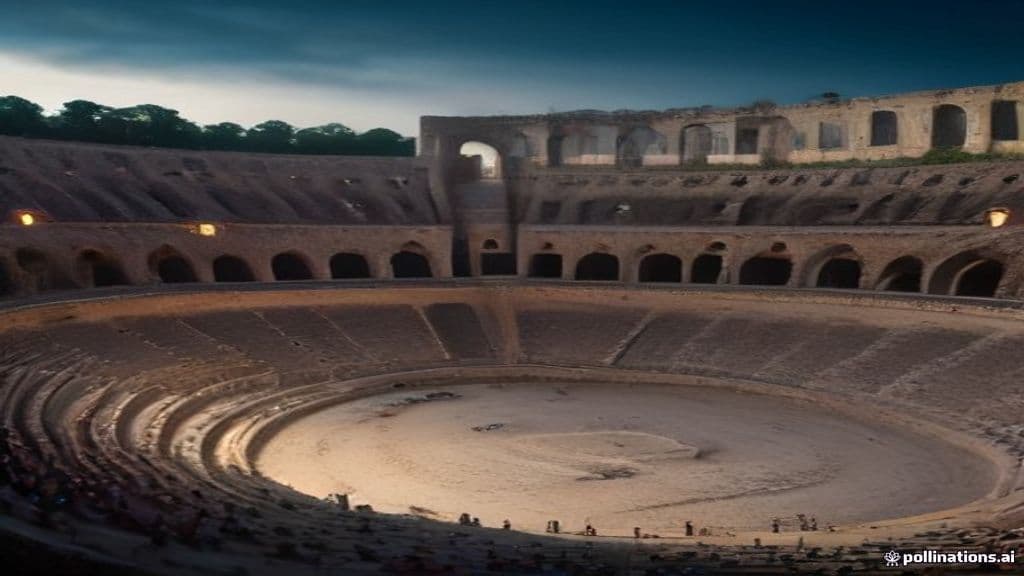
Constructed between 27 BC and AD 14 during the reign of Augustus and later expanded under Vespasian, the Pula Arena served as the primary venue for gladiatorial contests, animal hunts, and other Roman public entertainments, once accommodating up to approximately 23,000 spectators. It is regarded as one of the best-preserved ancient Roman amphitheatres and is notable for being the only remaining example to retain its entire circular wall structure. Visual and archival records in the supplied sources include a 1966 aerial-view postcard and inclusion in a compiled video/slide sequence of Croatian monuments, confirming its recognition as a regional monument in 20th-century media. The provided sources focus on the arena's architectural and historical significance and do not describe any paranormal activity or folklore associated with the site.
Community Record
- [1]Pula Arena - Wikipedia. Wikipedia contributors. "Pula Arena." Wikipedia, The Free Encyclopedia.wiki
- [2]Pula Arena - Wikidata entry. Wikidata entry Q474998 for Pula Arena.other
- [3]Croatia (Brotherhood of Europa archive video). Brotherhood of Europa. Compiled video/slide sequence listing Pula Arena among Croatian monuments.other
- [4]Razglednica, Arena, Pula, 6.8.1966. — Pogled iz ptičje perspektive. 1966 postcard image (aerial view) of the Pula Arena from Archive.org.other