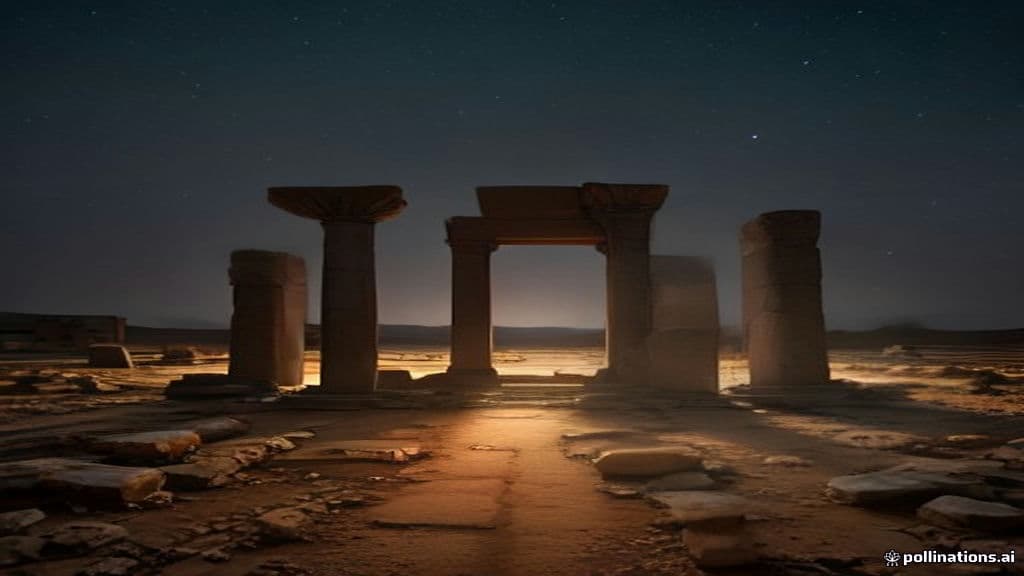
The Ruins of Ugarit, also referred to by the Arabic toponym Ras Shamra or Tell Shamra, are an archaeological tell on the northern Syrian coast. Excavations concentrated on the site's late Bronze Age strata revealed the Ugaritic texts and what is described in scholarly summaries as the oldest known systematic use of an alphabet (the Ugaritic alphabetic cuneiform system). Archaeological evidence indicates a long sequence of occupation reaching back millennia, with some summaries noting occupation since the 8th millennium BC, although modern research has focused most intensively on the late Bronze Age levels. The site was rediscovered in modern scholarship in 1928 and has since been central to studies of ancient Near Eastern language, writing, and religion. The provided sources contain no documented reports of paranormal phenomena, apparitions, or hauntings tied to the ruins. A modern Arabic novel set at the ruins uses Ugarit as a symbolic and mythic literary setting where ancient figures and motifs (Tammuz, Ishtar, the Phoenix) are woven into a contemporary narrative; this is a literary association rather than a claim of witnessed supernatural activity. No investigative theories, witness accounts, or physical phenomena are included in the supplied materials. Culturally, the site is significant both for its archaeological-linguistic contributions (Ugaritic texts and alphabetic system) and for its continuing role in regional cultural imagination, serving as a locale where authors juxtapose ancient myth and modern experience. The summary statements above are drawn from encyclopedic archaeological sources and a literary blurb; the archaeological and historical claims are well corroborated in scholarship, while the mythic references are derived from fiction.
Community Record
- [1]Ugarit. Wikipedia contributors. "Ugarit." Wikipedia, The Free Encyclopedia. (accessed via provided research notes)wiki
- [2]هيكل الحب (The Temple of Love) — Archive listing / blurb. Archive.org listing for the Arabic novel هيكل الحب (The Temple of Love), blurb noting the ruins of Ugarit as the novel's setting and its invocation of mythic figures (Tammuz, Ishtar, Phoenix).literary
- [3]VOA Africa transcript (no relevant Ugarit content). Archive.org VOA Africa transcript; listed among provided materials but contains no information relevant to Ugarit.other