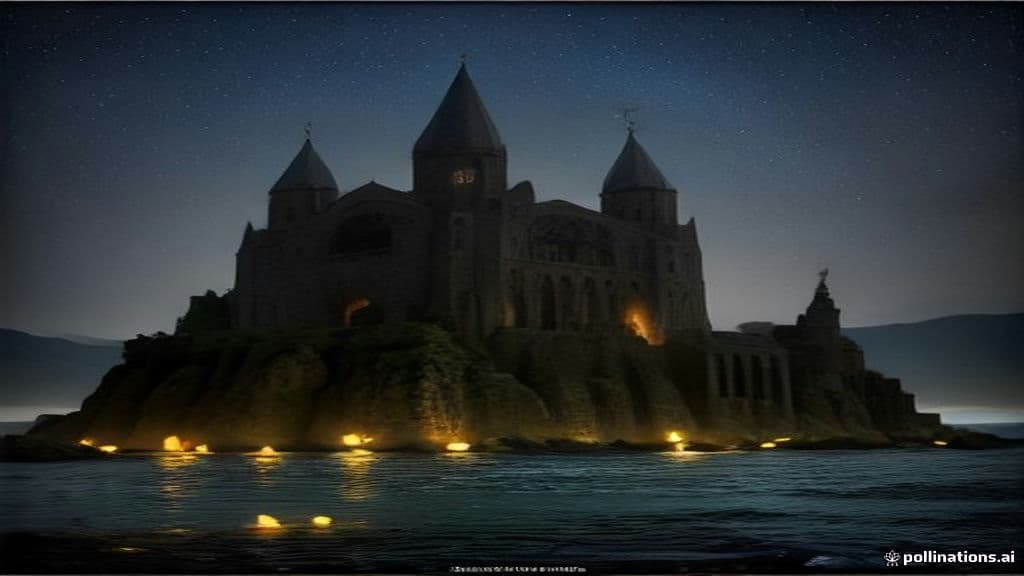
Sevanavank (Armenian: Սևանավանք) is a monastic complex located on the northwestern shore of Lake Sevan, near the town of Sevan in Gegharkunik Province. Historically built on a small island, the site was transformed into a peninsula after large-scale lowering of Lake Sevan began during the Soviet period; sources link the start of that artificial draining to the era of Joseph Stalin, with a water-level fall of roughly 20 metres that altered the monastery's immediate geography. The peninsula now hosts nearby secular and institutional developments, including a guesthouse of the Writers Union of Armenia on the southern shore, the Armenian president's summer residence on the eastern shore, and newly constructed buildings for the monastery's still-active seminary on the northern shore. The provided source material does not supply firm dates for the monastery's founding within the excerpts given, nor does it include named supernatural entities or detailed folkloric narratives tied specifically to Sevanavank. An archive source discussing medieval Armenian spiritual music (Arevagal) notes participation by students of Sevan's seminary in regional liturgical traditions, but that material concerns broader cultural practice and events at other monasteries (for example, Geghardavank) rather than providing folklore or paranormal claims about Sevanavank itself. Because the supplied research excerpts do not document paranormal occurrences for Sevanavank, descriptions of any local tales (for example, references in the research prompt to "tales of drowned souls") are not corroborated by the cited sources and are therefore not reported here.
Community Record
- [1]Sevanavank Monastery. Wikipedia contributors, "Sevanavank," Wikipedia, The Free Encyclopedia.wiki
- [2]9. Arevagal in Geghard - Medieval Spiritual Songs (CD RIP). Archive.org, "Arevagal (Songs of Sunrise)" — notes referencing Vazgenian Seminary of Sevan participating in liturgical singing at Geghardavank.other