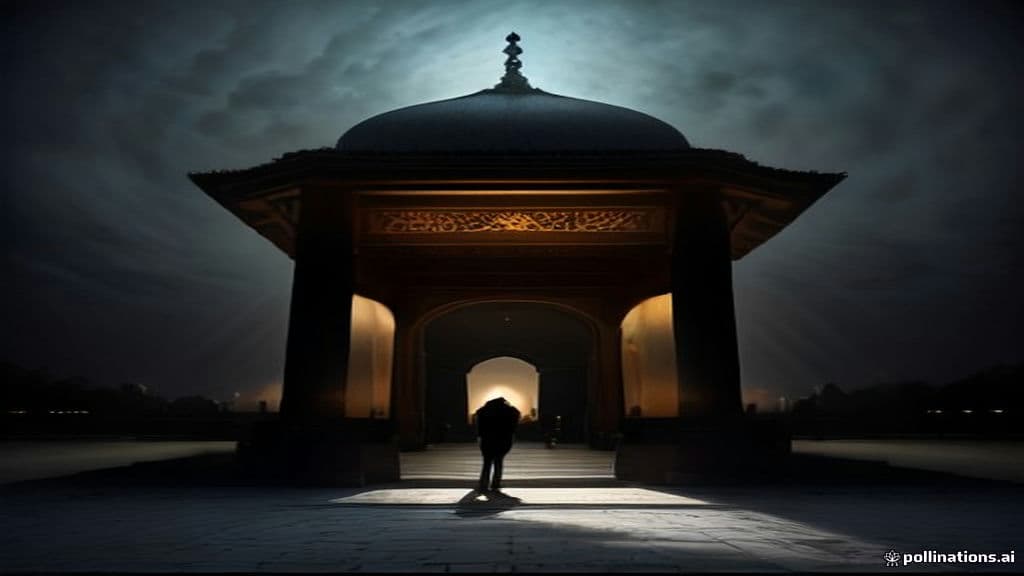
The Tomb of Hafez (Hāfezieh; Persian: حافظیه) is a memorial pavilion and gravesite for the celebrated Persian poet Hafez (Khwāja Shams-ud-Dīn Muḥammad Ḥāfeẓ-e Shīrāzī), located in the Musalla Gardens on the northern edge of Shiraz, on the north bank of a seasonal river. The present pavilion and memorial buildings date to 1935 and were designed by French architect and archaeologist André Godard; they stand on the site of earlier structures, including a notable 1773 building. The site houses Hafez's marble tomb, contains surrounding memorials to other figures, and is listed as an Iranian national heritage site. The supplied research materials focus on the site's architectural history, cultural significance, and heritage status; they identify the tomb as a focal point for tourism and commemoration in Shiraz. The documents provided do not include any first-hand eyewitness accounts, folkloric narratives, or contemporary reports of paranormal or uncanny experiences at night. No supernatural entities, apparitions, sounds, or physical phenomena are described in the cited sources. Because the request concerned "local stories of uncanny experiences at night," the notes make explicit that such narratives are not present in the supplied materials. Further investigation into oral histories, Persian-language folklore collections, local media, or ethnographic studies would be required to document any nocturnal uncanny traditions associated with Hāfezieh.
Community Record
- [1]Tomb of Hafez - Wikipedia. Wikipedia contributors, "Tomb of Hafez," Wikipedia, The Free Encyclopedia.wiki
- [2]Tomb of Hafez (Wikidata Q129479). Wikidata entry Q129479 for Tomb of Hafez (Hāfezieh), Iranian national heritage site.other
- [3]Hafez Tomb (Thingiverse/Archive item 353591). Archive.org: Hafez Tomb (353591) — description notes completion date 1935 and André Godard design.other
- [4]Penn Museum film and related archive items (1963 #13 Iran). Archive.org: Penn Museum film references to Iran (1963) including material on Hafez Tomb site.other