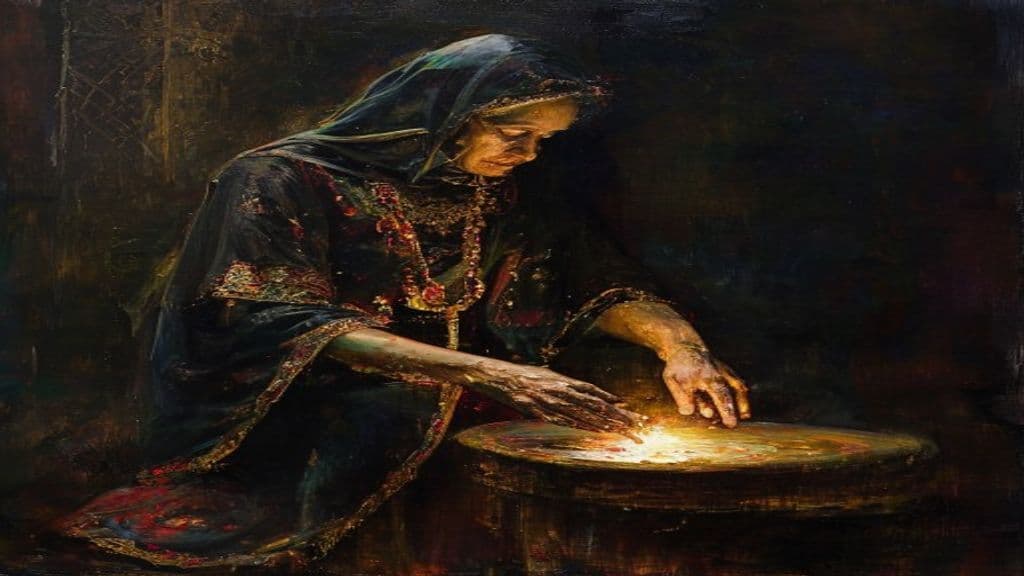
Within the tradition, consulting an albularyo and using their herbal remedies and healing procedures is believed to restore health by treating illnesses understood as caused by natural, spiritual, or sorcery-related agents (including sanib/possession, kulam/barang, and gaba). The albularyo's interventions are understood to counteract those culturally identified causal agents and thereby return the patient to normal functioning.
Albularyo healing denotes the work of albularyo (also spelled albulario), vernacular healers who practice folk medicine in the Philippines. The term derives from Spanish herbolario (herbalist) and, in the sources provided, is described principally as a form of herbal folk healing. Clinical and anthropological literature places albularyo practice within a syncretic cultural landscape in which Roman Catholic devotion often intersects with indigenous animist beliefs; in that context albularyo are part of the repertoire used to address a spectrum of concerns including physical illness, spirit possession (sanib), witchcraft/hexes (kulam, barang), and culturally framed misfortune such as gaba. The available sources give a high-level contextual picture but do not document specific ritual sequences, standardized procedures, or itemized lists of herbs or incantations. Popular-cultural references may portray or critique faith healers in varied ways, but they do not supply procedural detail. Clinically oriented literature highlights that albularyo practices are a culturally legitimate response to certain afflictions and that clinicians must distinguish such culturally-syntonic practices from psychopathology or underlying biomedical conditions.
- 01No specific procedural steps are documented in the provided sources. The sources attest that albularyo practice folk medicine and use medicinal plants, and that albularyo operate within a syncretic cultural context; however, they do not enumerate step-by-step rituals, fixed liturgies, or standardized sequences of actions. Any procedural reconstruction would be speculative and is not included here.
- ⚠No explicit ritual contraindications are provided in the available sources. The clinical scoping review notes a contextual risk that biomedical clinicians may misattribute psychiatric illness to cultural causes or, conversely, overlook cultural practices when assessing patients; this is a diagnostic/clinical caution rather than a ritual contraindication.
- ⚠Risk of exploitation by unscrupulous practitioners — suggested in a popular-cultural source as a critique, but not documented as a ritual contraindication in ethnographic or clinical sources.
Community Record
- [1]Albularyo. Wikipedia: "Albularyo or albulario is a Filipino term for a witch doctor, folk healer or medicine man, derived from Spanish herbolario (herbalist). They practice folk medicine and use medicinal plants in their trade."wiki
- [2]Between Devotion and Delusion: Distinguishing Culturally Syntonic Beliefs from Psychopathology in the Philippines and its Diaspora – A Scoping Review. Clinical scoping review: "The Philippines possesses a unique syncretic culture where deep-seated Roman Catholic devotion often intersects with indigenous animist folklore, encompassing beliefs in traditional healing (albularyo), witchcraft/hexes (kulam, barang), divine retribution (gaba), and spirit possession (sanib)."academic
- [3]Kulam+++Barang - Albularyo Prime (Archive music blurb). Archive blurb: "Kulam+++Barang is a one-man witch house producer who finds inspiration in slowed down vocal samples, hip hop beats, and stories of Philippine faith healers who heal the sick and the gullible, profiting from their naivete. Albularyo Prime is a collection of his early tracks... This is his faith healing of the Philippine music industry, a homily wrapped up in an audio barb."other