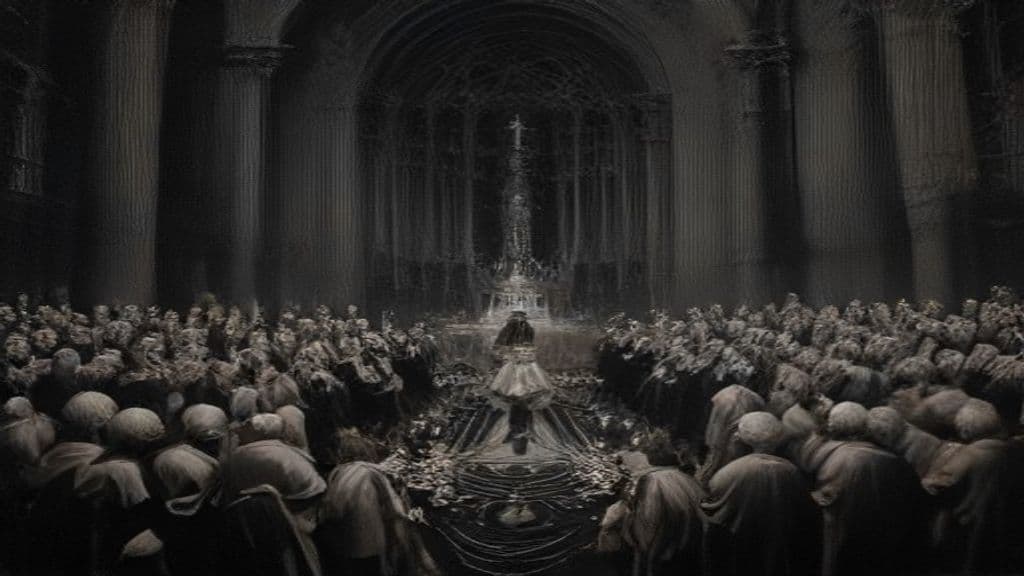
Within Catholic practice the rite is believed to recall and signify baptismal cleansing, to bless the assembly and sacred space, and—by virtue of the blessing of the water (which in Western tradition is often accompanied by exorcism texts)—to assist in driving away evil and spiritually cleansing the faithful; devotional tradition also holds that devout use of holy water helps remit venial sins.
Asperges is a liturgical aspersion rite in the Roman Catholic tradition in which a priest sprinkles the faithful, altar, and clergy with holy water. The ritual takes place in the context of Mass (in the traditional form it is customarily sung and performed before Mass on Sundays; it also appears as one option within the Penitential Rite in post‑Vatican II forms). The rite takes its name from the incipit of Psalm 51 in the Latin Vulgate (verse 9), which is sung in the traditional form except during Eastertide when an alternate antiphon is used. The water used in the rite is first blessed as holy water; Western liturgical practice records that the blessing of water is traditionally (often) accompanied by exorcism and other formulae, though specific blessing texts and local rubrics vary. Functionally, Asperges operates as a sacramental signifying baptismal purification, a penitential reminder to the assembly, a blessing of persons and objects, and is linked in tradition to warding or expulsion of evil via the blessed water.
- 01Prepare holy water that has been blessed according to the local liturgical rite prior to the Asperges (the blessing of water is traditionally often accompanied by exorcism texts in Western rites; specific blessing formulas vary by rubric).
- 02The priest (celebrant) takes an aspergillum or other approved instrument for sprinkling and a vessel containing the blessed water (aspersorium).
- 03When the Asperges is prescribed (traditionally before the chief Sunday Mass in the older rite; alternatively as an option in the Penitential Rite), the chosen antiphon/psalm is sung: in the traditional form Psalm 51 (with the incipit 'Asperges me') is sung except during Eastertide when an alternate antiphon is used.
- 04After the antiphon/psalm begins or after the opening verses (per local usage), the priest dips the aspergillum into the aspersorium and sprinkles the congregation, moving through the nave and directing water toward the people, the altar, and the clergy as prescribed by the local liturgical custom.
- 05If present in the local rite, the priest may make the sign of the cross with the aspergillum over the altar and sacred vessels and sprinkle the clergy and servers in turn.
- 06Upon completion of the sprinkling, the singing of the antiphon/psalm is concluded and the Mass or subsequent liturgical action continues according to the rubrics in use.
- ⚠No explicit contraindications are specified in the cited sources; local liturgical rubrics determine when the Asperges is or is not performed (for example, Psalm 51 is not used during Eastertide and an alternate antiphon is prescribed).
- ⚠Specific blessing texts that include exorcism are part of traditional blessing rites; where local rubrics do not prescribe such formulas, they should not be improvised.
Community Record
- [1]Asperges. Wikipedia: Asperges — description of the rite, naming from Psalm 51, use in traditional and post‑Vatican II forms.wiki
- [2]Holy water. Wikipedia: Holy water — notes that sprinkling recalls baptism and that blessing of water in the West is traditionally accompanied by exorcism; discusses sacramental use.wiki
- [3]Aspergillum (Wikidata). Wikidata entry for aspergillum — identifies instrument used to distribute holy water in services.other
- [4]Holy Water (Catholic Education Resource Center). CERC: explanation of sacramental function of holy water and its relation to baptism and blessing.other
- [5]Holy Water (Fisheaters / Catholic forum). Devotional source noting traditional beliefs such as that devout use of holy water remits venial sins and describing common parish practices.folk
- [6]THE MASS: VESTMENTS, SACRED VESSELS, ETC.: AN EXPLANATION. Explanatory material on traditional placement of the Asperges before Mass and relation to altar/clergy sprinkling.other