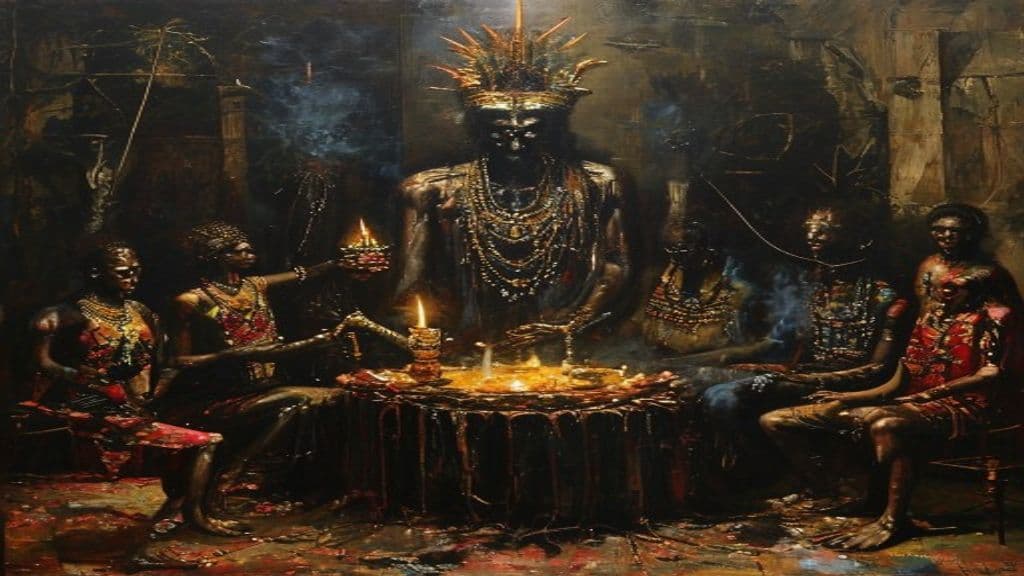
The single provided source does not document specific claims about what a bòkò ritual effects; Haitian Vodou traditions generally understand ritual acts to influence relations with lwa (spirits) and address community spiritual needs, but no direct efficacy claims for a bòkò ritual are present in the source.
Haitian Vodou is an African diasporic religion that developed in Haiti between the 16th and 19th centuries through syncretism of West and Central African traditional religions and Catholicism. The term bòkò (Haitian Kreyòl) appears in English-language summaries of Vodou practitioners, but the provided overview does not supply a detailed, sourced description of a distinct 'Bòkò ritual'. There is no single central authority in Vodou and practices vary among communities and practitioners; the excerpted source emphasizes diversity among Vodouists rather than specifying rites or procedures attributed to a bòkò. Because the source does not describe when a bòkò ritual is performed, its internal role, or its variations, those contextual details cannot be asserted from the provided material.
- 01The provided source does not include step-by-step procedural information for a bòkò ritual; no specific ordered actions can be reliably reported from the available material.
- ⚠The provided source does not mention contraindications or risks specific to a bòkò ritual.
Community Record
- [1]Haitian Vodou - Wikipedia. "Haitian Vodou is an African diasporic religion that developed in Haiti between the 16th and 19th centuries." "It arose through a process of syncretism between several traditional religions of West and Central Africa and Catholicism." "There is no central authority in control of the religion and much diversity exists among practitioners, who are known as Vodouists in English."wiki