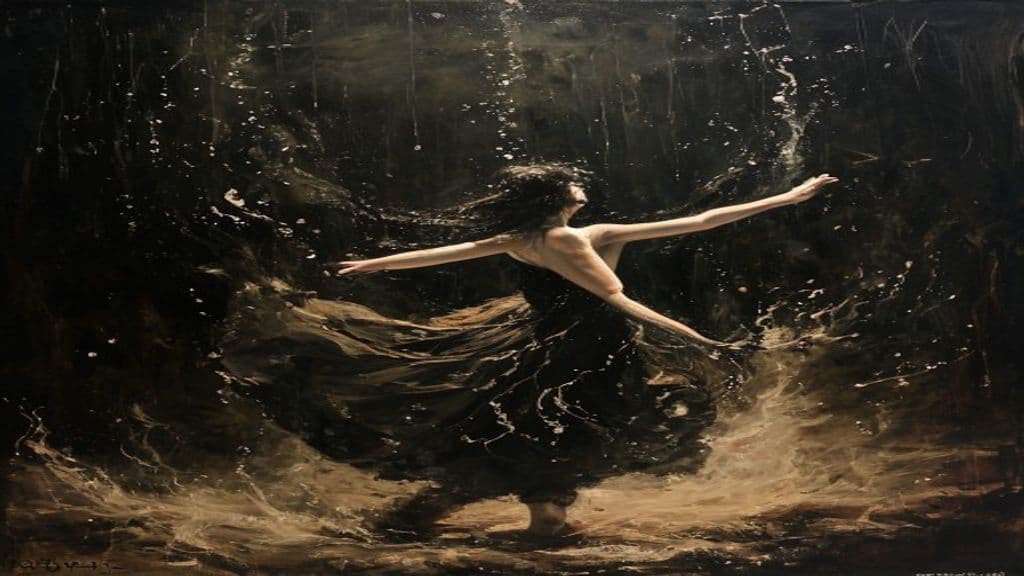
Within the tradition Salp'uri 'washes away evil spirits' and effects cleansing of a person, place, or ritual space by means of the mudang's ritual performance (song and dance, including the muga).
Salp'uri is a named ritual genre within Korean shamanism often described as a climactic cleansing dance or performance. Korean shamanic ritual practice (Musok/Muism) is diverse and locally variable; mudang—traditionally and most often women—serve as ritual specialists who sing ritual chants (muga), dance, and mediate between human and spirit realms. Muga can be brief invocations or extended narrative chants that recount origins of gods and episodes relevant to the shamanic world. Salp'uri is typically performed as part of larger shamanic ceremonies and is described in sources as the ritual action that 'washes away evil spirits' through the mudang's singing and dancing. The available descriptions emphasize performance (vocal and bodily) as the technology of effect; specific implements, fixed liturgies, or standardized sequences are not consistently attested across sources and vary by region and practitioner.
- 01Assemble the ritual space according to local custom and the mudang's practice (sources note regional diversity; no single standard configuration is attested).
- 02The mudang begins by singing muga (무가) — ritual chants; these may be short invocations or extended narrative songs depending on the tradition and occasion (Source: descriptions of muga).
- 03While singing the appropriate muga, the mudang performs the Salp'uri dance movements identified with the ritual 'washing away' of evil spirits; Salp'uri functions as the climactic cleansing performance within the ritual (Sources note dance and that Salp'uri is the ritual climax).
- 04Continue song and dance until the mudang signals the conclusion of the Salp'uri sequence and the cleansing is ritually enacted (sources describe Salp'uri as the climax of shaman rituals but do not supply a standardized duration or closing formula).
- ⚠No ritual-specific contraindications or technical taboos are specified in the provided sources; regional variation and local custom determine practice.
- ⚠External/social risks: historical and ongoing persecution and discrimination against shamanic practitioners have been documented, which poses social risk to public performance (but is not a ritual-technical contraindication).
Community Record
- [1]Korean shamanism — Wikipedia. Wikipedia contributors, 'Korean shamanism', Wikipedia, https://en.wikipedia.org/wiki/Korean_shamanismwiki
- [2]Songs of the shaman : the ritual chants of the Korean mudang (archive summary). Archive catalogue, 'Songs of the shaman: the ritual chants of the Korean mudang', https://archive.org/details/songsofshamanrit0000walrother
- [3]Salpuri (Korean performing arts entry). AsianInfo, 'Salpuri', http://www.asianinfo.org/asianinfo/asianinfo/korea/perform/salpuri.htmother
- [4]Korean shamanism — New World Encyclopedia. New World Encyclopedia, 'Korean shamanism', https://www.newworldencyclopedia.org/entry/Korean_shamanismwiki
- [5]The Women Who Speak For the Gods — Hazlitt (context on practitioners). Hazlitt, 'The Women Who Speak For the Gods', https://hazlitt.net/longreads/women-who-speak-godsother