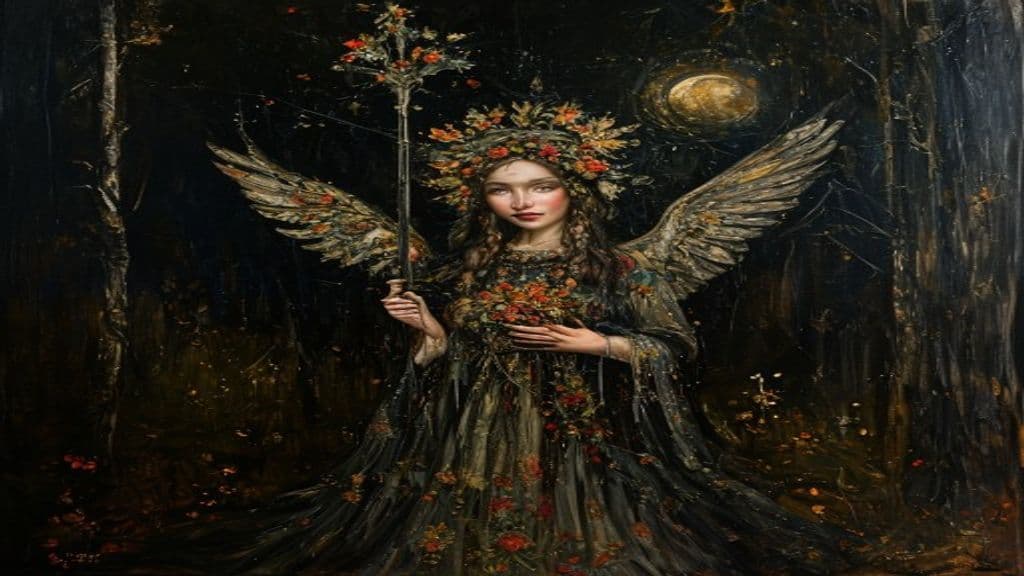
Within the tradition, performing the festival’s rites on Kupala Night (fire-jumping, bathing, wreath-floating, gathering herbs at the solstice) effects communal purification, increases fertility and luck in love, and wards or protects participants by harnessing the heightened power of the liminal midsummer night and the purifying properties of fire, water and specially gathered herbs.
Kupala Night is a popular communal celebration observed on the midsummer night that in many places coincides with the Christian St. John’s Eve. The ritual complex is not a single standardized liturgy but a set of regional folk practices associated with the summer solstice: lighting and circling communal bonfires, bathing or symbolic bathing in rivers, making and setting flower wreaths afloat (often by young women as a divinatory act), collecting or using herbs and 'magic water', and folkloric motifs such as the search for the mythical fern flower. These actions are understood in folk cosmology as exploiting a liminal time of heightened natural and supernatural potency; fire acts as purifier and protector, water as cleansing and healing, and herbs gathered at this time as especially potent. Practices, exact sequences, and emphases vary by locality and community; the sources describe popular practice rather than a prescriptive or clerical ritual formula.
- 01Gather at night on or around the customary date for Kupala Night in the locality (dates vary with calendar; commonly near June 24 or July 6–7 depending on use of Gregorian/Julian calendars).
- 02Light a communal bonfire in an open place; participants assemble around the fire and perform communal dancing and circling of the bonfire as a central fire rite (dancing and circling commonly reported across accounts).
- 03At or after the bonfire rites, some participants (often young women in many local traditions) make wreaths of flowers and plants and set the wreaths afloat on a river or other body of water as part of divination and fertility/love-oriented practice.
- 04Undertake bathing or symbolic bathing in a river, lake, or other bathing place on the night — water rites are performed for cleansing and are ritually regarded as especially potent at this liminal time (accounts vary from full bathing to symbolic ablutions).
- 05Collect, use, or ritually acknowledge herbs and 'magic water' associated with the day; herbs gathered or waters used at Kupala Night are ritually regarded in the folklore as especially potent for healing, purification, and folk magic (practices and identifications of specific plants vary regionally).
- 06Optionally, participate in folkloric quests or symbolic acts tied to local variants (for example, the folkloric motif of searching for the mythical 'fern flower' is present in some accounts as a romantic/fortune-seeking motif, though its literal existence and ritualized search vary by region).
- 07Conclude with communal celebration—singing, dancing, and local customary practices that blend the folk rites with any parallel observance of St. John’s Eve if present in the community; specific spoken prayers or liturgical formulas for protection are not supplied in the cited sources and are not standardized.
Community Record
- [1]Kupala Night. Wikipedia, 'Kupala Night' entrywiki
- [2]Ivana Kupala, Ukraine’s midsummer festival. Kyiv Independent, 'Ivana Kupala, Ukraine’s midsummer festival'other
- [3]Mythological Girls: Kupala. Girl Museum, 'Mythological Girls: Kupala'folk
- [4]Kupala Night: The Midsummer Festival of Fire, Magic, and Lost Secrets. Mythlok, 'Kupala Night: The Midsummer Festival of Fire, Magic, and Lost Secrets'folk
- [5]Midsummer celebrations in Poland – Lamus Dworski. Lamus Dworski, 'Midsummer celebrations in Poland'folk
- [6]Ukrainian Holidays | Center for Russian, East European, & Eurasian Studies. CREES, 'Ukrainian Holidays' resource pageacademic