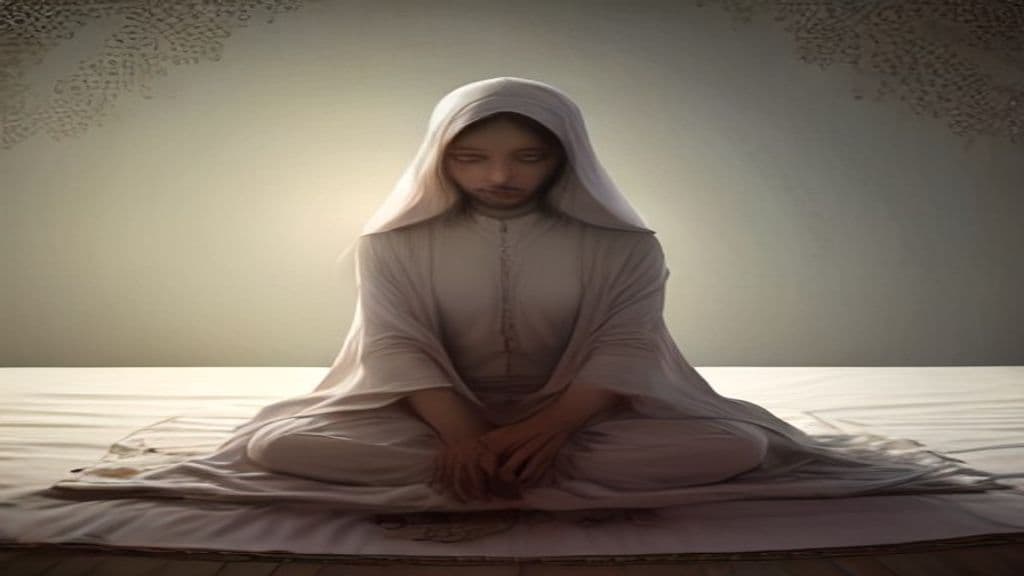
Within the Sufi tradition represented in the sources, reciting munājāt brings the practitioner closer to God, cultivates spiritual perfection and contrition, and can provide relief from worries or inner distress; specific named supplications (e.g., Istikshaf al-Humum) are believed to remove anxieties and afford spiritual vision or nearness to God.
Munājāt are presented in the sources as a literary and devotional genre of intimate supplication found among Sufi authors and in collections of litanies (wazāʾif). They are used as part of a Sufi’s devotional repertoire — alongside dhikr and wazaif — to meditate on tawḥīd, seek moral and spiritual rectification, and petition God privately. Sources cite named compilations (for example, a collection attributed to Shaykh al-Alawi and a Munajat compilation associated with Khwaja Abdullah Ansari), showing that specific texts of munājāt circulate and are transmitted. The practice is typically performed in private or in quiet devotional settings rather than as a single standardized public ritual. Recitation may occur in Arabic or in the vernacular according to one source’s description, and litany-style repetition and earnest supplication are salient features. One source fragment notes a physical gesture — drawing the hands over the face during supplication — but that description is fragmentary in the evidence and cannot be treated as a fully documented, universal component. The sources do not present munājāt primarily as technical exorcistic rites against jinn or possession; rather, they are devotional means for attaining nearness to God and for emotional/spiritual relief.
- 01Obtain or select an authorized text of munājāt from a recognized compilation or teacher (e.g., a published collection attributed to a Sufi master) to ensure one is reciting an established supplication as transmitted in the tradition (attested in collections such as Shaykh al-Alawi’s Munājāt and Khwaja Abdullah Ansari’s Munajat).
- 02Adopt a private, contemplative setting suitable for intimate supplication (sources describe munājāt as private or meditative recitations; exact location and posture are not standardized in the provided materials).
- 03Recite the chosen munājāt aloud or silently in full as it appears in the text, using Arabic or the vernacular as found appropriate in sources noting both possibilities (Source 7).
- 04Maintain an intimate, supplicatory tone focused on addressing God and meditating on divine unity (tawḥīd), as the primary devotional intention emphasized in the sources (Source 7).
- 05Where attested in one source fragment, some practitioners may accompany the recitation with a gesture of drawing the hands over the face while supplicating; the source is fragmentary and does not establish a precise form or universal requirement (noted as uncertain).
- 06Conclude the session in the manner provided by the compilation or teacher (many collections and Sufi authors provide closing formulas or follow-on litanies; exact closings vary by text and are not standardized in the provided excerpts).
- ⚠No formal ritual contraindications are listed in the provided sources; however, socioreligious caution is noted because some contemporary Sunni traditionalists or Salafi critics contest certain Sufi liturgical forms, which may expose practitioners to criticism or censure in some communities (attested as a debated attitude in sources).
- ⚠Claims that munājāt function as formal exorcistic rites against specific jinn or possessions are not supported in the provided materials and should not be assumed (explicit gap in evidence).
Community Record
- [1]Munajat wa Ḥikam (compilation attributed to Shaykh al-Alawi) (Arabic title and edition details). مناجات وحكم الشيخ العلاوي (edition noted in source list), Damascus 1388AH/1968CE; collected by Sayyid ʻAbd al-Wahhab Muhammad Munir al-Husayni (as cited in provided notes).literary
- [2]Munajat o Nasaeh e Khwaja Abdullah Ansari (Farsi) (title of a compilation). Title/compilation attributed to Khwaja Abdullah Ansari (as noted in the research notes).literary
- [3]Ecstatic Tradings in Sufism (discussion of Sufi discourse, dhikr, and munājāt). Academic discussion noting munājāt as part of Sufi discourse and meditative occupation on divine unity (used as basis for descriptions in the notes).academic
- [4]The Faith of Islam (contextual reference mentioning munājāt and litanies). Referenced in the research notes as part of contextual material on supplication and litanies.other
- [5]Portraits of Sunni traditionalist activists in South Africa (notes on devotional debates). Used in the research notes to indicate differing attitudes toward recitation of litanies and munājāt among contemporary Sunni traditionalists (as cited).academic
- [6]Archive: 10 Rintihan Doa Dan Munajat.. 3 GP (audio/archival example collection). Archival listing included among source materials in the research notes indicating circulation of munājāt recordings/collections.other
- [7]Al-Burhān (contextual/religious literature referenced in notes). Included in the source list of the research notes as background material on devotional practices and debates.other
- [8]Neo-Salafism blog post (contextual note on criticisms of Sufi practices). Referenced in the research notes regarding contemporary critiques of certain Sufi devotional forms.other