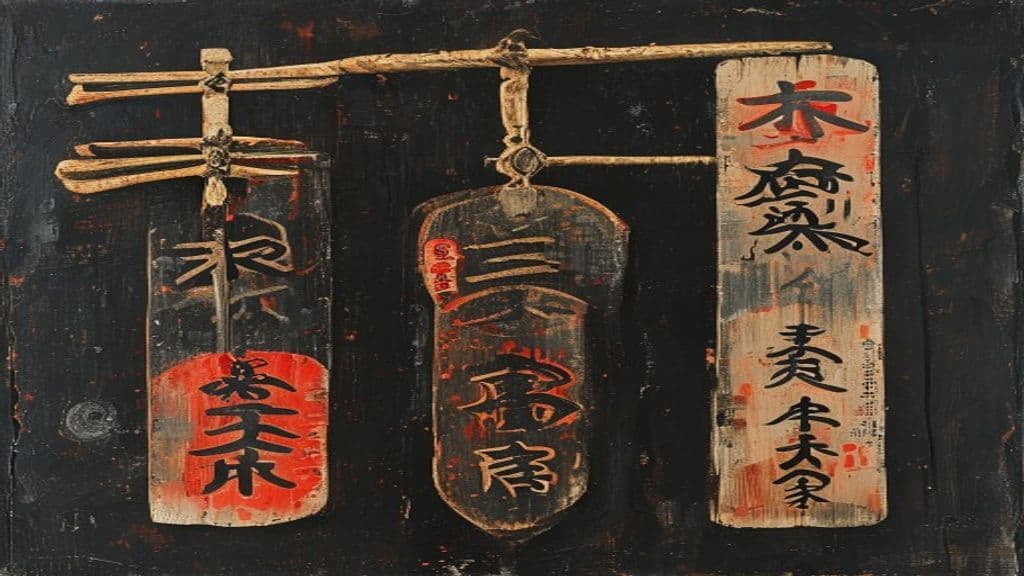
Within the tradition as presented in the sources, ofuda/omamori are said to confer various forms of luck and protection upon their possessor through dedication to particular Shinto kami or Buddhist figures.
Ofuda (rendered in some modern discussions alongside omamori) are identified in the provided sources as Japanese amulets associated with Shinto shrines and Buddhist temples. They function within a broad category of amuletic objects believed to protect a person from trouble and to provide general good fortune. The available excerpts note that such amulets are dedicated to particular deities or religious figures; however, the supplied material does not include ritual texts, blessing formulas, placement instructions, or a canonical procedure for producing or consecrating an ofuda. Comparative material in the sources tentatively links ofuda-type objects to East Asian talismanic practices (for example Chinese fulu) but marks that equivalence as uncertain in the original.
- 01No step-by-step blessing procedure is provided in the supplied sources. The available sources do not document specific ritual actions, recitations, or placement instructions for creating, blessing, or using an ofuda; therefore no procedural steps are included here to avoid speculation.
- ⚠The supplied sources do not list any contraindications or explicit risks for ofuda/omamori. Comparative commentary in the archive about other traditions notes that some sacred objects are understood elsewhere to require proper blessing or disposition, but that claim is not documented for ofuda in the provided excerpts.
Community Record
- [1]Omamori. "Omamori are Japanese amulets commonly sold at Shinto shrines and Buddhist temples, dedicated to particular Shinto kami as well as Buddhist figures and are said to provide various forms of luck and protection."wiki
- [2]Slavic Amulet (archive excerpt). "An amulet, also known as a good luck charm, is an object believed to confer protection upon its possessor. The word 'amulet' comes from the Latin word amuletum... 'an object that protects a person from trouble'." and "In China, Taoist experts called fulu developed a special style of calligraphy that they said would be able to protect against evil spirits. The equivalent type of amulet in Japan is called an ofuda." (original includes 'citation needed' on the equivalence)other