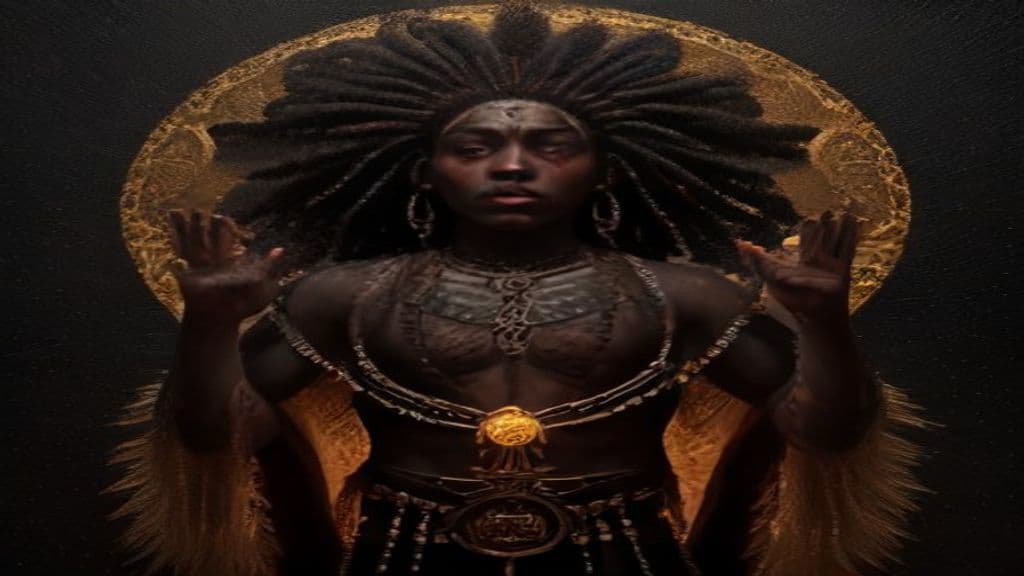
Within the tradition, invoking Ògún mobilizes the power of the orisha of iron, war, and metalworking to protect, enforce divine judgement, and enable martial or technical strength; mediators such as Esu/Elegba are engaged to translate human petitions to the orisha so the petition is received.
Ògún is described in the sources as a major Orisha in the Yoruba religion associated with war, iron, hunting, metalworking, blacksmiths, and divine judgement. The invocation functions as a protective and enabling rite: by calling Ògún, practitioners seek the orisha's capacity to protect, to enact justice, and to provide strength connected to iron and tools. Sources indicate that Orisha practice often involves mediator spirits (notably Esu/Elegba) who function to translate human language into the language of spiritual forces and thereby allow petitions to reach the Orishas. The supplied materials do not include a canonical liturgy, detailed procedural steps, or a standardized list of ritual implements; one archival source indicates that song and chant classes that group warrior orishas (for example, a class titled "The warriors: Eleguá Ogún Ochosí") are part of practice, suggesting musical invocation is a component in some contexts. Because the available sources are limited, no verbatim invocations, precise ritual order, or initiation requirements are documented here.
- 01No specific stepwise liturgy or ordered ritual actions are provided in the supplied sources; the sources explicitly do not include a documented procedural reconstruction and therefore no detailed steps can be reliably offered.
- ⚠None documented in the supplied sources — the sources do not list contraindications, risks, or conditions under which an invocation should not be performed.
Community Record
- [1]Ogun - Wikipedia. Wikipedia contributors, "Ogun," Wikipedia, The Free Encyclopedia.wiki
- [2]Marcus Gordon orisha song class - 13 December 1981 The warriors: Eleguá Ogún Ochosí. Marcus Gordon, archival recording listing "The warriors: Eleguá Ogún Ochosí" (13 Dec 1981).other
- [3]Astrology et al GENERAL METAPHYSICS CATALOG (Ifa Orisha. Esu/Elegba entry). Catalog entry listing Ifa/Orisha materials: "Ifa Orisha. Esu/Elegba. Ifa, The Divine Messenger... Esu is one of many spiritual forces in nature, its unique function is to translate the language of humans into the language of nature, vice-versa // Shango".other