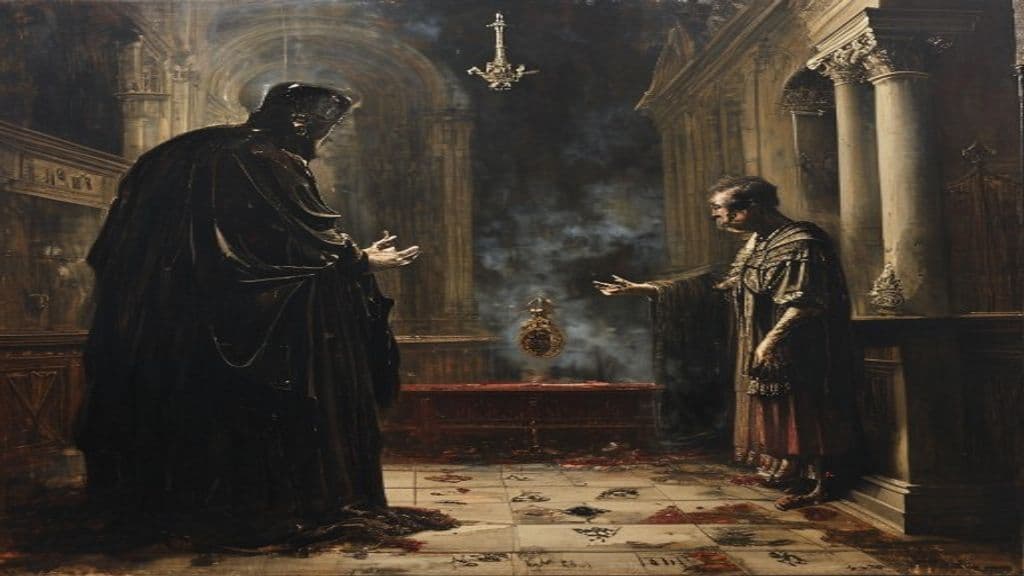
The tradition states that, when performed with authorization from valid and licit Church authorities and with the faith of the exorcist, asking publicly and authoritatively in the name of Jesus Christ will protect a person or object against the power of the Evil One and withdraw them from his dominion.
Within Roman Catholic practice the Roman Rite of Exorcism is categorized as a sacramental rather than a sacrament. The Church authorizes its use for Christians believed to be victims of demonic possession or subject to demonic influence. Sources emphasize that the rite's integrity and efficacy do not rest on a rigid use of an unchanging formula or on a prescribed ordered sequence; instead, they state efficacy depends primarily on authorization from valid and licit Church authorities and on the faith of the exorcist. Popular and archival commentary included in the provided materials situates a modern context in which some dioceses have emphasized appointing exorcists in response to perceived increases in occult activity, though those programmatic claims are presented in the sources as archival or popular reportage rather than official liturgical texts. The supplied materials do not include the authoritative liturgical text, rubrics, or a canonical manual for the rite, and they do not list specific required sacramentals or precise procedural steps. Therefore descriptions in this record restrict themselves to what the provided sources explicitly state: the rite is an authorized sacramental ministry directed at protecting and withdrawing persons or objects from demonic dominion, and its theological mechanism is invocation in the name of Jesus Christ combined with ecclesiastical authorization and the exorcist's faith.
- 01Do not attempt to reconstruct a fixed liturgical formula from these sources — the provided texts emphasize that the rite's integrity and efficacy do not depend on a rigid unchanging formula or an ordered sequence of prescribed actions but rather on authorization from valid and licit Church authorities and the faith of the exorcist. (statement derived from Source 1)
- 02Obtain authorization from valid and licit Church authorities before undertaking the rite — sources state that ecclesiastical authorization is a necessary element for efficacy (Source 1).
- 03Proceed under the exercised faith of the appointed exorcist — the tradition as cited identifies the exorcist’s faith as a necessary condition for the rite's efficacy (Source 1).
- ⚠Attempting the rite without authorization from valid and licit Church authorities — the supplied sources indicate that lack of proper authorization undermines the conditions the tradition identifies for efficacy (Source 1).
- ⚠Performing the rite without the requisite faith of the exorcist — the sources state that the exorcist's faith is a necessary element for efficacy (Source 1).
Community Record
- [1]Exorcism in the Catholic Church (Wikipedia summary including Catechism quotation). Summary and quotation: The Catholic Church authorizes the use of exorcism for Christians... exorcism is sacramental but not a sacrament... 'Its efficacy depends on two elements: authorization from valid and licit Church authorities, and the faith of the exorcist.' The Catechism: 'When the Church asks publicly and authoritatively in the name of Jesus Christ that a person or object be protected against the power of the Evil One and withdrawn from his dominion, it is called exorcism.'wiki
- [2]The Parts of the Roman Mass with Riverrun (archival program). Archival program material referenced in research notes (program content).other
- [3]Demonic possession and exorcism (archival program description). Program description asserting increases in cases and reporting that 'the Vatican announced that every diocese should have an exorcist' (presented as archival content).other
- [4]Interviews with an Exorcist (Malachi Martin archival interview). Archival interview description referencing Father Malachi Martin as a noted exorcist and Jesuit (program/biographical note).other