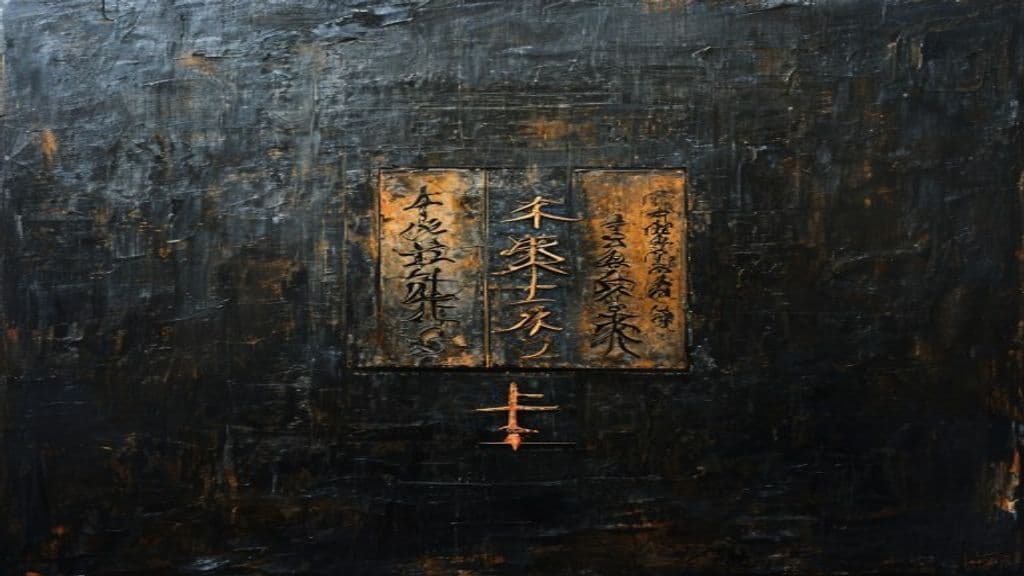
Within the Taoist ritual context, fulu produced by a Taoist practitioner enact talismanic power: the written or painted symbols and accompanying incantations confer protection, effect warding, invoke or direct spirit-agents, or carry out exorcistic functions as intended by the practitioner.
Fulu (fu) are described in modern reference works as talismanic script and incantations produced by Taoist practitioners and rendered onto talismans. The defining feature in available sources is that the signs may be asemic (non-phonetic) talismanic symbols accompanied by oral formulas; both the visual inscription and the incantation together constitute the fulu. The practice is embedded in Taoist ritual culture where practitioners produce talismans for a range of ritual functions. The supplied sources identify fulu as products of Taoist ritual composition but do not provide prescriptive procedural detail, media specifications, or fixed liturgical sequences. Historically, fulu and related ritual technologies were topics in inter-religious debates (e.g., between Buddhists and Taoists) in medieval China, indicating their recognized ritual and doctrinal importance.
- 01A Taoist practitioner composes the fulu and writes or paints the talismanic symbols and any associated script or marks upon a talismanic object.
- 02The talisman, bearing the written or painted fulu, is then applied, carried, displayed, or otherwise deployed according to the practitioner's judgment and the ritual context.
Community Record
- [1]Fulu (Taoist talisman). Wikipedia contributors, 'Fulu (Taoist talisman),' Wikipedia, The Free Encyclopedia.wiki
- [2]Laughing at the Tao : debates among Buddhists and Taoists in medieval China. Unspecified author/editor, Laughing at the Tao: debates among Buddhists and Taoists in medieval China (bibliographic description provided in research notes).other