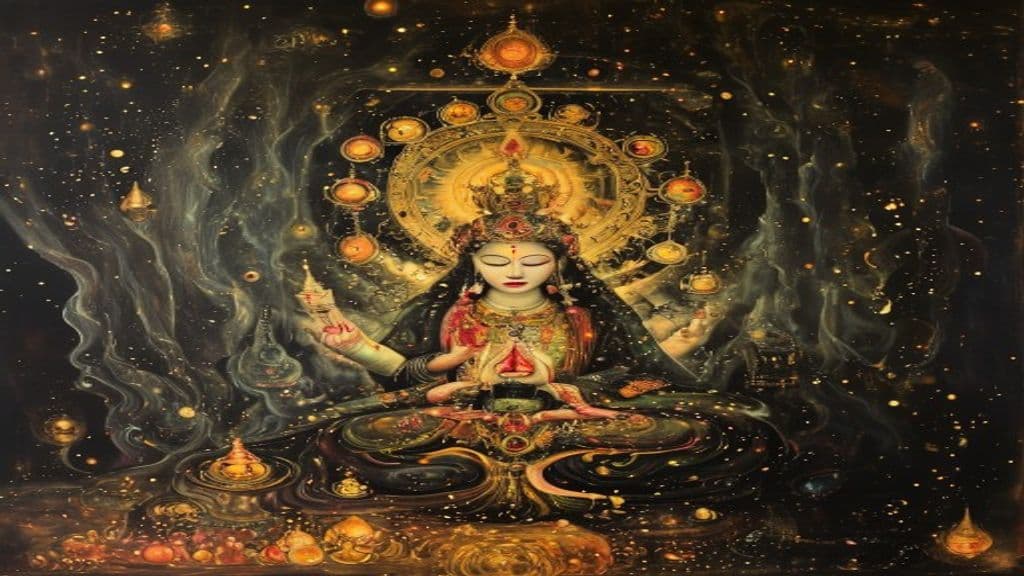
Within the tradition, Phowa is claimed to enable the dying person to transfer their consciousness (mindstream) out of the body via the crown aperture (Brahmarandhra / Sahasrāra) at the moment of death, thereby guiding that consciousness to a Buddha-field, ensuring a favorable rebirth, or enabling immediate liberation and escape from confused bardo states.
Phowa is integrated into tantric sādhanā and is classically treated as a death-transition practice: its practical aim is to orient or 'transfer' consciousness at the point of death. In Tibetan Vajrayāna contexts it is taught as one of the Six Yogas of Nāropa in some lineages and appears in Nyingma and certain Kagyu transmissions. Sources associate Phowa with working at the crown aperture (Brahmarandhra / Sahasrāra) and with preparatory tantric practices (for example, deity yoga, tummo, and dream yoga) that in some lineages are presented alongside or prior to Phowa instruction. Contemporary transmission often occurs through lineage teachers and organized courses (for example, teachers such as Ayang Rinpoche offer Phowa instruction). The supplied sources are fragmentary about exact liturgical formulas: canonical mantras, precise hand gestures, and a complete sādhanā text were not provided in the materials used here, so procedural reconstructions are schematic and marked where uncertain.
- 01Prepare context and mind: receive Phowa instruction from a qualified lineage teacher and prepare according to that lineage's guidance (sources indicate Phowa is lineage-taught and commonly accompanied by preparatory tantric practice; specifics of prerequisites are not provided in the supplied materials) (uncertain).
- 02Practice preparatory yogas as taught by the lineage (e.g., deity yoga, tummo, dream yoga) where these are presented as preparatory in a given tradition — sources note these practices are commonly paired with Phowa in tantric curricula but do not state they are universally mandatory (uncertain).
- 03Visualize the crown aperture: train to direct awareness toward the Brahmarandhra / Sahasrāra (sources link Phowa conceptually to the crown centre and crown-aimed transference).
- 04At or near the time of death, focus the mindstream upward and through the crown: apply the instructed method to transfer consciousness out of the body via the crown aperture to a Buddha-field or liberation — specific mantras, hand gestures, exact verbal formulas, and liturgical sequencing are not given in the supplied sources and therefore are not specified here (uncertain).
- 05If performed for another person: a trained practitioner or the dying person (if trained) may enact the practice according to lineage instruction — the supplied materials indicate both self-practice by a trained dying person and instructor-led practice are recognized possibilities but do not provide a fixed prescription for who must act in every tradition (uncertain).
- 06Post-death guidance and integration: recognize that Phowa is embedded in a broader bardo and postmortem framework (e.g., Tibetan bardo teachings); supportive ritual or instruction after death follows lineage protocols (the supplied sources reference bardo teachings but do not offer a complete postmortem liturgy).
- ⚠Lack of proper transmission or preparation: sources repeatedly frame Phowa as a lineage-taught tantric method and indicate preparatory practices are commonly taught alongside it, implying it should not be attempted without appropriate instruction (uncertain).
- ⚠Premature practice without lower-chakra groundwork: Chapter 21 and related materials warn that crown-centered practices may carry risks such as 'spiritual bypassing' or a 'locked crown' if lower-chakra work and genuine preparatory practice are omitted (this caution is general to crown practices in the supplied sources and not a stepwise contraindication specific to Phowa).
Community Record
- [1]Phowa - Wikipedia. Wikipedia, entry 'Phowa' (accessed via provided source list).wiki
- [2]The Tibetan Book of Living and Dying (archive excerpt; Chapter 21 reference). Sogyal Rinpoche (ed.), The Tibetan Book of Living and Dying (archive reference provided).other
- [3]Chapter 21: Crown Chakra (archive). Chapter 21 (Crown Chakra) — archival excerpt linking Phowa to Brahmarandhra / Sahasrāra and discussing crown-practice cautions.other
- [4]The Mahāsiddha Model Of Immortality (archive). Mahāsiddha Model — discusses theoretical frameworks and notes relation of Phowa to other tantric yogas (four-stage path mentioned; no procedural text provided in supplied excerpt).other
- [5]Phowa Course March 2023 | His Eminence Ayang Rinpoche. Ayang Rinpoche course pages noting contemporary transmission of Phowa by lineage teachers.other
- [6]Chöd - Wikipedia (contextual related practice). Wikipedia entry on Chöd cited as an adjacent tantric practice within Nyingma and Kagyu milieus (contextual comparison).wiki
- [7]Transitions to The Otherworld - The Tibetan Books of The Dead. Bibliotecapleyades excerpt summarizing bardo teachings; used as contextual material for postmortem framework related to Phowa.other