
Aegeus appears in the generational cycle of the early kings of Athens as a son of Pandion II (per the mythic genealogy preserved in ancient sources). Born in Megara, he and his brothers reconquer Athens from usurpers and divide Attica; subsequently Aegeus becomes king of Athens. Childless for a time, he consults the Delphic oracle about an heir; after cryptic instructions are interpreted by Pittheus in Troezen he fathers Theseus (in versions where Aegeus is the biological father) and arranges a token-based recognition: he buries a sword, shield, and sandal under a great rock for his son to recover when grown. Later, believing Theseus dead because the returning ship bore a dark sail, Aegeus throws himself into the sea, which the tradition names the Aegean Sea after him. Sources also report alternate or additional elements in different tellings (for example, accounts that implicate Poseidon in Theseus’ paternity or that include Medea as Aegeus’ wife), and ancient authors attribute to him certain cult-foundations such as the worship of Aphrodite Urania.
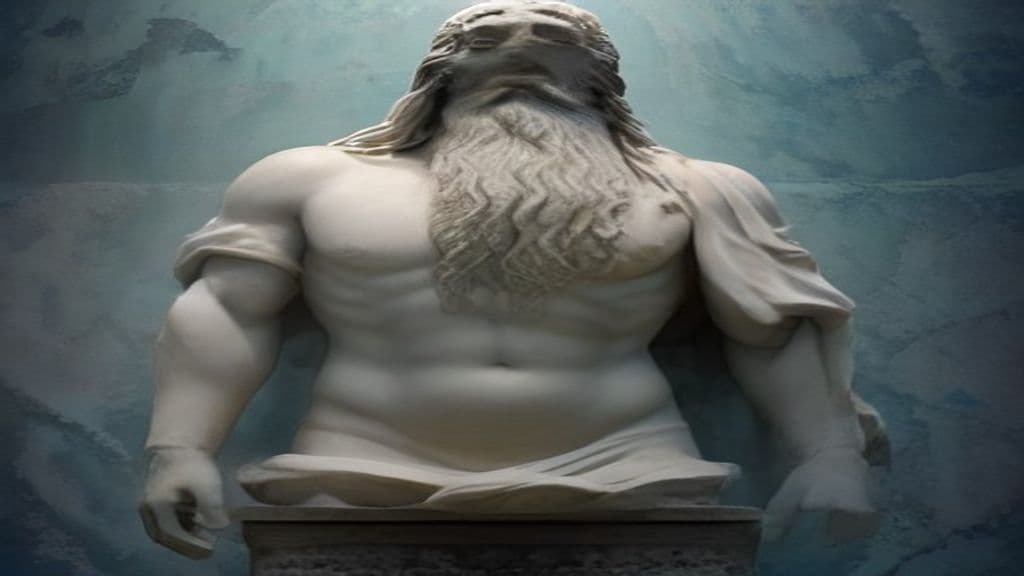
The supplied sources do not give a direct physical description or established iconography for Aegeus. Textual narratives emphasize his role as king, father, and political actor rather than bodily or visual detail; surviving accounts focus on his actions (consulting oracles, marriage alliances, dynastic arrangements) and narrative fate rather than appearance.
Aegeus is portrayed as a mortal political actor: a king who consults the Delphic oracle, founds or reforms civic religious practice (Pausanias attributes the introduction of the cult of Aphrodite Urania in Athens to him), offers hospitality and asylum to exiles (e.g., Medea in some versions), makes dynastic and territorial settlements, and issues instructions for succession. No supernatural powers are ascribed in the supplied material; his causal efficacy in myths rests on social, political, and religious agency rather than magic.
Weaknesses
- conditionhuman fallibility and misinterpretation of signs (e.g., failure to see the white sail)
- conditionchildlessness (motivates seeking divine aid and cultic action)
Wards
None recorded.
Community Record
- [1]Aegeus — Wikipedia. Wikipedia contributors. "Aegeus." Wikipedia, The Free Encyclopedia.wiki
- [2]Pausanias (summary in archival notes) — cult of Aphrodite Urania attributed to Aegeus. Summary of Pausanias' reports as presented in the supplied archival excerpt (LP0010).literary
- [3]Aegeus — attalus.org name index. Onomastic/index entry compiling ancient references to Aegeus.other
- [4]Euripides, Medea (text available online — context for Medea and Aegeus). Euripides, Medea — surviving play where Aegeus appears in Athenian mythic narrative contexts.literary
- [5]Supplementary summaries and discussions (blogs, Q&A) cited in research notes. Modern commentary and synthesis of ancient variants (used in the supplied research notes).other
- [6]Archive summaries and indexes referenced in the research notes. Archival material cited among the supplied sources summarizing mythic episodes connected to Aegeus (LP0013).other