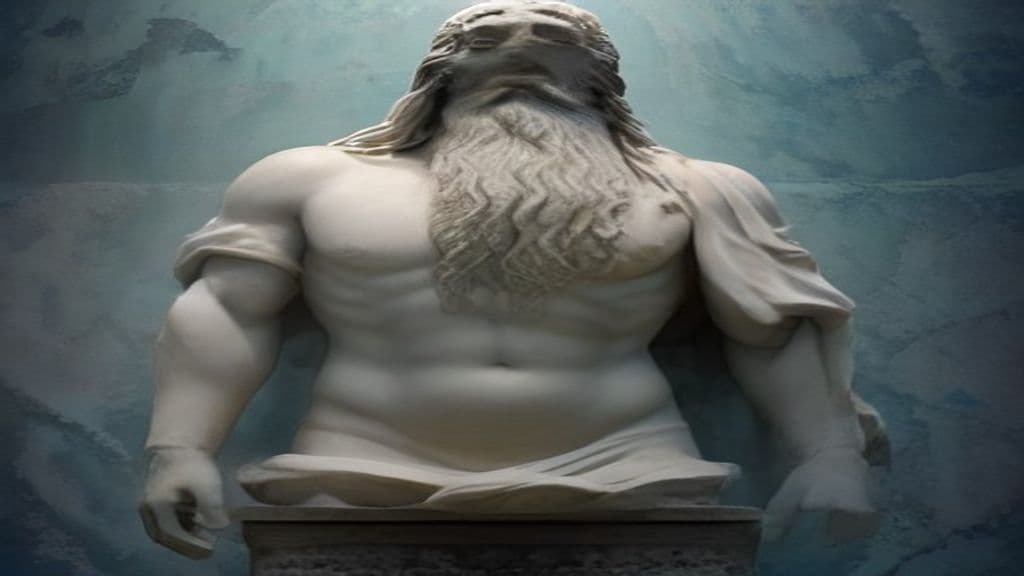
In Homeric and later classical summaries Poseidon is one of the three principal brothers who divided the cosmos after the overthrow of Cronus: Zeus received the sky, Hades the underworld, and Poseidon received the sea; the earth and Mount Olympus remained common to them. Bronze Age (Mycenaean) records show Poseidon attested as an important chief deity at sites such as Pylos and Thebes, where he bears chthonic titles (for example rendered in Linear B) that indicate an older, complex role in prehistoric cults.
Classical Greek artistic tradition commonly represents major Olympian gods in anthropomorphic form; within that tradition Poseidon is typically depicted as a mature, bearded adult male. While the provided sources do not preserve a single canonical description, later mythographic tradition and artistic convention present him as a powerful adult figure often associated with seafaring iconography (for example carrying or connected with a trident in later imagery) and with epithets such as 'earth-shaker'.
Poseidon presides over the sea, storms, earthquakes and horses. He is described as able to raise storms at sea, to cause earthquakes (ancient epithet rendered as 'earth-shaker'), and in mythic narratives he can affect springs and waters by striking the ground (later tradition supplies the image of a trident). He acts as protector of seafarers and as guardian of Hellenic cities and colonies; his favor or wrath directly influences navigation, voyages and civic fortunes, as in Homeric episodes where he delays and punishes voyagers (notably Odysseus) or in foundation myths where he retaliates when denied civic patronage.
Weaknesses
- conditionLoss of civic favor / dishonor
- conditionOffence to divine order (e.g., harming or insulting his kin/sons)
Wards
- ritualPropitiatory offerings
- ritualCult veneration at sanctuaries (including offerings in sanctuaries and caves such as the Mycenaean cave at Amnisos)

Zeus
Zeus (Ancient Greek: Ζεύς) is the supreme deity of the classical Greek pantheon, a sky-and-thunder god who rules as king of the gods on Mount Olympus and functions as a sky‑father who assigns roles among the immortals.

Athena
Athena is a major ancient Greek goddess associated with wisdom, handicraft (notably weaving), and warfare; she serves as a tutelary protector of cities—most prominently Athens—and is central to myth, cult, and civic identity in the Greek world.
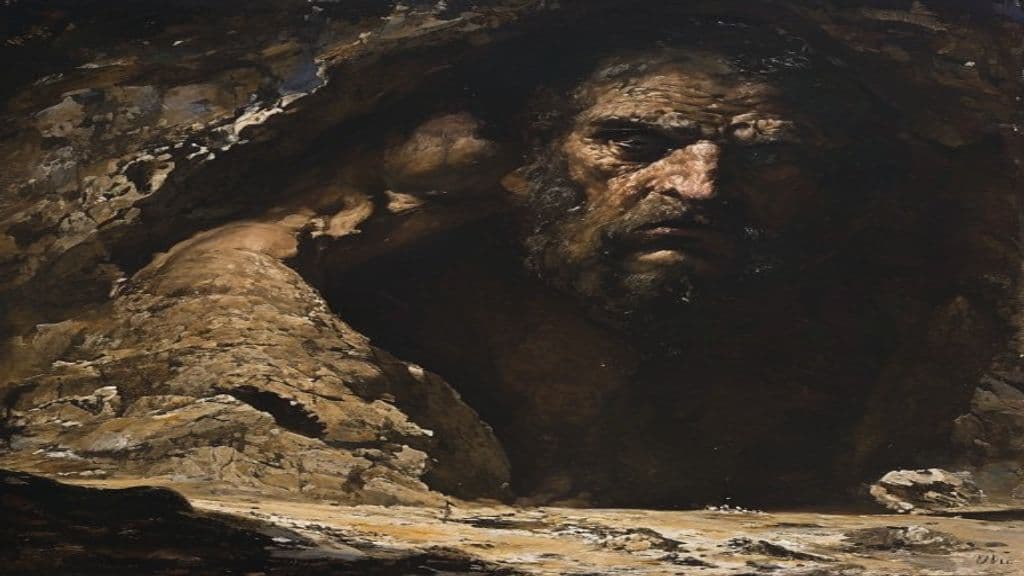
Polyphemus
Polyphemus is the Homeric Cyclops — a one‑eyed giant shepherd who lives outside Greek civic norms, notorious for refusing hospitality and for blinding and being blinded by Odysseus. Later literature reframes him variously as comic, rhetorical, or lovesick, but the core tradition presents him as a liminal, semi‑divine monstrous figure (son of Poseidon).
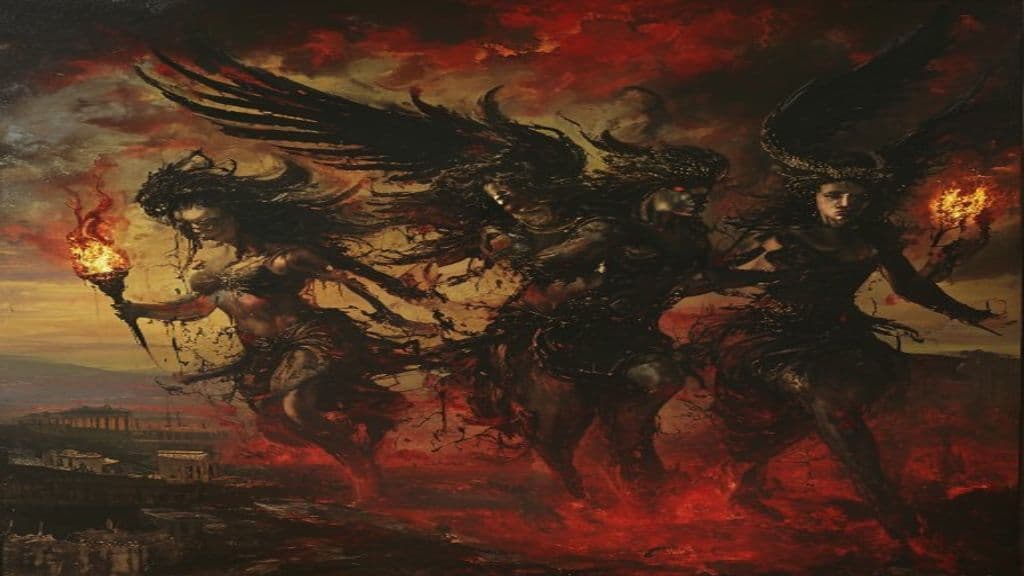
Erinyes
The three avenging Furies of Greek myth — Alecto, Megaera, and Tisiphone — who pursued and tormented those guilty of crimes against blood kin, especially murder of family members.
Community Record
- [1]Poseidon. Wikipedia: 'Poseidon is one of the twelve Olympians...' and related entries on Mycenaean attestations, epithets, domains and cult practice.wiki
- [2]Poseidon (Wikidata). Wikidata summary entry for Poseidon, used as a supporting database statement.other