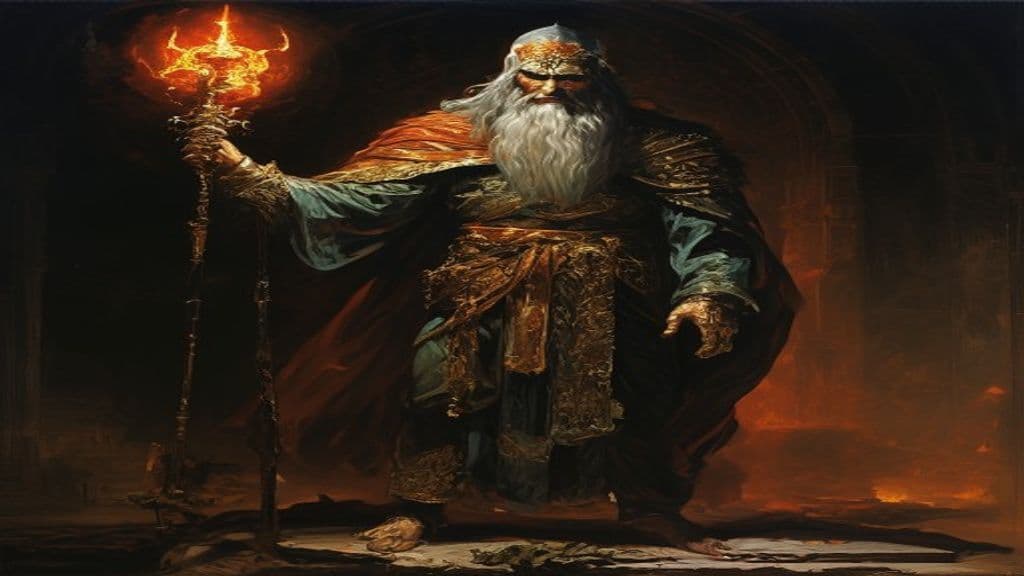
The lexical form appears in Gathic/Old Avestan as aēšəma and in Younger Avestan as Aeshma (𐬀𐬉𐬴𐬨𐬀), originally a word for a quality of fury that, over time, becomes personified in Zoroastrian scripture and commentarial tradition. In the Zoroastrian cosmology Aeshma is a messenger/agent of Angra Mainyu and occupies a commander role among hostile beings; later Middle Persian forms include eshm/kheshm and the term persists into New Persian (خشم). Textual references in the Yasna, Yashts, and Vendidad portray him as the named adversary of Ahuric hypostases and of ritual order (sources summarized in modern reference works).
Canonical sources supplied here do not give a detailed anthropomorphic iconography; descriptions are conveyed primarily through epithets. His standard epithet is 'of the bloody mace' (Avestan xrvi.dru-), contrasting with Ahuric epithets for divine mace-bearers. A later passage gives an epithet translated as 'having his body forfeited' (Yasht 19.97) though the precise meaning is uncertain in the cited summaries. Beyond violent and bloody imagery implied by these epithets, the provided material contains no sustained physical depiction.
Aeshma functions as the hypostasis and active agent of wrath: he distracts from proper worship and 'distorts the intention and meaning of sacrifice' by fomenting brutality against cattle, violence in war, and drunkenness (Yasna 10.8; Yasht 17.5 as summarized). He is represented as placed in a demonic hierarchy under Angra Mainyu and called a commander in later tradition (Zatspram 34.32 cited in summaries). Scriptural passages and later Rivayats attribute improperly performed Yasna rites to his influence; he flees before Mithra in some texts (Yasna 57.10; Yasht 10.97), is opposed and driven off by Sraosha (Yasht 11.15; Yasna 57.25), can be repelled by recitation of prayer (Vendidad 11.9), and will be overthrown or flee at the final renovation before the saoshyant (Yasht 19.95).
Weaknesses
- mantrarecitation of prayer (Vendidad 11.9)
- ritualcorrect performance of the Yasna / obedience to Sraosha (Yasna/Yasht references; Rivayats)
- otheropposition by Ahuric hypostases, especially Sraosha and Mithra (Yasht 11.15; Yasna 57.10, 57.25; Yasht 10.97)
Wards
- mantraliturgical recitation/prayer to drive Aeshma away (Vendidad 11.9)
- ritualinvocation or protection by Sraosha; adherence to observance and ritual discipline (Yasht 11.15; Yasna 57.25)
- ritualinvocation or presence of Mithra to repel Aeshma (Yasna 57.10; Yasht 10.97)
- conditionproper, correctly performed Yasna liturgy to avoid attracting his influence (Rivayats)
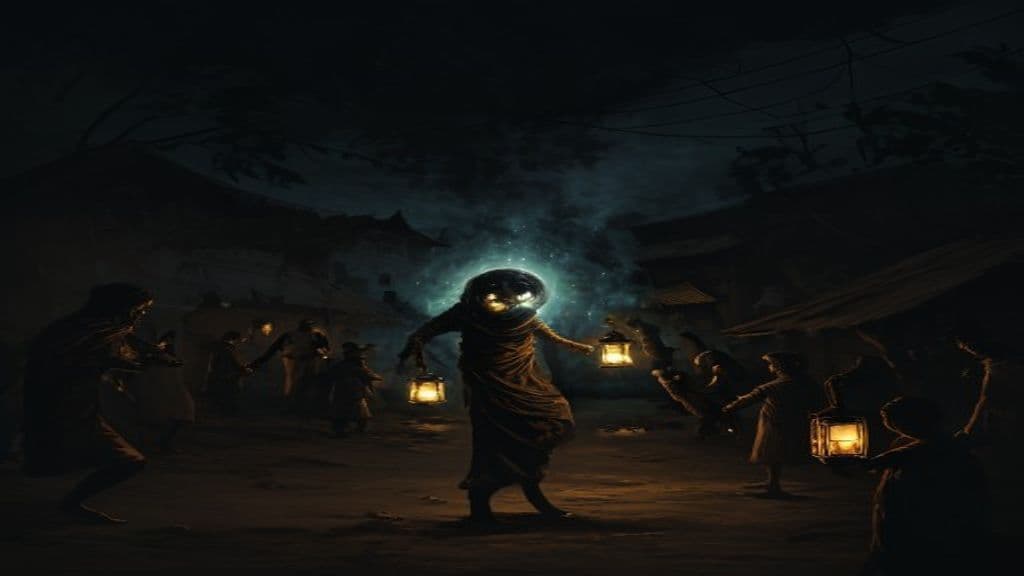
Ab-Zohr
Ab-Zohr is the culminating rite of the Zoroastrian Yasna service: a formal offering to the waters (Aban/Apas) that creates the consecrated liquid parahaoma and functions to purify, strengthen, and atone for damage done to waters. It is a ritual action rather than an independent supernatural being.
Aban (Āb/Ābān)
Aban (Avestan apas; Middle Persian āb/ābān) is the collective, sacred principle of the waters in Zoroastrian cosmology — both the element water and its personified hypostases (the Apas/Ahuranis). Aban functions as a primordial, life-giving creation, a calendrical and liturgical focus (day-name, month-name, Abanagan feast), and a ritual object of veneration (ape zaothra, Aban Yasht) rather than a malign force to be expelled.
Aban Yasht
The Aban Yasht is a hymn from the Persian tradition that praises Anahita, a goddess associated with water, fertility, and wisdom. It consists of 132 stanzas and is part of the 21 Yashts collection. (Note: - Power tier should be "Primordial" or possibly "Cosmic", given that it's a hymn of great spiritual significance and associated with a goddess. - The article incorrectly states that Anahita is associa)
Ahriman (Angra Mainyu)
Angra Mainyu (Middle Persian Ahriman) is the hypostasis or personification of destructive, deceitful, and disordering mentality in Zoroastrian tradition. In the earliest (Gathic) layer it is presented as a choiceful destructive mainyu opposed to the constructive Spenta Mainyu; in later Pahlavi exegesis it becomes a personified cosmic antagonist who nevertheless is described as ontologically deficient and non-divine.
Ahura
Ahura is an Avestan term that designates a class of divinities in the Indo‑Iranian and Zoroastrian tradition, marking the sacred ‘lords’ who are to be reverenced and opposed to the rejected class of daevas. In Zoroastrian scripture the label functions as both a technical category and an honorific applied to high divine figures such as Ahura Mazda, Mithra, and Apam Napat.
Ahura Mazda
Ahura Mazda is the principal deity of Zoroastrian tradition, invoked as the supreme source of goodness and wisdom who instructs Zoroaster and commands helper spirits (yazatas). Historically attested in Achaemenid royal inscriptions, Ahura Mazda occupies a central role in Zoroastrian liturgy (notably the Yasna) and in various Iranian religious formulations.
Ahurani
Ahurani (Avestan ahurani; pl. ahuranis) is a Zoroastrian divinity or class of divinities of the waters in the Avesta. In hymnic contexts (notably Yasna Haptanghaiti and Yasna 68) the ahurani(s) are invoked as companions of the ahura(s), bearers of health, fertility and other gifts, and the ritual recipients of libations (Ab‑Zohr).
Airyanem Vaejah
Sacred homeland and territory in Zoroastrianism, considered the cradle of Iranian civilization. (Note: * Power tier: Greater (Airyanem Vaejah is a sacred territory, not a cosmic entity) * Appearance and Abilities sections are missing * Weaknesses and Wards sections are missing * Summary should be rewri)
Aka Manah
Aka Manah (Akem manah; Middle Persian Akoman, New Persian Akvan) is the personification of 'evil mind' in Zoroastrian literature. Originating as a Gathic term for corrupt thought, the figure is later reified in the Younger Avesta and Pahlavi texts as a high-ranking demonic opponent of Vohu Manah and ally of Angra Mainyu, whose activity is to pervert human thought and moral discrimination.
Amesha Spenta
Amesha Spenta (Avestan Aməša Spəṇta) are a canonical heptad of divine, bounteous principles in Zoroastrian thought, described as the first emanations of Ahura Mazda and later functioning as moral ideals and protectors or guardians of portions of creation.
Anahita (Arədvī Sūrā Anāhita / Ardwisur Anāhīd)
Anahita is a worship-worthy divine figure (yazata) in Iranian religious tradition, attested in the Avesta and later Middle Persian texts, who personifies the waters and the mythical heavenly river and is associated with fertility, procreation, wisdom, and (in later syncretic forms) martial success and the planet Venus.
Angra Mainyu
In Zoroastrian tradition Angra Mainyu (Avestan) — often rendered Ahriman in later sources — is the personified destructive spirit and the principal adversary of the beneficent divine power (Spenta Mainyu) and, in some formulations, of Ahura Mazda. The figure functions as the opposing brother‑power within a foundational Mazdean dualism.
Community Record
- [1]Aeshma — Wikipedia. Wikipedia entry on Aeshma (summarizing Avestan Yasna, Yashts, Vendidad and later tradition)wiki
- [2]Wikidata: Aeshma. Wikidata entry for Aeshmaother
- [3]Archive and collected modern references (selection). Supplementary archive links cited in research notes (modern cultural references and collected materials)other