
In the inscriptionary tradition preserved as the Agum‑Kakrime text, Agum presents himself as a Kassite ruler who recovered the cult statue of the city‑god Marduk from the land of Ḫana after a period in which the statue had been removed from Babylon, and who renovated the É‑sagila and restored its cult. The surviving narrative frames these actions as establishing his legitimacy and care for both Kassites and Akkadians; the text survives in later copies and is treated as a specialized antiquarian/ritual text in the Ashurbanipal library.
The provided sources contain no physical description of Agum II; the extant materials are inscriptional and focus on his acts, titulary, and ritual program rather than bodily features.
Agum II's 'powers' in the sources are political and cultic rather than supernatural: he claims suzerainty over various peoples (Padan, Alman, Guteans), commissions restoration of temple architecture and cultic equipment, arranges purification rites (including a rite described as performed by a snake charmer), donates to the temple, and orders the creation of protective door‑demons to guard the cella and cult statue of Marduk and his consort Zarpanītum. He functions as a ritual patron and restorer who legitimates rule through care for the city‑god's cult.
Weaknesses
None recorded.
Wards
- ritualconstruction of protective door‑demons
- ritualpurification of the temple house (including rites performed by a 'snake charmer')
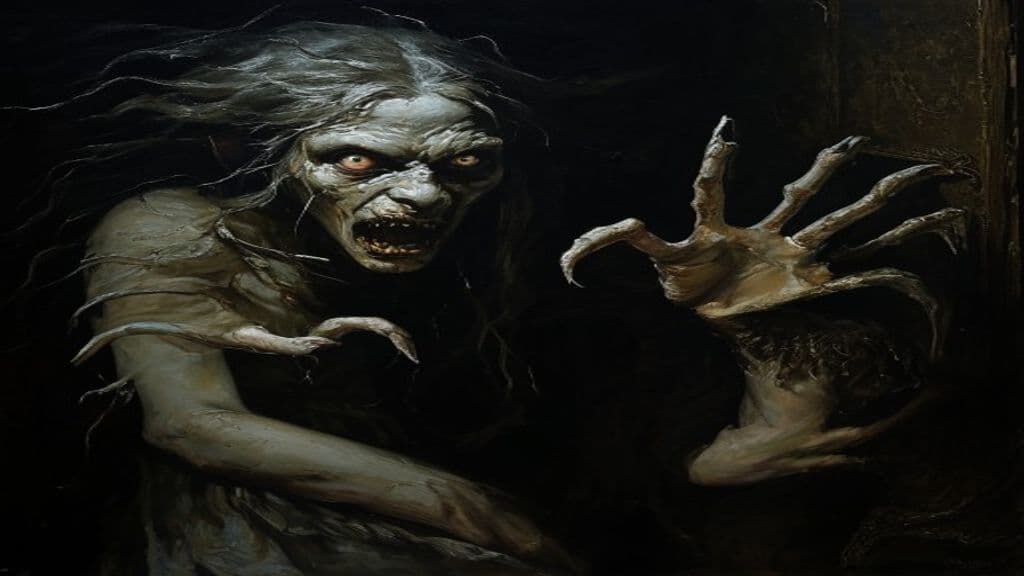
Mormo
A Greek child-eating bogeywoman used to frighten children into obedience, sometimes depicted as a shape-shifting female phantom who bit naughty children.

Marid
The most powerful class of jinn in Islamic tradition — beings of the sea, associated with the deep ocean, storms, and the granting of wishes at terrible cost. The classic genie of the Arabian Nights.

Djinn
The class of supernatural beings created from smokeless fire in Islamic cosmology — a parallel civilization to humanity, capable of belief or unbelief, with their own prophets, society, and judgment before God.
Community Record
- [1]Agum II — Wikipedia. Wikipedia: 'Agum II' article (summary of the Agum‑Kakrime Inscription and traditions)wiki
- [2]Wikidata entry for Agum II. Wikidata: Agum II itemother
- [3]CIA Reading Room: KARPOV, YA. TO: KARTSEV, V.P. (archive copy referencing scholarship). Archive.org copy listed in research notesother
- [4]CIA Reading Room: GLUSHKO V V TO: GOLDBERG Y (archive copy referencing scholarship). Archive.org copy listed in research notesother
- [5]CIA Reading Room: ZAITECV, V.M. TO: ZAITSEVA, N.G. (archive copy referencing scholarship). Archive.org copy listed in research notesother