
In the oldest Zoroastrian layer (the Gathas) akem manah appears as a descriptive state—'manah made evil'—applied to human disposition and as a property of hostile beings. In later Zoroastrian tradition (Younger Avesta, Pahlavi) this concept is personified: Akoman is one of the demonic creatures fashioned by Angra Mainyu (Ahriman) to oppose Ahura Mazda. Pahlavi texts rank Akoman highly among Ahriman's host—sometimes described as second in order after Angra Mainyu—and pair him structurally as the antithesis of the Amesha Spenta Vohu Manah (Good Mind).
Scriptural texts (Gathas, Younger Avesta, Pahlavi) do not preserve a consistent anthropomorphic form for Akoman; he is primarily characterized by function—'evil thought' or 'evil purpose.' In later epic literature (Ferdowsi's Shahnameh) Akvan is rendered with vivid monstrous features: long hair, blue eyes, and an elephant-like head with tusks in place of teeth. That concrete grotesque image belongs to the Shahnameh's literary adaptation rather than to the early religious corpus.
Across the Younger Avesta and Pahlavi materials Akoman's chief activity is to induce perverted thought and sensual desire in humans, blunting their capacity to discriminate good from evil and promoting social and moral disorder. In Vendidad he appears in a temptation episode where he poses ninety-nine questions to Zarathustra. In hymnological material he is listed among hostile beings who oppose beneficent entities and is predicted to be defeated by Vohu Manah at the final renovation of the world. Pahlavi summaries and the Denkard attribute to him the social effects of discord, concealment of one's own faults while seeking others', and other mischiefs associated with corrupt mind and desire.
Weaknesses
- conditionCultivation of Vohu Manah (Good Mind) and steadfast worship of Ahura Mazda
- conditionProphetic steadfastness exemplified by Zarathustra's resistance in the Vendidad (answering the ninety-nine questions)
- otherOpposition and intervention by beneficent beings (Vohu Manah and allied entities) as recounted in Pahlavi narratives
Wards
- conditionRight religious practice, moral discrimination, and devotion to Ahura Mazda (scriptural model of defense)
- otherCultivation/invocation of Vohu Manah (Good Mind) as the antithetical principle to Akoman

Vohu Manah
Vohu Manah is the Avestan concept of the 'Good Mind' personified in later Zoroastrian tradition as one of the Amesha Spentas, divine emanations of Ahura Mazda representing the benevolent, properly directed mental disposition that enables right action and upholds creation.

Angra Mainyu
In Zoroastrian tradition Angra Mainyu (Avestan) — often rendered Ahriman in later sources — is the personified destructive spirit and the principal adversary of the beneficent divine power (Spenta Mainyu) and, in some formulations, of Ahura Mazda. The figure functions as the opposing brother‑power within a foundational Mazdean dualism.
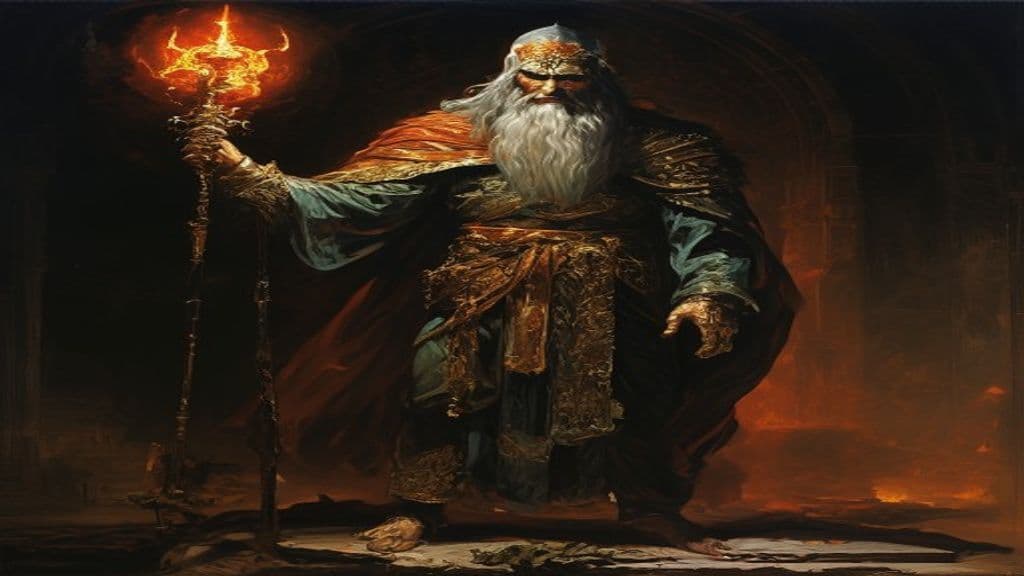
Aeshma
Aeshma is the Zoroastrian hypostasis of wrath — a fiendish being who personifies rage and functions as an ontological opponent to Ahuric principles and ritual discipline. In scripture and later tradition he distracts worship, foments violence and drunkenness, can be driven off by prayer or by divine agents such as Sraosha and Mithra, and will be overthrown or flee at the final renovation.
Community Record
- [1]Aka Manah (Wikipedia). Wikipedia article on Aka Manah (summarizes Gathic usage, Vendidad episode, Pahlavi ranking, and Shahnameh depiction)wiki
- [2]History of Zoroastrianism, M. N. Dhalla (Part II & IV). M. N. Dhalla, History of Zoroastrianism (1938), parts cited in research notes summarizing Pahlavi characterizations and demonological rankingsacademic
- [3]History of Zoroastrianism, M. N. Dhalla (Part IV). M. N. Dhalla, History of Zoroastrianism (1938), part 4 (used for summaries of Pahlavi materials and Bundahishn/Denkard references)academic
- [4]Shahnameh (summary references to Akvan). Summary of Ferdowsi's Shahnameh image of Akvan: long hair, blue eyes, elephant-like head with tusks (as reported in the supplied notes via Wikipedia)literary